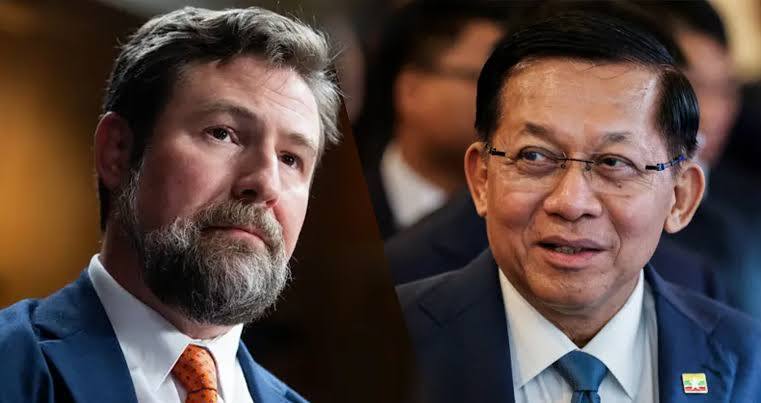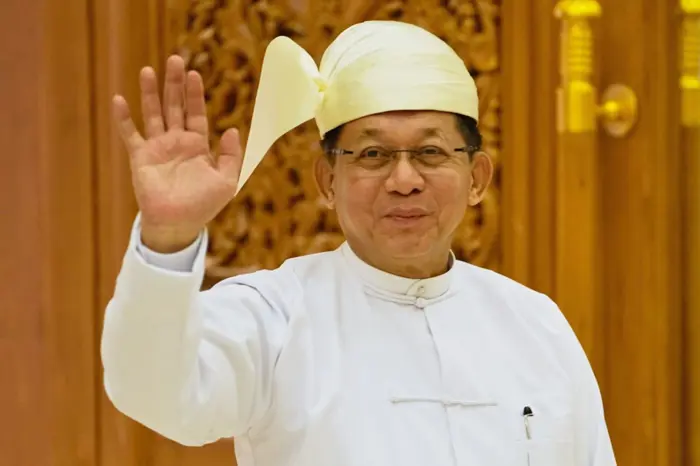
Myanmar’s President Min Aung Hlaing has announced a 100-day deadline for initiating peace talks with anti-government armed groups, signaling a renewed push by the military-backed administration to address the country’s prolonged internal conflict.
According to state-run newspaper Global New Light of Myanmar, the president on Tuesday invited both signatories and non-signatories of the Nationwide Ceasefire Agreement (NCA) to participate in dialogue, setting July 31 as the final deadline for engagement.
The NCA, originally signed in October 2015 with eight ethnic armed organizations, has remained a central yet fragile framework for peace. However, Myanmar’s political landscape shifted dramatically following the 2021 Myanmar military coup, when the military ousted the elected government led by the National League for Democracy (NLD).
In his remarks, Min specifically mentioned several key armed groups, including the Karen National Union, Chin National Front, and the All Burma Students' Democratic Front, urging them to join the proposed talks.
“We also desire peace. Without stability, development cannot move forward,” he said, emphasizing that national progress hinges on achieving lasting security and reconciliation.
According to Anadolu Ajansı, the president also indicated that efforts would be made to bring the People’s Defense Force (PDF), aligned with the shadow National Unity Government (NUG), back into what he described as a “legal framework,” though no details were provided on the conditions or mechanisms for such a process.
Min Aung Hlaing, who previously served as commander-in-chief of the military known as the Tatmadaw from 2011 until March this year, assumed the presidency after elections organized by the military-backed administration. The polls, conducted in phases beginning in late December, resulted in a victory for pro-military parties, including the Union Solidarity and Development Party.
The announcement comes amid ongoing conflict between the military and a broad coalition of ethnic armed groups and pro-democracy forces, raising questions about the feasibility and inclusiveness of the proposed peace initiative.
BOB Post