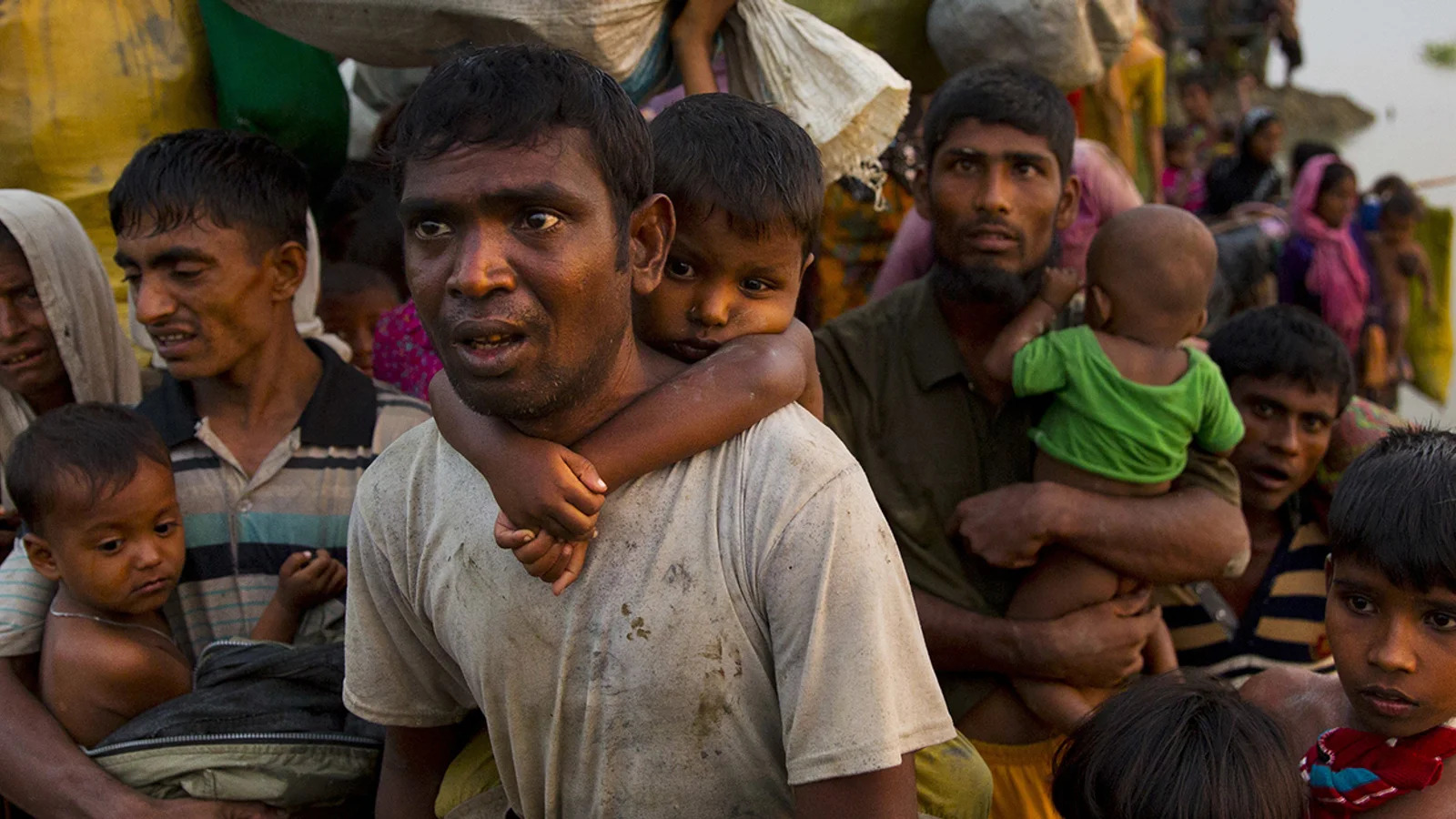
Rohingya communities in Rakhine State of Myanmar are facing a worsening humanitarian crisis as they remain trapped between fighting by the Tatmadaw and the ethnic armed group Arakan Army. Around 150,000 Rohingya have fled to Bangladesh since 2024, according to the 2026 annual report of the United States Commission on International Religious Freedom (USCIRF).
The report said the Rohingya population has been trapped in intense armed clashes in Rakhine State, with many attempting dangerous journeys to Bangladesh, during which a number of people reportedly lost their lives. It said violence and persecution continued to worsen in 2025 as Myanmar’s military carried out indiscriminate airstrikes and artillery attacks against civilians, schools and religious sites while attempting to regain territories lost during the country’s ongoing conflict.
According to the commission, Tatmadaw forces destroyed 379 religious sites during the year and killed more than 259 clergy members and civilians who were sheltering in places of worship or participating in religious activities. The report added that the military has increasingly used violence against religious communities, at times surrounding or attacking sacred sites as part of its operations.
More than 2.5 million people across Myanmar are now internally displaced, including populations in Christian-majority Chin and Kachin states and Muslim-majority Rakhine State, where Rohingya communities remain among the most vulnerable.
The report said Rohingya civilians who remain in Rakhine State continue to face severe conditions, including forced labor, food shortages and health crises linked to declining humanitarian assistance. It also cited reports that junta forces killed dozens of villagers in Ramree Township.

At the same time, the report accused the Arakan Army of locking or converting Rohingya mosques into military bases and detention facilities, while the Tatmadaw has continued forcibly conscripting Rohingya men and boys many of whom have been stripped of citizenship and deploying them in combat roles.
The USCIRF urged the United States government to redesignate Myanmar as a “Country of Particular Concern” under the International Religious Freedom Act and called for renewed humanitarian assistance and support for investigations into atrocities committed against Rohingya and other religious minorities.
The commission also recommended expanding higher education opportunities for Rohingya refugees living in camps in Cox's Bazar in coordination with Bangladeshi authorities.
Meanwhile, international pressure on Myanmar’s military leaders continues to grow. Earlier this year, a federal criminal court in Argentina issued arrest warrants for 25 Myanmar officials accused of genocide and crimes against humanity against the Rohingya, while related proceedings are also ongoing at the International Criminal Court and the International Court of Justice.
BOB Post