Myanmar authorities have detained four executives from supermarket chains, including a representative from a Japanese joint venture, for allegedly hiking rice prices amid ongoing economic struggles under the ruling junta, as reported by state media on Monday.
This Southeast Asian nation has faced significant instability since its military ousted the elected civilian government in February 2021, leading to mass protests and a broad-based armed resistance.
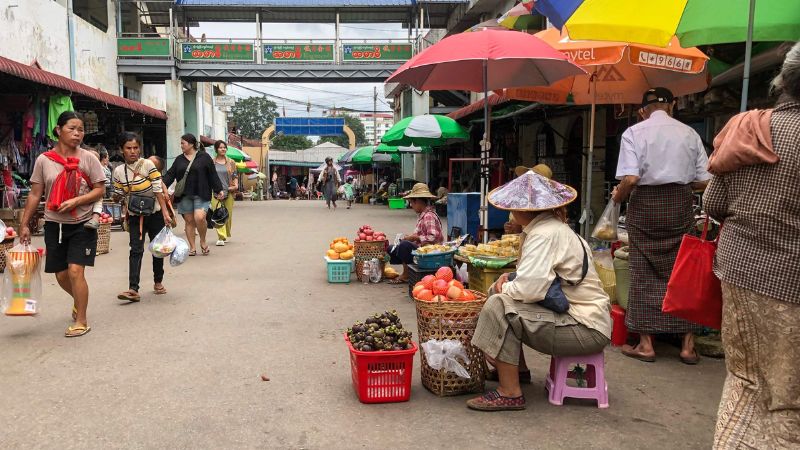
The arrests involve a total of 11 individuals, encompassing rice traders and officials connected to mills and retailers. These individuals are accused of marking up rice prices by 31% to 70% beyond set guidelines, according to the Global New Light of Myanmar.
In Tokyo, Chief Cabinet Secretary Yoshimasa Hayashi confirmed that a Japanese national is under investigation by police in Yangon, Myanmar's commercial hub. He stated that the Japanese government is actively pursuing the individual's early release and maintaining communication with their employer for support.
Among those detained is an executive from Aeon Orange, a supermarket chain resulting from a partnership between Japan's Aeon Co. and Myanmar's Creation Myanmar, the junta-controlled newspaper reported. Aeon has acknowledged the detention of one of its employees and is collaborating with the Japanese embassy for further information.
A rice mill owner in Myanmar noted that the sector is grappling with the discrepancy between the official foreign exchange rate and the black market rate, which affects transactions for imported essentials like fuel and fertilizer. He requested anonymity, citing the sensitivity of the issue.
“It’s unprofitable to sell rice at the government’s mandated price,” he said. “Myanmar has ample rice supplies; the current situation stems from the government’s price control efforts.”
For a long time, black market rates for Myanmar's kyat have substantially exceeded the official rate, pegged at 2,100 kyat to the dollar by the central bank. Recently, the black market rate has hovered around 4,500 kyat to the dollar.
The World Bank has highlighted that escalating violence and a weakening currency have exacerbated poverty, now more pervasive than in the past six years. The economic landscape is also strained by labor shortages.
In a related development last month, the junta detained 35 individuals in a crackdown on gold and foreign exchange traders, as well as agents dealing in foreign real estate, in an effort to stabilize the deteriorating currency.
BOB Post