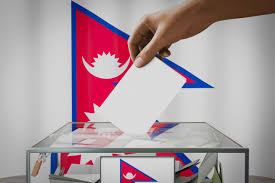
A total of 3,406 candidates have filed nominations for Nepal’s March 5 House of Representatives elections, but the long-standing dominance of older politicians remains largely intact. Of the total candidates, 2,263 are party-affiliated while 1,143 are independents, reflecting broad participation but limited generational change.
This comes despite a strong youth-driven movement in September demanding a shift in political leadership. Young people form the backbone of Nepal’s electorate: more than 52 percent of registered voters are aged 18–40, and youths make up over 42 percent of the population. Yet candidates aged 41–60 account for the largest share, with 1,925 contenders, while only 1,056 candidates fall in the 25–40 age group.

Established parties continue to rely heavily on senior figures. The Nepali Congress, CPN-UML and NCP have nominated relatively few candidates under 40, while a significant portion of their tickets have gone to individuals over 60. According to The Kathmandu Post, Congress and UML each have more than one-third of their candidates aged above 60, highlighting resistance to rapid generational change.
In contrast, newer parties such as the Rastriya Swatantra Party and Ujyalo Nepal Party have fielded a higher proportion of young candidates, signalling a gradual shift. Nearly 40 percent of RSP candidates are under 40, a stark difference from traditional parties.
Observers say change is underway, but slowly. Analysts note that while experience still shapes candidate selection, the growing presence of younger faces especially in new parties shows that pressure from youth movements is beginning to influence Nepal’s political landscape, even if a full transformation remains distant.
BOB Post