For families searching for loved ones swept away by Nepal’s devastating Himalayan floods, hope now rests in something far smaller than the disaster itself: a DNA sample.
Rajesh Ram, 53, carries a photograph of his missing son, Suroj Kumar, as he waits for forensic tests that could finally tell him what happened. Kumar, a garage mechanic in Betrawati, disappeared when floodwaters tore through the area.
“I searched for him everywhere, but I could not find his body,” Ram told AFP.
The disaster has left Nepal facing an unprecedented forensic challenge. A glacial and rock collapse along the Nepal-China border on August 26 sent a tsunami-like surge of freezing water, rocks and debris downstream, sweeping away people, homes and infrastructure.
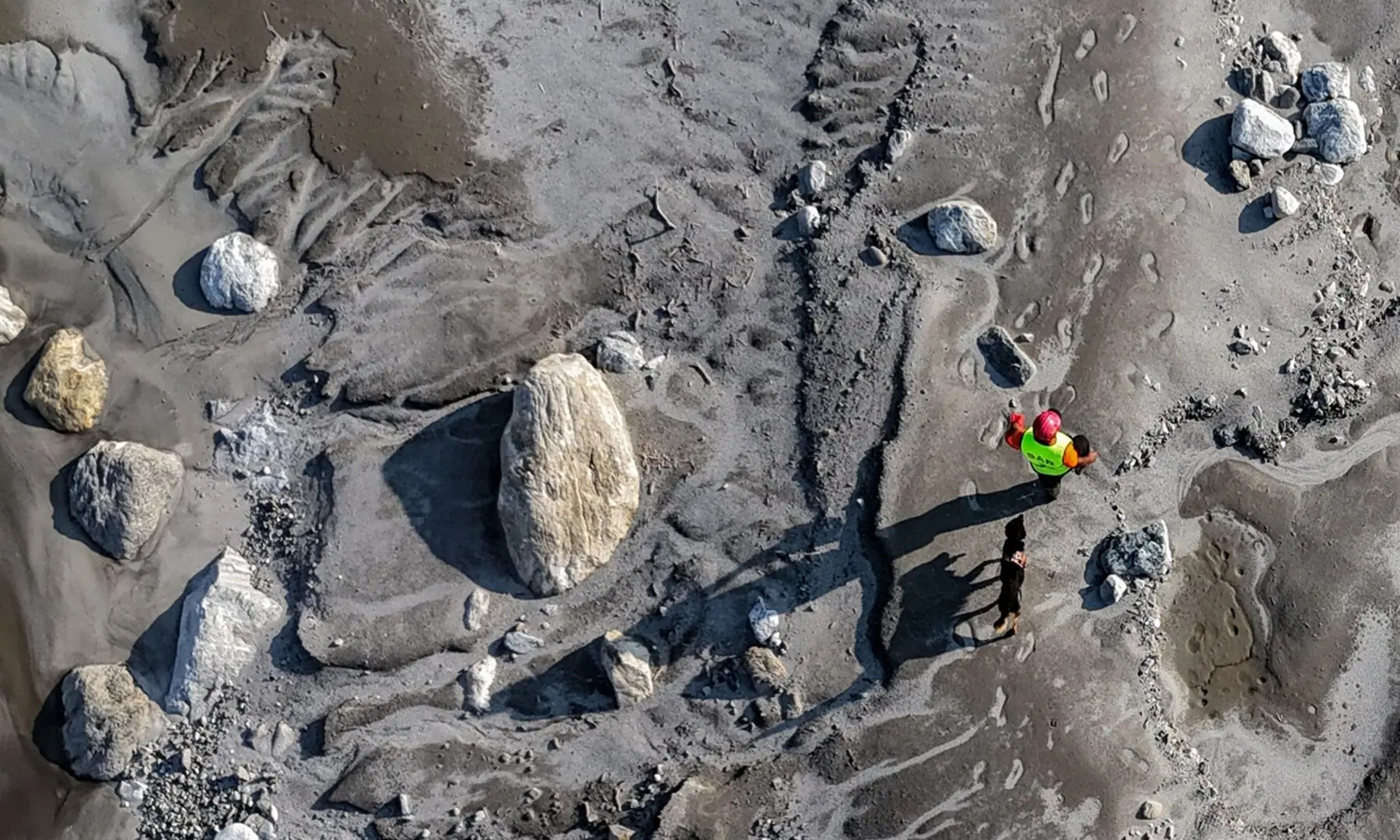
Nepali authorities have recovered 1,454 bodies, but about one-third are only partial remains. So far, just 112 bodies have been identified and returned to their families. Another 5,285 people remain missing in Nepal, including hundreds of foreigners. Chinese state media reported 43 deaths and 519 people missing in China, bringing the combined toll to nearly 1,500 dead and about 5,800 missing.
According to The Straits Times, authorities are now relying on large-scale DNA profiling to identify victims whose remains are difficult to recognise.
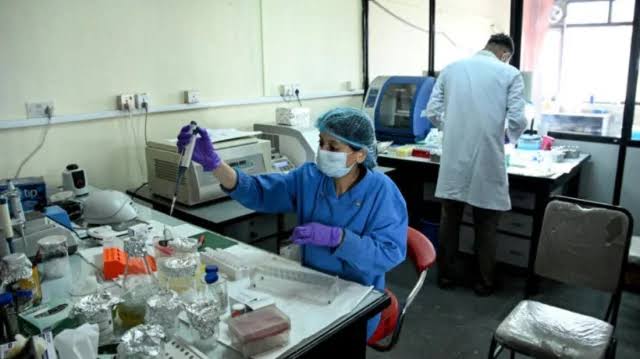
Mukul Pradhan, chief scientific officer at Nepal’s National Forensic Science Laboratory, said the country normally processes about 1,000 to 1,500 samples in an entire year, mainly for paternity cases and criminal investigations.
“We are now processing thousands of samples,” he said.
A total of 3,685 forensic samples are currently undergoing DNA testing, including more than 1,300 taken from recovered bodies. Blood samples can generally be processed more easily, while samples from teeth and bones may require several days.
Nepal has already buried more than 1,200 unidentified bodies, carefully numbering and tagging them so they can be recovered if DNA testing later establishes their identities.
The task is further complicated by the distance bodies may have travelled. Nirajan Thapa, head of the Biology Section at the National Forensic Science Laboratory, said floodwaters carried some remains far downstream, making the identification process much more complex than conventional disaster cases.
“In an earthquake or an accident, people are recovered in a specific area,” Thapa said. “But that scale has now become very large.”
DNA testing also has an important limitation. A DNA profile taken from an unidentified body cannot, by itself, establish who the person was. Investigators need reference samples from relatives and must compare the genetic profiles before confirming a match.
That means thousands of grieving families must also provide samples as authorities build a database of potential matches.
International assistance has arrived as Nepal struggles with the unprecedented workload. India, China and South Korea have sent forensic support teams, while fingerprint specialists from the United States and Singapore are also helping.
Officials hope the additional expertise and manpower will allow the first significant DNA matches to emerge within weeks.
For families, however, every passing day feels longer. Some have already held symbolic cremation ceremonies for relatives who remain missing, unable to wait indefinitely without knowing whether their loved ones will ever be found.
Ram is still waiting for that final piece of certainty. He does not know where the flood carried his son or whether his remains will ever be recovered. For now, he holds on to a photograph and the possibility that a DNA match may finally bring an end to the painful waiting.
BOB Post