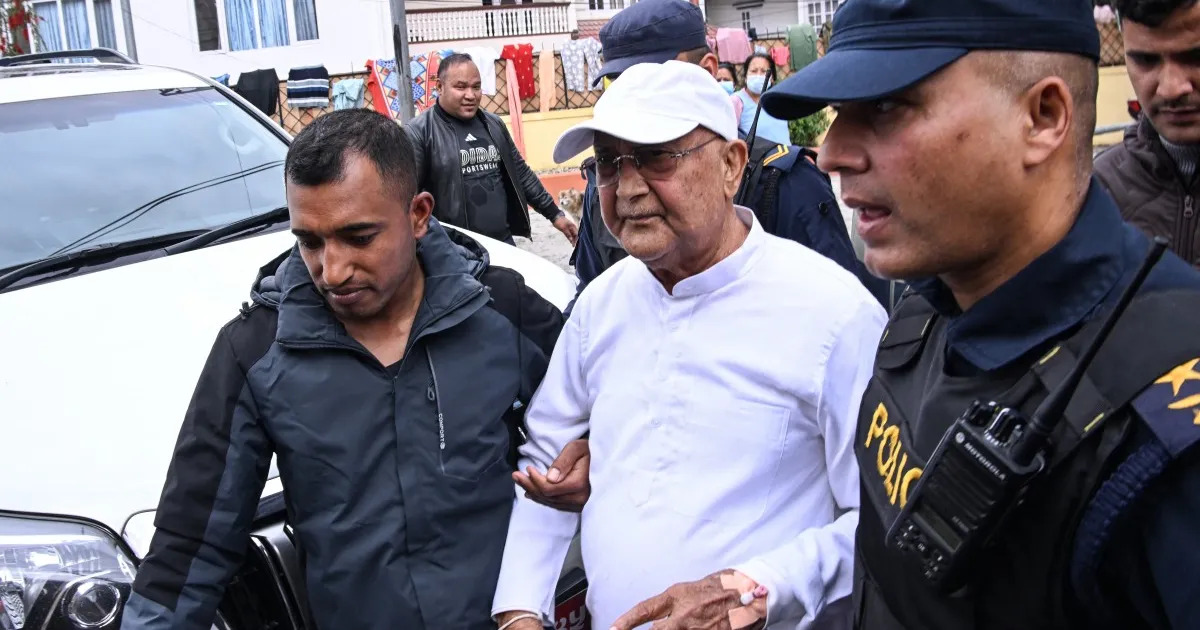
K.P. Sharma Oli, Nepal’s former prime minister, was arrested on Saturday alongside former home minister Ramesh Lekhak as authorities launched a criminal investigation into their alleged negligence during last year’s deadly anti-corruption protests.
Police confirmed that both leaders are being held at the Kathmandu Police Office and are expected to be presented before a court on Sunday. The arrests follow recommendations from a government-appointed inquiry commission that examined the violent suppression of demonstrations led largely by younger protesters.
The unrest, which erupted in September, left at least 76 people dead over two days, including 19 protesters killed on the first day after security forces opened fire. The findings of the panel concluded that Oli’s administration failed to intervene in time to halt the escalating violence, ultimately leading to his resignation.
The arrests came just a day after Balendra Shah, a rapper-turned-politician, was sworn in as Nepal’s new prime minister following a landslide electoral victory driven by public anger over corruption and the handling of the protests.
According to CNN, the probe into the protests has intensified political tensions in Nepal, with investigators focusing on whether senior officials ignored early warnings and failed to prevent excessive use of force by security personnel.
Oli, 74, who has a history of serious health issues including kidney transplants, was later transferred to a hospital after initially being taken into custody, according to witnesses. His legal team has strongly challenged the arrest, calling it “illegal and improper,” arguing that there is no risk of him evading the investigation.
Authorities have yet to issue further details regarding formal charges, while Lekhak has not publicly responded to the allegations.
The case marks a significant escalation in Nepal’s political accountability efforts, as the new government faces mounting pressure to deliver justice for victims of the protests while maintaining stability in a deeply polarized political landscape.
BOB Post