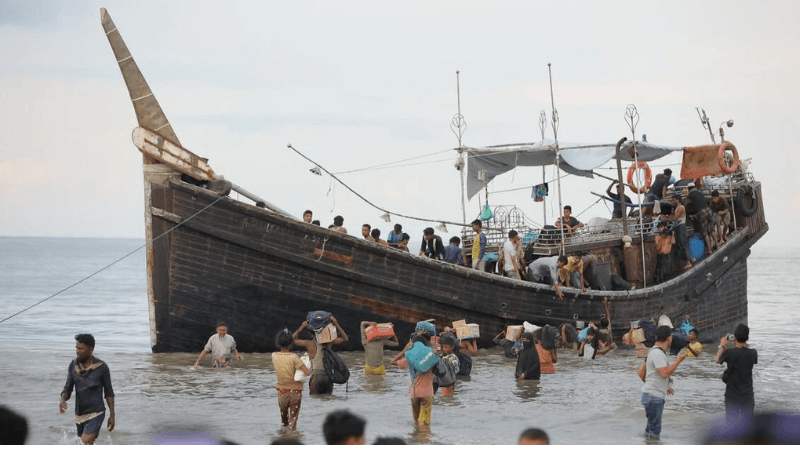
More than 5,300 Rohingya refugees have embarked on desperate maritime journeys from Bangladesh and Myanmar so far this year, with over 600 reported missing or to have lost their lives, UN agencies announced on Tuesday (October 11).
The two UN bodies are working closely with national authorities to enhance protection and long-term solutions for refugees, migrants, and stateless people traveling along key migration routes, including those in South and South-East Asia. Their collaborative efforts focus on improving coordination, providing humanitarian assistance, and ensuring that vulnerable groups are not left without support or legal protection.
This “route-based approach” aims to save lives, protect people and reduce harm, while helping states manage complex mixed movements more effectively. UNHCR and IOM emphasized that strengthening regional cooperation is critical to address the root causes of forced displacement and ensure safe, dignified, and legal pathways for those on the move.
According to UNB news, the dangerous trend is being driven by a combination of factors. These include limited assistance and opportunities in the refugee camps in Bangladesh, alongside escalating conflict and a worsening humanitarian situation in Myanmar, which has been exacerbated by funding cuts.
While Malaysian authorities managed to rescue 13 people, the confirmed death toll from the incident has risen to 26, including two teenage Rohingya girls recovered by Thai authorities. The rest of the passengers remain unaccounted for.
UNHCR and IOM are calling for more resources and stronger regional and international efforts to enhance search-and-rescue capacity and ensure safe access to asylum. They stressed that until the root causes of displacement and the political crisis in Myanmar are resolved, refugees will continue to undertake these dangerous journeys in search of safety.
BOB Post