Bangladesh on Tuesday welcomed the Bengali New Year with nationwide celebrations, as millions marked the arrival of Pahela Baishakh with cultural events, traditional attire and messages of unity and renewal. The first day of the Bengali calendar year 1433 was observed with vibrant festivities that reflected the country’s rich heritage and collective optimism for the year ahead.
Shedding the sorrows and burdens of the outgoing year, people across the country embraced the New Year with renewed energy. Deeply rooted in centuries-old traditions, Pahela Baishakh has evolved into a universal festival transcending religion, caste and ethnicity, bringing Bangladeshis together both at home and abroad. The day is widely seen as a symbol of cultural identity, patriotism and non-communal harmony.
According to the state-run Bangladesh Sangbad Sangstha (BSS), elaborate programmes were arranged across the country, with major celebrations beginning at dawn at Ramna Batamul where the national anthem and the iconic song “Eso He Baishakh” were performed, setting the tone for daylong festivities.
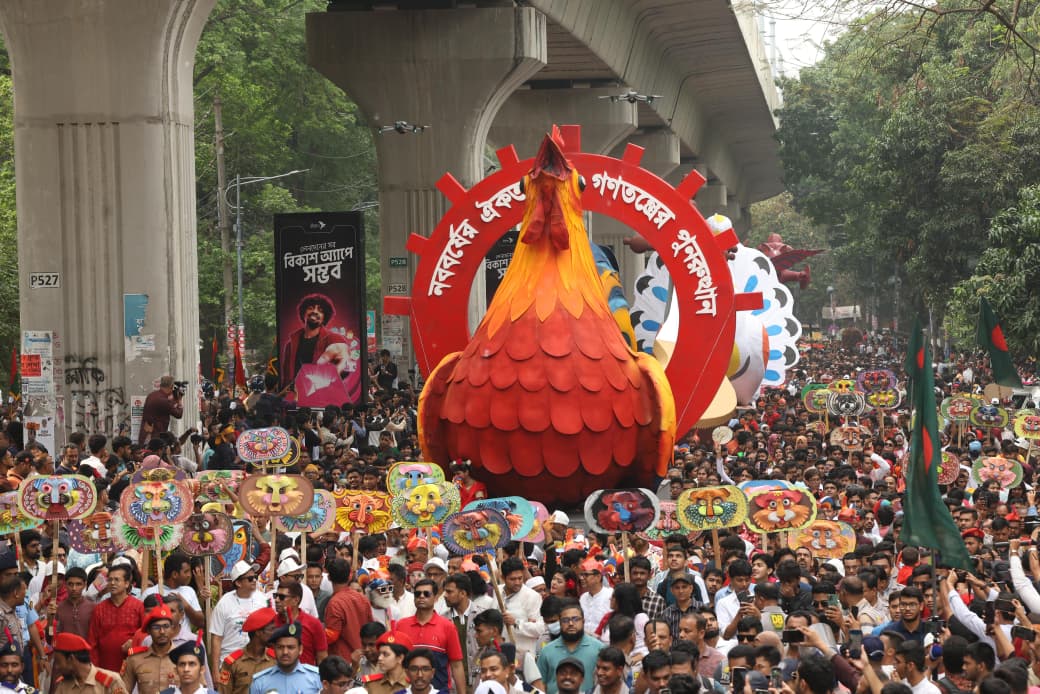
Cultural organisations hosted events featuring music, dance and poetry. As in previous years, the Faculty of Fine Arts at University of Dhaka brought out the traditional Baishakhi Shobhajatra, themed “Harmony of the New Year, Revival of Democracy,” drawing large crowds. The procession included symbolic motifs such as a rooster, dotara, pigeon, elephant and horse, representing strength, creativity, peace, dignity and movement.
President Mohammed Shahabuddin and Prime Minister Tarique Rahman greeted citizens in separate messages. The President called for unity and renewed commitment, describing Pahela Baishakh as a universal festival of the Bengali soul. The Prime Minister highlighted the festival’s connection with the country’s agricultural traditions, rural economy and natural cycles, urging people to move forward with determination.
Across the country, people of all ages joined celebrations wearing colourful traditional attire. Baishakhi fairs featured folk games including Boli Khela, lathi khela and ha-du-du. In Chattogram, the historic Jabbarer Bolikhela was held at Laldighi Maidan, continuing a century-old tradition.
In the capital, around 35 musicians performed national songs, including the national anthem and “Eso He Baishakh,” while hundreds of students carried the national flag during the procession. The morning programme at Ramna Batamul, organised by Chhayanaut, once again offered songs dedicated to peace, humanity and harmony—one of the most iconic traditions associated with the Bengali New Year.
The nationwide celebrations underscored Pahela Baishakh’s enduring significance as a shared cultural moment, uniting Bangladeshis in hope for a year marked by progress, resilience and collective prosperity.
BOB Post