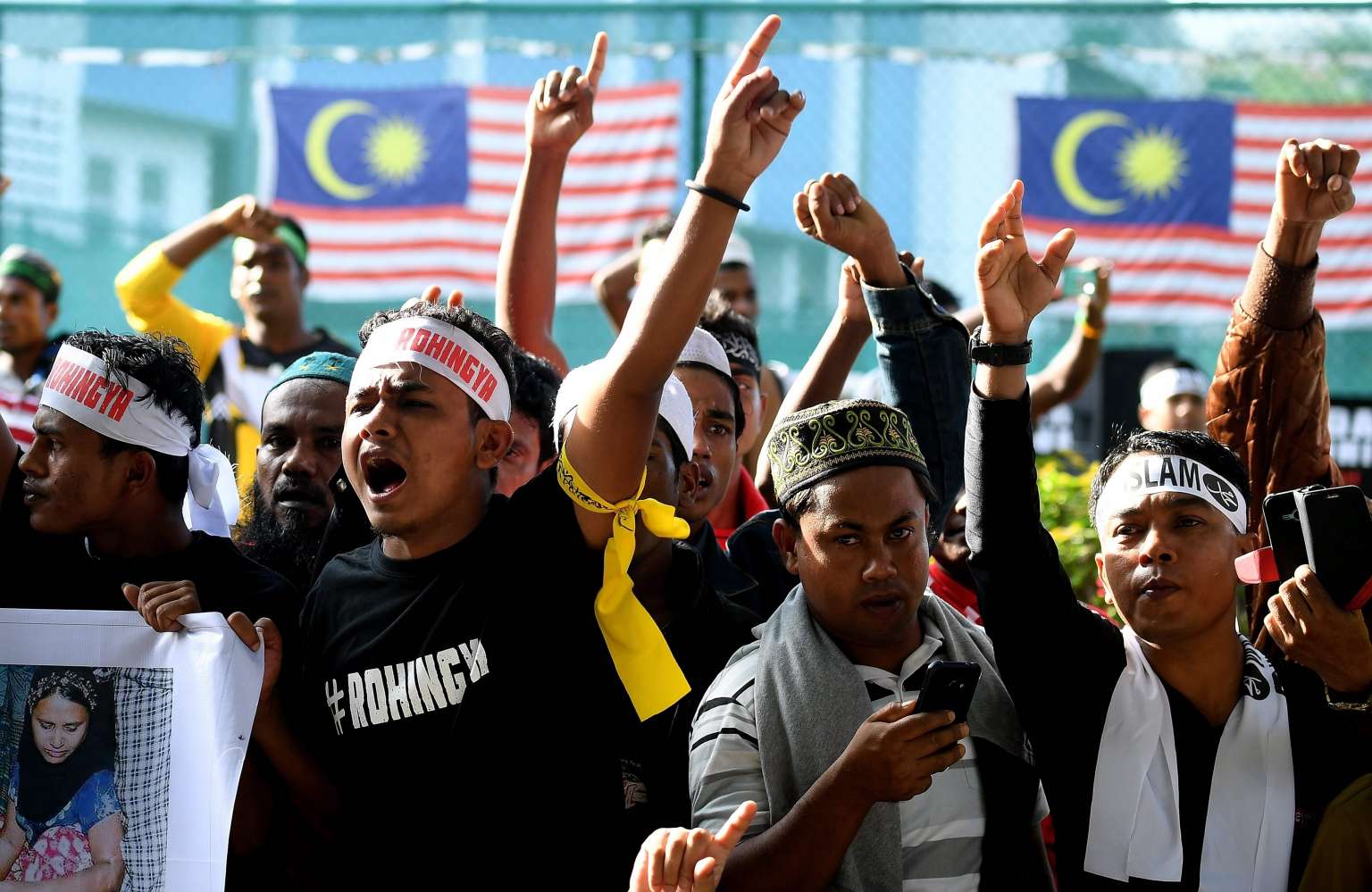
Malaysian human rights groups have challenged a government proposal to restrict the movement of Rohingya refugees, warning that such measures could violate fundamental rights without addressing any proven national security threat.
The Human Rights Commission of Malaysia (Suhakam) and refugee rights organisation Tenaganita have questioned the justification for the proposed restrictions, demanding evidence of the alleged security concerns.
Suhakam chairman Hishamudin Yunus said the commission was unaware of credible evidence showing that Rohingya refugees, as a community, threatened Malaysia’s national security or sovereignty.
He pointed to Inspector-General of Police Khalid Ismail’s statement in June that Rohingya accounted for just 0.02 percent of Malaysia’s overall crime rate from 2024 until then.
According to Free Malaysia Today, Deputy Prime Minister Ahmad Zahid Hamidi recently said the government was examining possible movement restrictions, citing national security, sovereignty and human rights considerations.
Hishamudin warned that strict controls could limit refugees’ access to healthcare, education, legal assistance and employment protection, while increasing their exposure to forced labour and exploitation.
He also cautioned that targeting Rohingya refugees specifically could violate the principle of non-discrimination under international human rights standards.
Tenaganita executive director Glorene Das said the government must explain what specific threat it was trying to address and provide credible evidence before considering restrictions on an entire refugee community.
She urged authorities to enforce existing laws against individual criminal activities rather than allowing public fears and isolated incidents to shape policies against refugees.
Das also said Malaysia’s humanitarian commitments towards displaced Syrians and Palestinians should extend equally to Rohingya refugees seeking protection.
The proposed restrictions have raised fresh concerns over the treatment of Rohingya in Malaysia, where questions of refugee protection, legal status and freedom of movement remain unresolved.
BOB Post