International recognition of the genocide committed against Myanmar’s Rohingya has been influenced not only by legal evidence but also by geopolitical interests and relations between states, a new book argues.
Titled Politics of Denial and Non-Recognition of Genocide: The Case of the Rohingya, the book was launched Sunday at an event organized by the Refugee and Migration Lab at the office of the Refugee Relief and Repatriation Commissioner in Cox’s Bazar.
Published by Palgrave Macmillan, the 17-chapter book is jointly edited by Professor Nasir Uddin of Chittagong University, Professor Palash Kamruzzaman of the University of South Wales in the United Kingdom, and Associate Professor Bayes Ahmed of University College London.
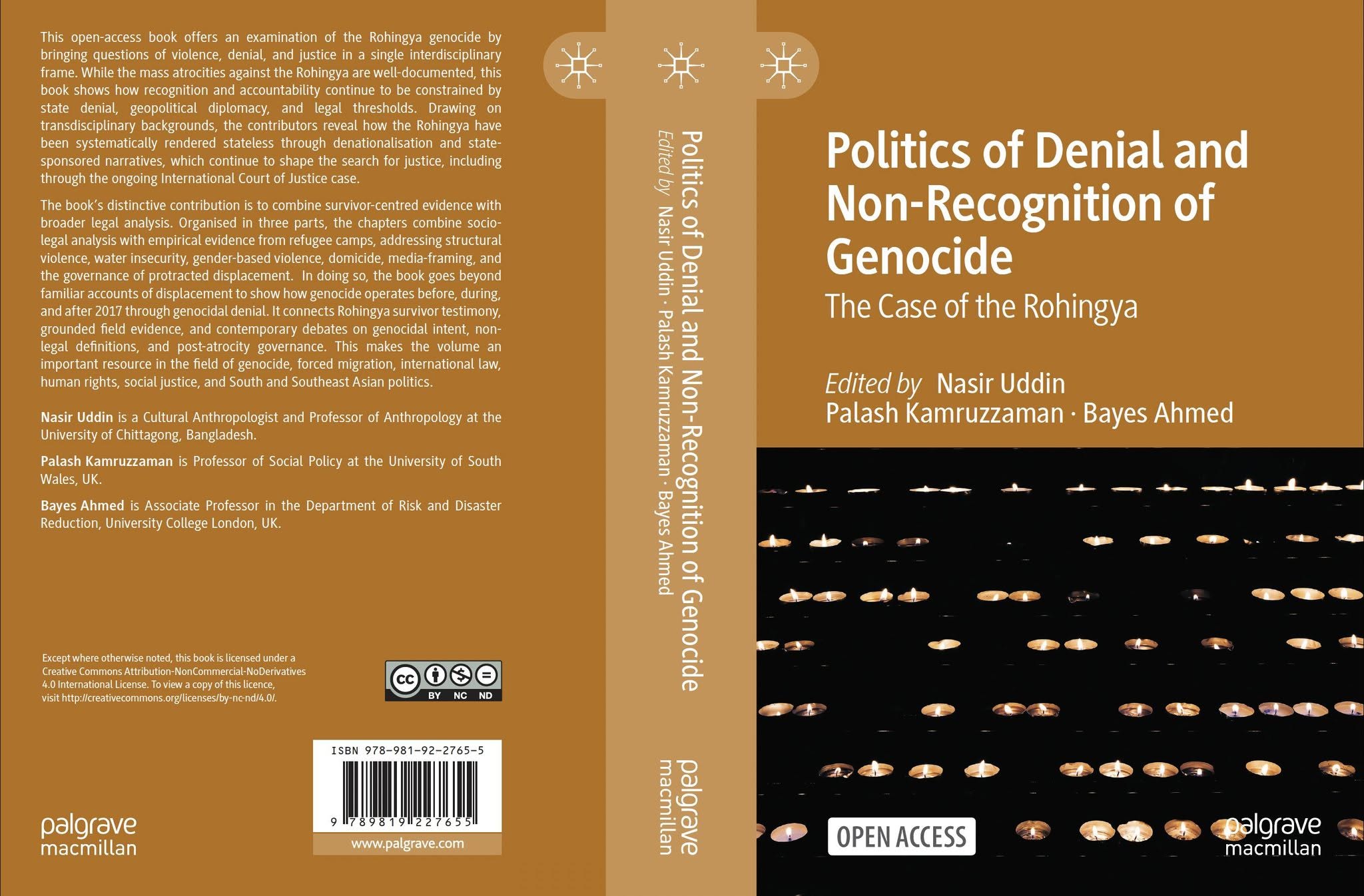
According to New Age, the book examines why recognition of the Rohingya genocide remains contested or delayed despite extensive evidence, survivor testimonies, and documentation of mass atrocities.
Divided into three sections, the book places Rohingya survivors’ testimonies and lived experiences at the centre of its analysis. One chapter draws on accounts from 70 Rohingya survivors, documenting their experiences of persecution and rights deprivation.
The launch event featured a keynote presentation and a roundtable discussion on “The Rohingya Genocide”, with Professor Imtiaz Ahmed delivering the keynote address.
BIISS Director General Major General ASM Ridwanur Rahman, ActionAid Bangladesh Country Director Farah Kabir, academics, law enforcement officials, humanitarian workers, civil society representatives, and members of the Rohingya community also attended the event.
The book explores several dimensions of the Rohingya crisis, including the erasure of Rohingya identity, denial of citizenship, gender-based violence, child rights, water security, forced displacement and media representation. It also examines the genocide case brought by The Gambia against Myanmar at the International Court of Justice.
Rohingya youth representative Sahat Zia Hiru and survivor Enamul Hasan, a community mobiliser in the camps, said the book reflects the realities faced by the Rohingya, particularly their prolonged denial of basic rights and pursuit of justice.
They said humanitarian assistance alone cannot provide a lasting solution to the crisis. They called for basic rights, education, justice and accountability, alongside a safe, voluntary and dignified return to their homeland in Myanmar.
BOB Post