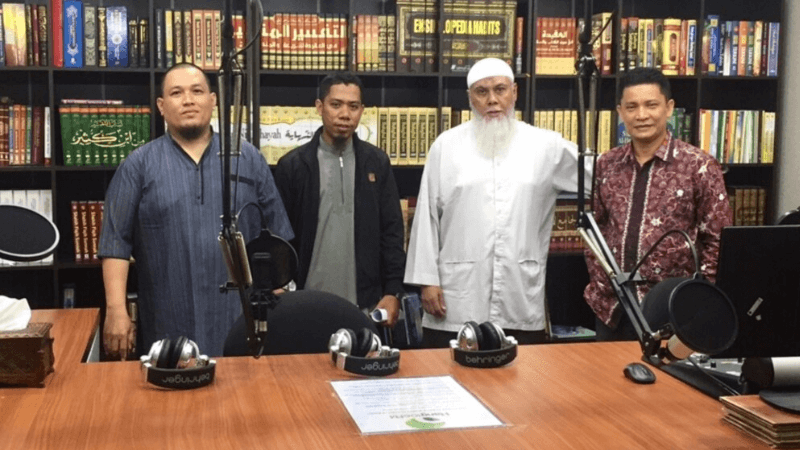
A notable shift in religious identity is unfolding in several Indonesian cities, with the emergence of "Urban Salafism" among the country's Muslim youth. This trend, particularly prominent in the capital Jakarta, is reshaping the perception of Salafism, traditionally associated with conservatism, by blending it with modern urban lifestyles.
Urban Muslim youth in Indonesia are increasingly turning to Urban Salafism as an alternative to mainstream Islamic organizations that are perceived as becoming more political. Over the past decade, Salafism has thrived in Indonesian cyberspace and urban centers, offering a spiritual alternative that resonates with the skepticism of the youth.
Historically stigmatized due to associations with conservatism and radicalization, Salafism in Indonesia has undergone a significant transformation. The movement has strategically adapted to appeal to urban millennials, distinguishing itself from its Middle Eastern counterparts by remaining detached from political institutions and debates on democracy.
Influence of Social Media and Celebrity Engagement:
Urban Salafism's success is attributed to its adept use of social media platforms, including YouTube, Instagram, Facebook, and podcasts, to disseminate religious content. Urban Salafis leverage these platforms to present a more modern and inclusive image of Salafism, attracting a younger audience seeking spiritual guidance and community.
Moreover, the movement has enlisted urban celebrities, artists, content producers, filmmakers, and businesspeople who engage in popular culture while adhering to Salafi principles. This fusion of traditional Islamic values with contemporary trends has been coined as 'popular culture da'wa,' allowing Salafism to appeal to a broader audience.
Transformation of Salafism's Image:
Once considered ideologically and culturally conservative, Salafism in Indonesia has evolved into a digitally savvy and modern movement. The adoption of urban fashion styles, language, and social media has reimagined Salafism's face from 'exclusivism' to 'inclusivism,' fostering a sense of belonging for urban youth.
Pengajian Sunnah, weekly Islamic recitations, has become a popular activity for millennials and Gen Zs in Jakarta. These gatherings, held in mosques, apartments, malls, and residences, attract thousands of participants. Notably, collaborations between Muslim millennials and Salafi scholars have contributed to the success of these events.
Concerns and Challenges:
While Urban Salafism has gained popularity, concerns linger. Critics argue that the curated online image often presents a simplified and sanitized version of Salafi doctrine, potentially masking the stricter interpretations and social restrictions inherent in the ideology.
There is also apprehension about the potential for extremism, as the puritanical nature of Salafism could create an environment conducive to radicalization. Additionally, the movement's reinforcement of conservative gender roles raises questions about its compatibility with promoting gender equality and women's empowerment.
Future Prospects:
The future trajectory of Urban Salafism remains uncertain, with questions about whether it represents a long-term shift in religious identity or a temporary trend. The movement's success will depend on its ability to adapt to the changing social and cultural landscape while addressing internal challenges related to intellectual depth, potential for extremism, and gender equality.
BOB Post