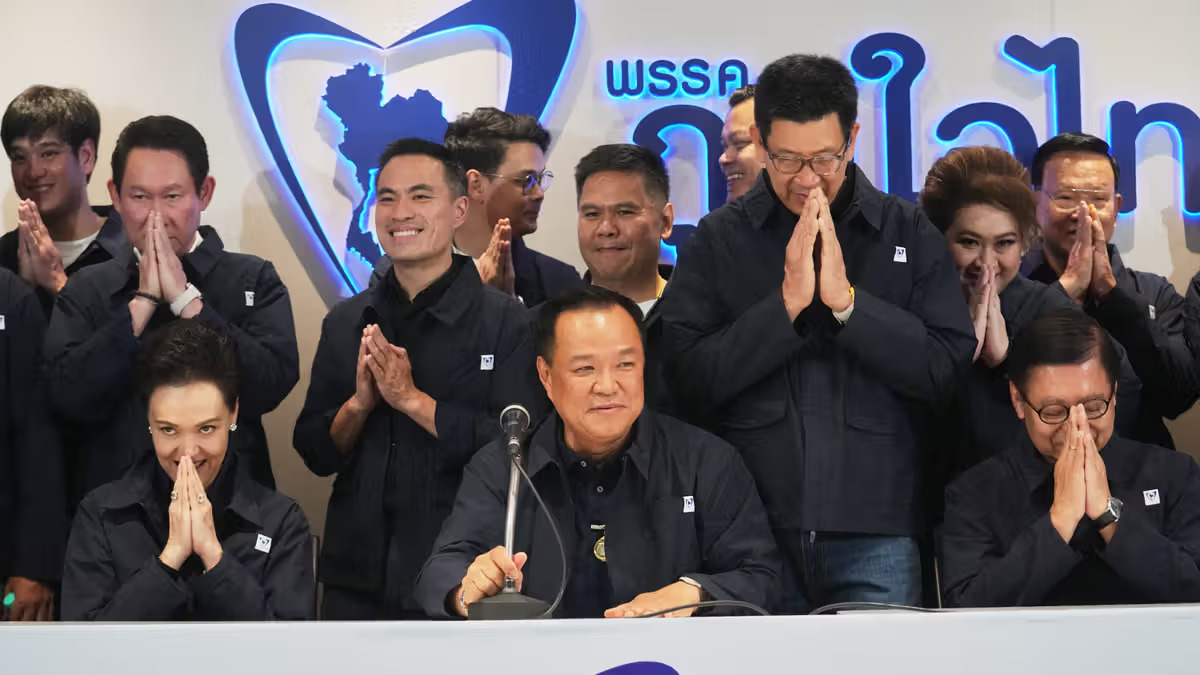
Thailand’s ruling Bhumjaithai Party, led by Prime Minister Anutin Charnvirakul, scored a decisive victory in Sunday’s (February 8) general election, strengthening prospects for a more stable governing coalition after years of political turbulence.
Preliminary results released by the Election Commission, with nearly 95% of polling stations counted, showed Bhumjaithai winning around 192 seats in the 500-member House of Representatives. The progressive People’s Party followed with 117 seats, while the once-dominant Pheu Thai Party trailed with 74 seats. Smaller parties collectively secured about 117 seats, according to a Reuters calculation of official data.
The election was called abruptly in mid-December amid a border standoff between Thailand and Cambodia. Political analysts said the timing appeared calculated, allowing Anutin to capitalize on rising nationalist sentiment during the crisis. According to CNBC, the snap election reflected a broader strategy by the conservative leadership to consolidate power while opposition forces were still regrouping.
Anutin assumed office after former prime minister Paetongtarn Shinawatra of the populist Pheu Thai Party was removed from power over her handling of the Cambodian crisis. Less than 100 days later, he dissolved parliament, a move that many viewed as risky but ultimately successful.
“Bhumjaithai’s victory today is a victory for all Thais, whether you voted for the Bhumjaithai Party or not,” Anutin told reporters after the results became clear. “We will do our utmost to serve the Thai people to the best of our ability.”
The scale of Bhumjaithai’s win now places Anutin in a strong position to form a governing coalition, potentially ending a prolonged period of fragile governments and policy deadlock in Southeast Asia’s second-largest economy.
BOB Post