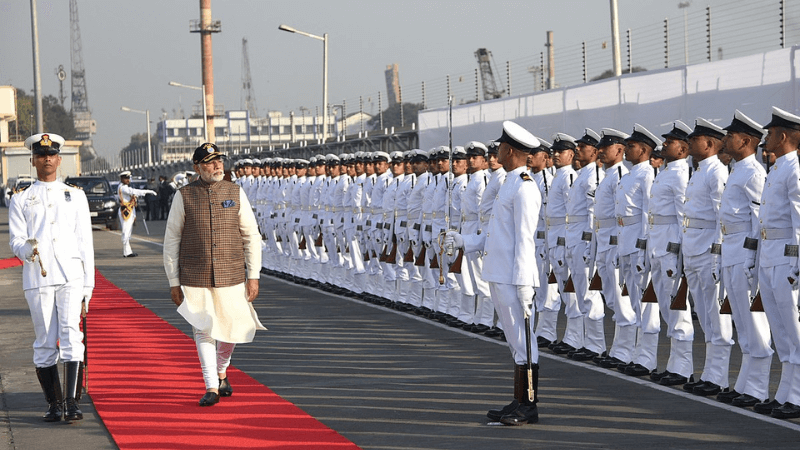
In a strategic move amidst the unfolding dynamics of great power competition in the Indo-Pacific, the Indian Navy has emerged as a proactive force, actively engaging through its TIDES (Technology Innovation for Defence Excellence) initiative. The TIDES initiative, geared towards fostering innovation and indigenization in the Indian defense industry, stands as a beacon of cutting-edge technological advancements, with a specific focus on enhancing naval capabilities. This expertly curated initiative has not only yielded significant results but also positioned the Indian Navy as a formidable player in the region.
Enhancing Naval Capabilities:
The core of the Indian Navy's engagement in the Indo-Pacific lies in promoting regional stability and security, a commitment underscored by the TIDES initiative. This forward-looking endeavor is dedicated to developing new technologies and capabilities that bolster the Navy's prowess, ensuring it remains at the forefront of safeguarding the region. Through sustained efforts, the Indian Navy aims to maintain its strategic edge and contribute actively to upholding maritime security.
Multifaceted Collaborations:
Beyond technological strides, the Indian Navy has embarked on a comprehensive approach to regional security. Actively participating in joint exercises, coordinated patrols, and robust information and intelligence sharing with neighboring nations, the Navy ensures the seas remain secure. These collaborative efforts reflect a commitment to shouldering the responsibility of ensuring regional safety in the face of evolving challenges.
Indo-Pacific Regional Dialogue (IPRD):
A pivotal component of the Indian Navy's diplomatic efforts is the Indo-Pacific Regional Dialogue (IPRD), an annual international conference that serves as an apex-level platform. Bringing together key stakeholders from across the region, the IPRD facilitates crucial discussions on maritime trends and issues. Designed to foster solution-oriented dialogues, the conference promotes deeper integration of security and defense-related science, technology, industrial bases, and supply chains³.
Admiral Hari Kumar's Perspective:
Admiral Hari Kumar, the Chief of the Indian Navy, articulates the Navy's strategic imperatives in the Indo-Pacific. Amidst the challenges posed by China's assertiveness in the South China Sea, the Admiral emphasizes the importance of adhering to a rules-based order and the significance of upholding global maritime rules, even in the face of territorial disputes. His vision extends to the need for another indigenous aircraft carrier to address the vastness of the Indian Ocean Region (IOR) and the expansive Indo-Pacific, underlining the imperative of sustained naval strength.
Coastal Security and Future Aspirations:
The Indian Navy's commitment to coastal security, fortified in the aftermath of the Mumbai terror attacks, reflects a decade and a half of corrective measures. Strengthening naval and Coast Guard capabilities, implementing advanced radar chains, and fostering collaborative efforts with coastal police stations underscore a comprehensive approach to security challenges. Admiral Hari Kumar advocates for vigilance and adaptability, acknowledging that security, while bolstered, cannot be foolproof.
The Indian Navy's dynamic engagement in the Indo-Pacific through initiatives like TIDES showcases a commitment to innovation, collaboration, and regional security. As geopolitical tides continue to shape the strategic landscape, the Indian Navy's multifaceted approach positions it as a key player in navigating the complexities of the Indo-Pacific. The TIDES initiative, coupled with strategic dialogues like the IPRD, signifies the Navy's commitment to leveraging technology, fostering regional partnerships, and contributing to a secure and stable maritime environment.
BOB Post