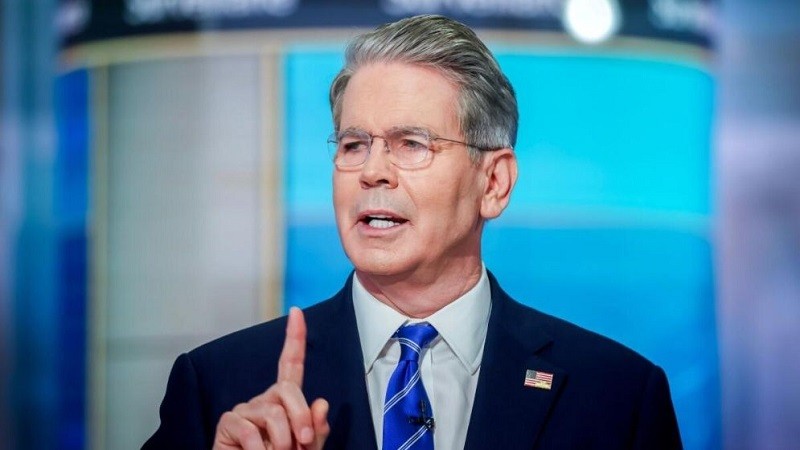
The United States is preparing what officials describe as its “biggest bombing campaign," targeting Iran’s missile infrastructure as the conflict in the Middle East intensifies.
US Treasury Secretary Scott Bessent said the operation would focus on destroying Iranian missile launchers and production facilities. Speaking in an interview with Fox Business host Larry Kudlow, Bessent said the planned strikes would deliver the most severe damage yet to Iran’s military capabilities.
“Tonight, will be our biggest bombing campaign, and we’ll do the most damage to the Iranian missile launchers and the factories that build the missiles,” he said, adding that US operations were already significantly degrading Iran’s military capacity.
Bessent argued that Iran had failed to achieve success on the battlefield and was now attempting to create economic disruption in response to the escalating conflict.
“Having not been able to succeed there militarily, they’re trying to create economic chaos, and I don’t think they’re going to be able to do it,” he said.

According to Anadolu Ajansı, the remarks come as Washington intensifies its military campaign aimed at crippling Iran’s missile infrastructure and strategic weapons production sites.
The US official also warned that tensions surrounding the Strait of Hormuz could disrupt global energy markets. Nearly 20% of the world’s crude oil and natural gas shipments pass through the narrow waterway, making it one of the most critical energy transit routes globally.
Bessent said that when the conflict began, insurance companies withdrew coverage for vessels operating in the Strait of Hormuz and surrounding Gulf waters, creating major concerns for shipping companies.
To address the issue, the US International Development Finance Corporation (DFC) has announced a program to provide up to $20 billion in insurance coverage for ships operating in the area.
“What this program will do is give shippers insurance, whether they are hauling oil, products or fertilizer,” Bessent said.
He added that naval escorts could also be provided if necessary to ensure safe passage through the strategic waterway.
“There is the willingness to go through the strait if we also provide a naval escort if needed,” he said.
US authorities are currently awaiting further security assessments from US Central Command (CENTCOM) regarding when maritime traffic can safely resume.
“We will wait to hear from CENTCOM in terms of when they think safe passage is possible,” Bessent said, adding that the situation could take one or two weeks to stabilize.
Regional tensions have surged since the United States and Israel launched large-scale attacks on Iran on Feb. 28, triggering a widening conflict across the Middle East. Iran has responded with missile and drone attacks targeting US bases, diplomatic facilities and Israeli cities, raising fears of further escalation.
BOB Post