Not long ago, a university degree in Bangladesh was almost an assurance of social mobility, job security, and respect. Families encouraged their children to pursue traditional professions like medicine, engineering, or government service, convinced these paths promised stability and success.
But times have changed, and so must our universities!
Perhaps the degrees are important, but the knowledge and skills that students have acquired in those four years are what truly counts with so much that is changing in the world today. With the onset of the Fourth and Fifth Industrial Revolutions occurring, shaping industries with technologies such as artificial intelligence (AI), blockchain, and Internet of Things (IoT), Bangladeshi universities must be asking one very important question: Are we preparing our graduates for what the future holds or just certifying them for the past?
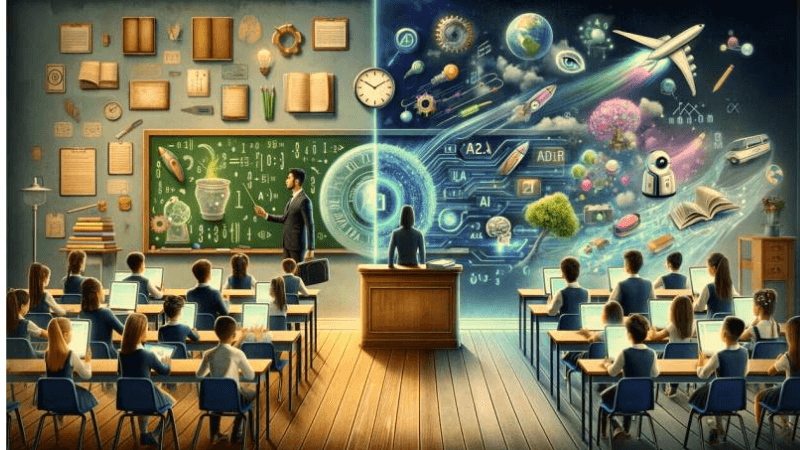
Bangladeshi universities stick with traditional teaching methods that depend on teacher lectures with unwavering repetition. The systems put more value on students who memorize information rather than think creatively. Modern workplace demands adjustability and thinking skills plus digital ability but our university graduates still lack these abilities when they enter jobs. However, technology eliminates positions that technology-illiterate people would have occupied in our present-day society. The digital economy needs graduates who can work with modern technology and solve difficult problems while easily exchanging information between different fields of knowledge and always seeking new learning opportunities. At present our educational system does not follow the present-day job market trends.

Furthermore, the educational needs of Bangladesh require universities to adopt Education 4.0 which combines technological infrastructure with practical learning systems and social responsibility at its core. The educational approach of Education 5.0 advances beyond its predecessors by highlighting both human innovation and holistic well-being and sustainability together with digital transformation. These concepts represent tools that serve as essential connections for universities. The higher education institutions face two major challenges to match their curriculum to on-the-job requirements while fostering innovation skills and establishing continuous educational experiences.
Institutions need to shift their function from permanent degree delivery to lifelong learning infrastructure development. The model where people learn only once to work throughout their lifetime no longer exists. Furthermore, institutions need to develop modular award programs together with industry stakeholders for high-in-demand fields such as data analytics, renewable energy and AI. Graduates who participate in these short micro-credentials and professional certifications develop new skills that help them adjust to market changes. Educational subscription services partnered with AI-driven career direction systems enable learners and alumni to maintain current and applicable knowledge.
The academic institutions of Bangladesh need to establish stronger alliances between academic institutions and the industry sector. Most educational programs exist without meaningful connection to what employers need in industry sectors. University graduates fail to secure matching positions because employers identify deficiencies in the skills they receive from education. Universities need joint innovation labs alongside internship programs that combine teaching staff from both academia and the industry sector for productive co-formatting of curriculums. The combination of universities and tech firms can create IoT applications for smart farming through systematic training of students for real-world agricultural challenges.
Most importantly, future-ready education means rethinking pedagogy. Project-based learning as well as design thinking and multidisciplinary problem-solving replace monotonous lectures within educational settings. Students from different academic departments should jointly solve entrepreneurial tasks as team members. Educational institutions must include entrepreneurship with resilience and adaptability as well as emotional intelligence in their educational curricula. Success in today's economy requires competencies in shaping uncertainty as strongly as possessing technical abilities.
Students need educational environments matching the digital elements found in modern world settings. Simulation platforms based on virtual reality enable students to practice medical operations and develop architectural designs. The combination of games within educational activities through interactive platforms boosts student focus while enhancing their ability to keep information. AI tutors working with intelligent learning platforms apply personalized content delivery based on what students need based on their individual learning speed and learning methods. Moreover, universities require leadership position in digital transformation because the Digital Bangladesh vision enters its maturation phase. The pandemic has proven that hybrid education along with online sessions will become permanent educational models.
A university must abandon its solitary ivory tower existence so it becomes an innovation center through community integration and global connections. Research should avoid working in academic isolation when it can contribute to solving actual issues such as climate change together with rural health challenges and fintech advancement and food security concerns. Open innovation ecosystems must emerge at universities through the combination of researchers along with students and entrepreneurs and governmental organizations and civil society members for innovative co-creation. Universities must expand their metrics to exceed journal citations through establish metrics which measure societal impact alongside startup creation and human life enhancement.
The present moment poses remarkable potential to Bangladesh due to its higher educational institutes along with its young demographic. The correct arrangement of our university system will make educational institutions active contributors to innovation along with job generation and comprehensive social advancement. The nation has already started to move forward with positive steps that include management of AI strategies by ICT divisions and the emergence of entrepreneurship cells within universities and a rise in international research collaboration programs. But the pace must accelerate. Piecemeal reforms are not enough. Higher education requires a visionary coordinated plan that will protect its future development.
The change required for universities needs to happen now rather than wait because it represents an urgent necessity. Successful implementation of Education 4.0 and 5.0 depends on remarkable leadership together with visionary policy creation alongside broad-based cooperative ventures between different sectors. Due to their current operation as degree production facilities universities need to transform into entities that launch innovative concepts and transformative initiatives. Student success involves both graduation certification and teaching them to prosper and lead for national advancement.
The question is no longer if change is needed, but how fast we can make it happen!

By - Dr. Mohammad Rashed Hasan Polas is an Assistant Professor and Researcher
at Sonargaon University (SU), Dhaka, Bangladesh. He writes about education, innovation, and sustainability.