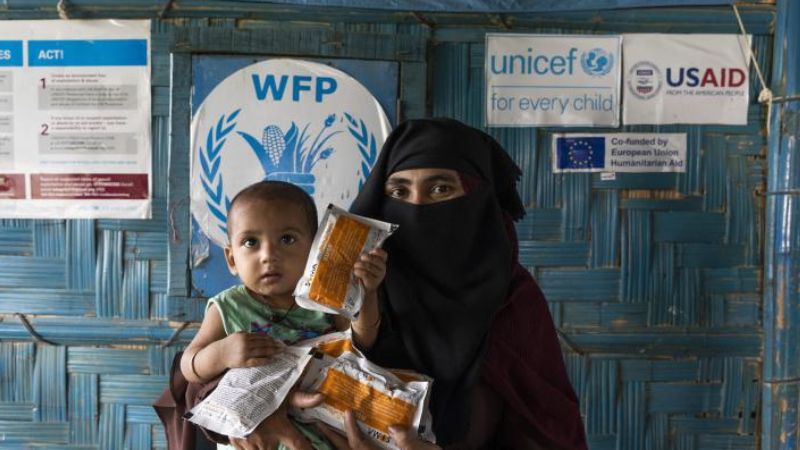
NGOs, rights activists, and Rohingya refugees have welcomed the United Nations World Food Program’s (WFP) decision to postpone a planned reduction in food aid, following fresh funding commitments that helped avert the crisis.
The WFP had earlier warned of cutting monthly rations from $12.50 per person to $6 due to funding shortages, but a recent pledge—led by the United States' $73 million aid package—ensured that food assistance for over 1 million Rohingya refugees in Bangladesh remains intact, Benar News reported on March 28.
“While April ration cuts are averted, given the immense needs, we still need continued funding support or we will soon run out of funds again,” said Kun Li, WFP’s head of communication and advocacy in Asia and the Pacific.
Under the updated aid plan, Rohingya refugees in Cox’s Bazar camps will receive $12, while those on Bhashan Char island will get $13 per person. The Bangladesh government has been encouraging relocation to Bhashan Char to ease overcrowding in the 33 camps of Cox’s Bazar, with 35,000 refugees having moved there since 2021, according to the UN High Commissioner for Refugees.
The postponement follows an urgent appeal from humanitarian groups, warning that reduced rations could accelerate malnutrition, disease, and negative coping mechanisms, including child marriage and human smuggling.
Mohammad Nur, a Rohingya community leader in Cox’s Bazar, expressed relief at the decision: “We were worried, but now relieved... How can a person live on only $6?”
The US remains the largest donor to the Rohingya crisis, having contributed $2.4 billion since 2017. US State Department spokesperson Tammy Bruce emphasized that continued international support is critical, urging other nations to step up aid efforts.
Refugee advocates warn that while immediate food aid has been secured, broader funding challenges persist, risking increased hunger, disease, and unnecessary deaths if long-term assistance is not sustained.
BOB Post