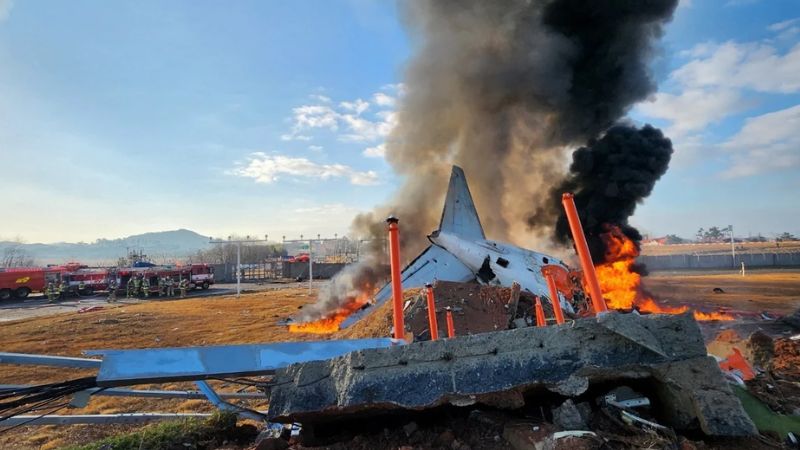
On Sunday morning (November 29), a Jeju Air flight from Bangkok to South Korea tragically crashed while landing at Muan International Airport, killing at least 85 people. Only two survivors—a passenger and a crew member—were recovered from the wreckage of the airplane, which carried 181 passengers and staff.
The crash occurred at 9:03 a.m. local time (1203 GMT), as Jeju Air Flight 2216 attempted to land in challenging weather conditions. The plane, a Boeing 737-8AS, reportedly suffered engine trouble shortly before landing, with video footage showing smoke trailing from the aircraft before it erupted in flames on the runway.
Rescue teams concentrated their efforts on evacuating passengers from the rear of the jet. Lee Hyeon-ji, a fire department response officer, cautioned that the death toll might increase due to critically injured passengers.
Authorities deployed 32 fire engines and numerous firefighters to the scene. The fire was extinguished within two hours, but search and rescue operations remain ongoing. The crash site is located in Muan County, approximately 288 kilometers southwest of Seoul.
Investigating the Cause
Initial reports suggest that a bird strike may have damaged the aircraft's landing gear, contributing to the crash. Adverse weather conditions during the landing attempt may have exacerbated the situation. A formal investigation by aviation authorities is underway to determine the exact cause.
Acting President Choi Sang-mok expressed deep condolences to the victims' families and called for all available resources to aid rescue and recovery efforts. Choi, who took office just days before the crash, held an emergency meeting with cabinet members to coordinate the response.
Jeju Air, one of South Korea’s largest low-cost carriers, issued a public apology, pledging full cooperation with authorities and support for the victims’ families. "We sincerely apologize for this devastating accident and will do everything in our power to assist the affected families," the airline stated.
This marks the first fatal accident in Jeju Air's history since its founding in 2005. South Korea's aviation industry is known for its strong safety record, with only minor incidents involving the airline, including a 2007 runway overrun in Busan that resulted in minor injuries.
Rescue operations and investigations continue, with officials prioritizing the recovery of victims and providing support to those affected by the disaster.
BOB Post