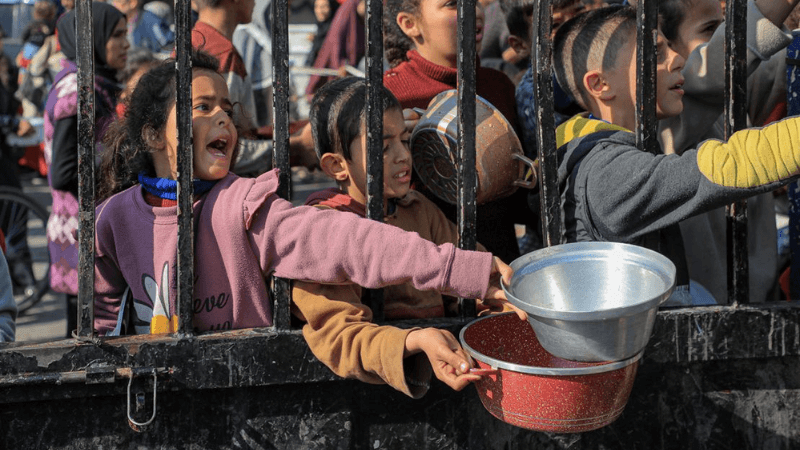
The US State Department issued a stark warning on Friday, indicating that famine conditions are likely present in at least some areas of northern Gaza, with other regions at risk of plunging into starvation. This statement comes just a day after the International Court of Justice directed Israel to permit food aid into the territory.
A State Department official informed Reuters, "While we can say with confidence that famine is a significant risk in the south and center but not present, in the north, it is both a risk and quite possibly is present in at least some areas."
The assessment from the US adds to a growing consensus that Israel's military actions in the Palestinian coastal enclave have exacerbated the humanitarian crisis. The number of aid distribution trucks in south and central Gaza has increased to nearly 200 per day, but further deliveries are deemed necessary.
"It has to be addressed by additional assistance coming and the right kind of assistance coming in," the official emphasized, stressing the urgent need to meet the nutritional needs of Gaza's population.
The Biden administration's promised maritime aid corridor, including the construction of a floating port, aims to expedite aid delivery, with completion expected by mid to late April. However, unless there is a significant increase in land-based deliveries via Israeli border crossings, time remains a critical factor in providing substantial aid.
Despite Israeli assertions of allowing adequate access to food and aid, last week, the main aid agency, UNRWA, reported being hindered from delivering aid.
The US warning aligns with a recent ruling by the International Court of Justice, which also highlighted the emergence of famine conditions in parts of Gaza. Additionally, the Integrated Food Security Phase Classification warned of imminent famine, likely to occur by May in northern Gaza and potentially spreading across the entire enclave by July.
These developments underscore the urgency of the situation, prompting renewed efforts for a Gaza ceasefire and increased humanitarian access. However, aid groups lament that on-the-ground realities have yet to reflect the resolutions passed by the UN Security Council, with only a fraction of the required supplies being allowed into Gaza since October.
BOB Post