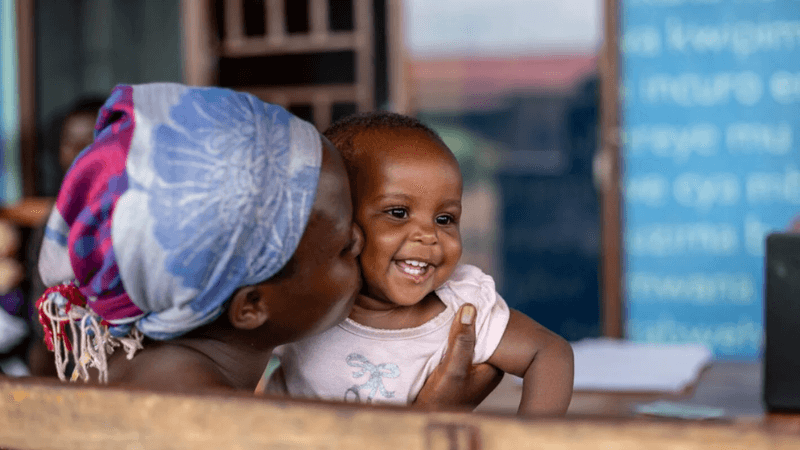
In 2022, the global child mortality rate saw a significant decline, reaching a historic low with an estimated 4.9 million children dying before their fifth birthday worldwide. This figure, released by the United Nations Inter-agency Group for Child Mortality Estimation (UN IGME), highlights progress in reducing child deaths. However, the staggering statistic still represents a loss of one child every six seconds, indicating the need for continued efforts to improve child health and well-being worldwide.
“Behind these numbers lie the stories of midwives and skilled health personnel helping mothers safely deliver their newborns, health workers vaccinating and protecting children against deadly diseases, and community health workers who make home visits to support families to ensure the right health and nutrition support for children,” said UNICEF Executive Director Catherine Russell. “Through decades of commitment by individuals, communities, and nations to reach children with low-cost, quality, and effective health services, we’ve shown that we have the knowledge and tools to save lives.”
The report highlights significant progress in reducing global under-5 mortality rates, which have declined by 51% since 2000. Countries like Cambodia, Malawi, Mongolia, and Rwanda have made remarkable strides, reducing under-5 mortality by over 75%. However, the findings underscore the ongoing challenge of preventing child and youth deaths, with 4.9 million children dying before age 5 and another 2.1 million aged 5-24. Most of these deaths occur in sub-Saharan Africa and Southern Asia due to preventable causes like preterm birth, birth complications, pneumonia, diarrhea, and malaria. Access to high-quality primary healthcare, including vaccinations, skilled birth attendance, breastfeeding support, and childhood illness diagnosis and treatment, could have averted many of these tragic losses.
“While there has been welcome progress, every year millions of families still suffer the devastating heartbreak of losing a child, often in the very first days after birth,” said WHO Director-General, Dr. Tedros Adhanom Ghebreyesus. “Where a child is born should not dictate whether they live or die. It is critical to improve access to quality health services for every woman and child, including during emergencies and in remote areas.”
Investing in education, job opportunities, and decent working conditions for health workers, including community health workers, is crucial to improving access to quality health services and saving children's lives from preventable deaths. Community health workers, as trusted members of their communities, play a vital role in providing life-saving health services such as vaccinations, testing, medicine for treatable illnesses, and nutrition support. To maximize their impact, they should be integrated into primary healthcare systems, fairly compensated, well-trained, and equipped with necessary resources. Studies indicate that implementing community-based child survival interventions in high-risk countries could substantially reduce child deaths, particularly by addressing leading causes like acute respiratory infections, diarrhea, and malaria, delivering essential care closer to home.
“This year’s report is an important milestone showing that fewer children die before their fifth birthday,” said Dr. Juan Pablo Uribe, Global Director for Health, Nutrition, and Population, World Bank & Director, Global Financing Facility for Women, Children, and Adolescents. “But this is simply not enough. We need to accelerate progress with more investments, collaboration, and focus to end preventable child deaths and honor our global commitment. We owe it to all children to ensure they have access to the same health care and opportunities, regardless of where they are born.”
Despite encouraging global progress in child survival, significant threats and inequities persist, posing risks to children's lives worldwide. These threats include growing inequality and economic instability, prolonged conflicts, the worsening impacts of climate change, and the lingering effects of the COVID-19 pandemic. These factors may stall or reverse the gains made, resulting in unnecessary loss of children's lives. Children from the poorest households face twice the risk of dying before age 5 compared to those from the wealthiest households, while those in fragile or conflict-affected areas are nearly three times more likely to die before their fifth birthday. Addressing these challenges is essential to ensuring the well-being and survival of children globally.
“The new estimates show that strengthening access to high-quality health care, especially around the time of birth, helps to reduce mortality among children under age 5,” said Li Junhua, United Nations Under-Secretary-General for Economic and Social Affairs. “While the milestones in the reduction of child mortality are important to track progress, they should also remind us that further efforts and investments are needed to reduce inequities and end preventable deaths among newborns, children, and youth worldwide.”
At current rates, 59 countries will miss the SDG under-5 mortality target, and 64 countries will fall short of the newborn mortality goal. That means an estimated 35 million children will die before reaching their fifth birthday by 2030—a death toll that will largely be borne by families in sub-Saharan Africa and Southern Asia or in low- and lower-middle-income countries.
The report also notes large gaps in data, particularly in sub-Saharan Africa and Southern Asia, where the mortality burden is high. Data and statistical systems must be improved to better track and monitor child survival and health, including indicators on mortality and health via household surveys, birth and death registration through Health Management Information Systems (HMIS), and Civil Registration and Vital Statistics (CRVS).
BOB Post