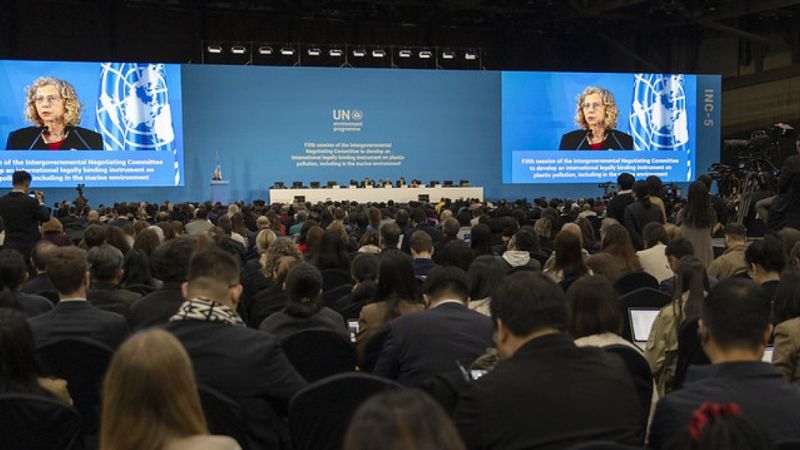
Last week, negotiations for a global plastic treaty in Busan ended without producing a legally binding agreement to combat plastic pollution. The contentious issue of capping global plastic production derailed progress, with oil-producing nations such as Saudi Arabia, Russia, Kuwait, and Iran opposing such measures. These nations pushed for a treaty focusing solely on waste management, leaving the production of plastics and the resulting microplastic leakage unchecked.
Microplastics: A Growing Threat in the Indo-Pacific
In the Indo-Pacific region, where seafood consumption is high, dietary microplastics pose a significant health risk. Microplastics, tiny fragments of degraded plastics less than 5 millimeters in size, enter waterways and accumulate in marine environments. This issue is particularly severe in the Philippines and Australia, both of which are major contributors to marine plastic pollution.
Plastic Pollution in Numbers: Philippines vs. Australia
Philippines: Leading the world in marine plastic pollution, the Philippines contributes 350,000 tons of plastic waste annually, 36% of the global total. Without intervention, this could rise to 11 million metric tons by 2060.
Australia: Annually generates 2.5 million tons of plastic waste, 1 million of which is single-use. With only 13% of this waste recycled, the remainder largely ends up polluting coastlines and marine environments.
Current National Policies and Their Shortcomings
Both nations have introduced measures to address the plastic crisis.
Philippines: The 2022 Extended Producer Responsibility (EPR) Act mandates progressive recovery targets, aiming to recover 80% of plastic waste by 2028.
Australia: The CSIRO targets an 80% reduction in new plastic waste by 2030, focusing on changing consumer behavior and improving waste systems.
While these policies are a step forward, they fail to address the accumulated "legacy" plastic pollution already present in marine ecosystems. This pollution, including degraded microplastics, continues to threaten marine life and human health.
Global Commitments Falling Short
At the international level, the Osaka Blue Ocean Vision commits G20 nations to achieving net zero marine plastic pollution by 2050 through a lifecycle approach. However, current efforts focus on managing waste rather than curbing production. With 15 million tons of plastic entering the oceans annually—set to triple by 2040—global agreements and targets risk being too little, too late.
Time for Innovative National Responses
The failure of the Busan talks underscores the need for national governments to take the lead. The Philippines and Australia, despite their efforts, still primarily emphasize waste management. Both nations must adopt a dual approach, integrating plastic production caps with waste reduction strategies. Immediate and ambitious action is needed to combat the growing threat of marine plastic pollution.
As global negotiations stall, the Indo-Pacific region must address the crisis head-on, protecting marine ecosystems and public health from the far-reaching impacts of unchecked plastic pollution.
-
Obaidur Chowdhury
BOB Post