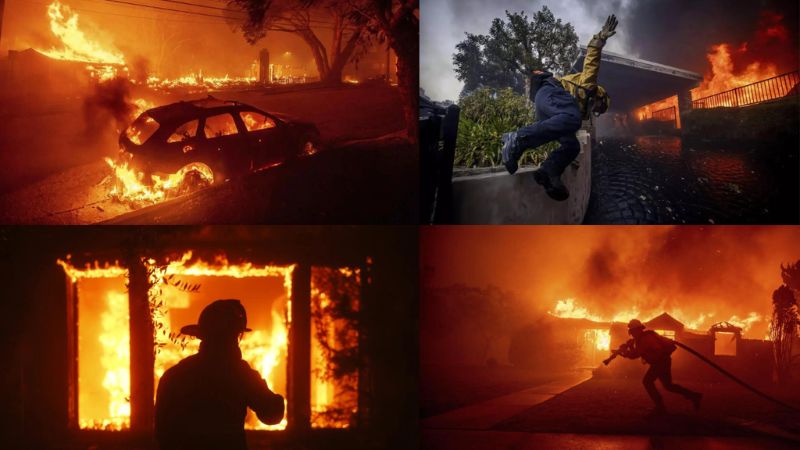
The devastating wildfires in Los Angeles are on track to rank among the most expensive in US history, with preliminary losses estimated to exceed $135 billion (£109.7 billion).
Private forecaster AccuWeather has projected total losses of $135 billion to $150 billion as the fires rage through some of the most valuable property in the country. The insurance industry is bracing for a significant blow, with analysts from firms like Morningstar and JP Morgan estimating insured losses of over $8 billion.
The Palisades and Eaton fires have caused massive destruction, with fire authorities reporting more than 5,300 structures destroyed by the Palisades blaze and over 5,000 by the Eaton fire.
"These fast-moving, wind-driven infernos have created one of the costliest wildfire disasters in modern US history," said Jonathan Porter, Chief Meteorologist at AccuWeather.
Historical Comparisons
The ongoing fires are drawing comparisons to the 2018 Camp Fire, which remains the most expensive wildfire disaster in terms of insured losses, costing $12.5 billion. That fire, near Paradise in northern California, claimed 85 lives and displaced over 50,000 people.
Due to the high property values in the affected areas, experts believe the current wildfires could rank among the top five costliest wildfires on record, according to insurance giant Aon. Including uninsured properties, total losses are expected to be even greater.
Long-Term Consequences
Even after the fires are contained, the aftermath is expected to have lasting impacts on health, tourism, and California's broader insurance market.
Denise Rappmund, a senior analyst at Moody's Ratings, warned of widespread repercussions. "Increased recovery costs will likely drive up premiums and may reduce property insurance availability," she said. She also noted potential long-term damage to property values and additional strain on public finances.
Insurance Industry in Crisis
The fires add pressure to an already strained insurance industry. With natural disasters such as wildfires, hurricanes, and floods becoming more frequent, insurers have been raising premiums or canceling coverage entirely in high-risk areas.
In California, homeowners have increasingly turned to state-backed insurance plans like the Fair Plan, which offers minimal coverage at higher costs. The number of policies under the Fair Plan has more than doubled since 2020, from roughly 200,000 to over 450,000 as of September 2023.
A Growing Challenge
As the wildfires continue to wreak havoc, the situation underscores the challenges of addressing climate-driven disasters and their economic fallout. With containment efforts still underway, the full scope of the destruction and its long-term effects on California's economy and infrastructure remain uncertain.
BOB Post