The Russian authorities announced on Saturday that they had detained four individuals suspected of orchestrating the devastating attack on a suburban Moscow concert venue, where at least 133 people lost their lives. This tragic incident, one of the deadliest terrorist attacks in Russia during President Vladimir V. Putin's tenure, has been claimed by the Islamic State in three separate messages since Friday.
Despite the ISIS claims, President Putin, in his initial public statement about the attack more than 19 hours after it occurred, did not directly address the extremist group's involvement or the identities of the attackers. Instead, he broadly attributed the incident to "international terrorism," while Russian state media began insinuating Ukrainian and Western involvement.
The Russian leader criticized Ukraine, asserting that the suspects were apprehended while en route to the Russian border, which he alleged had been facilitated from "the Ukrainian side." However, Kyiv has vehemently denied any involvement in the attack.
Russian state media largely downplayed or questioned the ISIS claim, focusing instead on implicating Ukraine. As of Saturday, the authorities had not released the identities of the alleged perpetrators. However, state media did broadcast what they described as interrogation footage of two suspects, one of whom claimed to have carried out the attack for financial gain after being recruited through the messaging app Telegram. All four suspects were reported to be foreign nationals, according to Russia's Interior Ministry.
During his address, President Putin declared Sunday a national day of mourning and vowed to bring those responsible for the attack to justice. He emphasized that all individuals involved in planning, organizing, or carrying out the heinous act would face severe punishment.
As the investigation unfolded, accounts of the harrowing ordeal emerged from survivors, describing scenes of chaos and terror as they fled the burning concert hall. The victims, many of whom had traveled from various parts of the country to attend the event, included individuals in their 40s, with some reports indicating that at least three children were among the casualties.
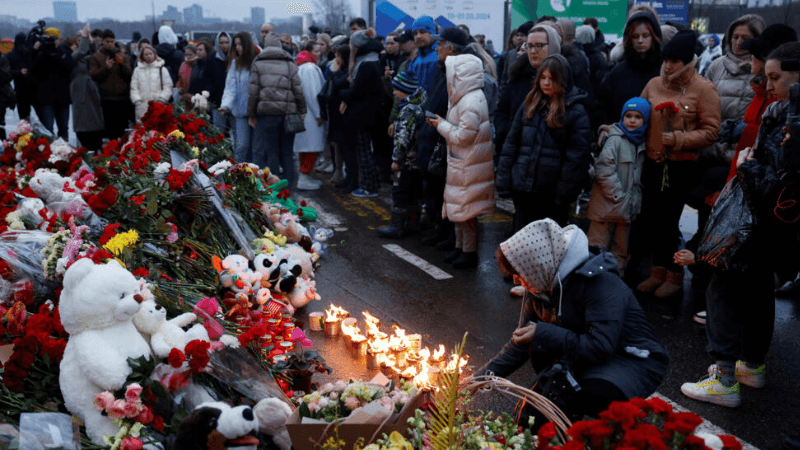
Despite the tragic outcome, acts of solidarity and support were evident across Russia, with citizens donating blood and paying tribute to the victims at makeshift memorials. However, authorities warned that the death toll could rise as emergency services continued their operations at the site of the attack.
In the aftermath of the tragedy, both domestic and international leaders condemned the attack and offered condolences to the Russian people. The United States, while expressing solidarity with Russia, reiterated the need for global cooperation in combating terrorism.
The attack, perpetrated by armed assailants who stormed the concert venue and set it ablaze, underscored a significant security lapse in Russia and raised questions about the country's preparedness to address extremist threats. The incident also prompted scrutiny of President Putin's focus on countering perceived Western threats, particularly amid Russia's ongoing conflict with Ukraine.
Despite attempts by Russian state media to deflect blame onto Ukraine, Ukrainian President Volodymyr Zelensky dismissed such accusations as baseless and criticized President Putin for diverting attention from Russia's internal security challenges.
The investigation into the attack continues, with authorities striving to uncover the full extent of the perpetrators' motives and accomplices. As Russia grapples with the aftermath of this tragedy, the nation mourns the loss of innocent lives and seeks justice for the victims and their families.
BOB Post