

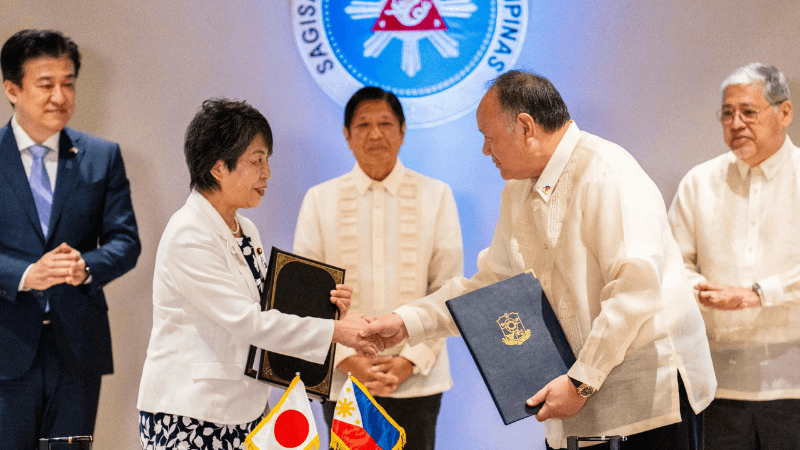
An agreement on reciprocal access (RAA) has been reached between Japan and the Philippines. The signing of this historic agreement by Japanese Foreign Minister Yoko Kamikawa and Philippine Defense Minister Gilberto Teodoro permits the use of force on each other's territory. According to presidential communications secretary Cheloy Garafil, Philippine President Ferdinand Marcos Jr. attended the signing ceremony in Manila.
By making it easier for visiting troops to enter the country with their equipment and personnel from abroad, the pact aims to promote military cooperation. This RAA, the first of its sort that Japan has signed in Asia, will take effect after being ratified by the legislatures of both nations.
Strategic counterweight to Chinese dominance in the South China Sea might come from a Japanese military presence in the Philippines. The Philippines and other countries in Southeast Asia are at odds with Beijing's extensive maritime claims in this area. A global court said in 2016 that China's allegations lacked legal support, a ruling Beijing has continuously denied.
Both the Philippines and Japan, key Asian allies of the United States, have taken a firm stance against what they perceive as aggressive actions by Chinese vessels amidst longstanding maritime disputes. While Japan does not have claims in the South China Sea, it faces its own maritime disputes with China in the East China Sea, leading to repeated standoffs.
In a notable shift from its post-World War II pacifism, Japan announced its largest military buildup in December 2023. This move underscores Tokyo's efforts to strengthen defense ties with other nations due to its concerns over China's actions, including pressure on Taiwan, navigation freedom, and trade disputes. Japan has backed the Philippines' stance in the South China Sea and has expressed serious concern over China's activities, including incidents damaging Philippine vessels and injuring a Filipino sailor.
The Philippines maintains a Visiting Forces Agreement (VFA) with the United States and Australia. Japan, which hosts the largest concentration of US forces abroad, has similar RAA deals with Australia and Britain and is negotiating another with France. As part of its Official Security Assistance program, Japan has agreed to provide the Philippines with coastal surveillance radars, aiming to enhance the deterrence capabilities of partner countries. However, Japan's military aid remains restricted by a self-imposed ban on lethal equipment exports.