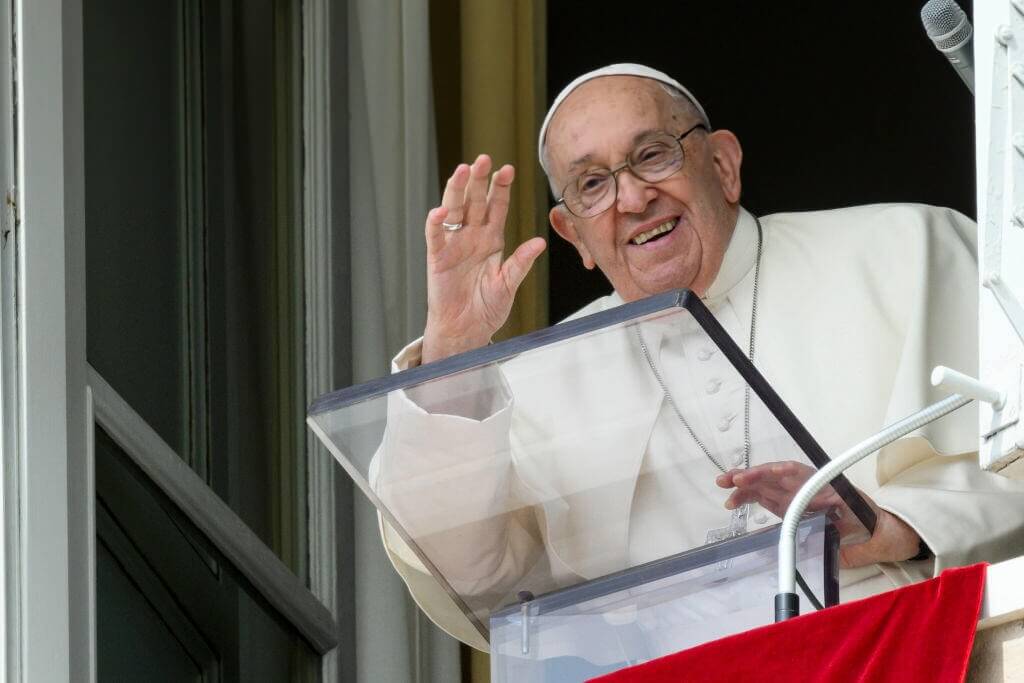
The Vatican has confirmed the death of Pope Francis, the 266th pontiff of the Roman Catholic Church, who passed away early Monday morning at the age of 88.
The announcement was made at 9:45 AM by Cardinal Kevin Farrell, Camerlengo of the Apostolic Chamber, from the Casa Santa Marta — the late pontiff’s longtime residence inside Vatican City.
“Dearest brothers and sisters, with deep sorrow I must announce the death of our Holy Father Francis,” Cardinal Farrell said. “At 7:35 this morning, the Bishop of Rome, Francis, returned to the house of the Father.”
The Pope had been battling recurring respiratory complications for years, worsened by a partial lung removal in his youth. His condition sharply deteriorated in mid-February following a hospital admission for bronchitis, which later developed into bilateral pneumonia.
After 38 days at the Agostino Gemelli Polyclinic in Rome, Pope Francis was discharged to continue his recovery at home. Despite signs of resilience, his health took a final turn in recent days.
Born Jorge Mario Bergoglio in Buenos Aires, Argentina, Pope Francis made history in 2013 as the first pope from Latin America, the first Jesuit to be elected, and the first to adopt the name of St. Francis of Assisi — a choice that would define his papacy.
He quickly became a global spiritual figurehead known for disarming humility, a sharp moral compass, and a relentless call to protect the vulnerable — from migrants and the poor to the environment itself.
His hallmark phrase, “a Church that is poor and for the poor,” was not just rhetoric. It was lived: in his reforms, his global diplomacy, and his personal refusal to embrace the pomp traditionally associated with the papacy.
The Pope’s death triggers a centuries-old set of Vatican protocols. But true to his character, Francis had already taken steps to simplify his own farewell. In April 2024, he approved a revised edition of the Ordo Exsequiarum Romani Pontificis, modernizing the rites for a papal funeral.
Among the changes: the confirmation of death now occurs in a chapel, not in the room of passing, and the body is placed directly into the coffin — symbolizing dignity in death and a return to liturgical roots.
“The renewed rite,” explained Archbishop Diego Ravelli, Master of Apostolic Ceremonies, “seeks to emphasise that the funeral of the Roman Pontiff is that of a pastor and disciple of Christ, not of a powerful person of this world.”
No official date has yet been set for the funeral Mass, though Vatican sources suggest it will reflect the late Pope’s request for modesty and scriptural depth rather than pageantry.
Across the globe, messages of condolence have begun pouring in from world leaders, religious figures, and communities touched by Francis’ bold message of mercy and human dignity.
In a time marked by division, Pope Francis was often seen as a voice of conscience — speaking up for refugees, for climate justice, and for the forgotten. He once described the Church as “a field hospital after battle.” Many will remember him as the doctor on call.
As the bells of St. Peter’s Basilica toll, and the faithful gather in candlelit vigils, one thing is clear: the world did not just lose a pope — it lost a prophetic witness.
Pope Francis has now gone to his final rest, but the work he began — the wounds he touched — remain, awaiting the next hands to heal.
Bob post