As dawn broke over the Eternal City, a rare serenity enveloped the Vatican’s surrounding streets. Just hours before the inaugural Mass of Pope Leo XIV, the usual bustle of pilgrim-packed piazzas gave way to an eerie quiet — a silence steeped not in apathy, but in solemn anticipation.
By 8am, the tide turned. Near Piazza Pia, hundreds funneled through security checkpoints, voices mingling in French, uniforms of Civil Protection and the Red Cross punctuating the growing crowd. “It’s like a bottleneck. Everyone arrived at once,” a volunteer explained, recalling the more chaotic scenes during Pope Francis’s farewell just three weeks earlier.

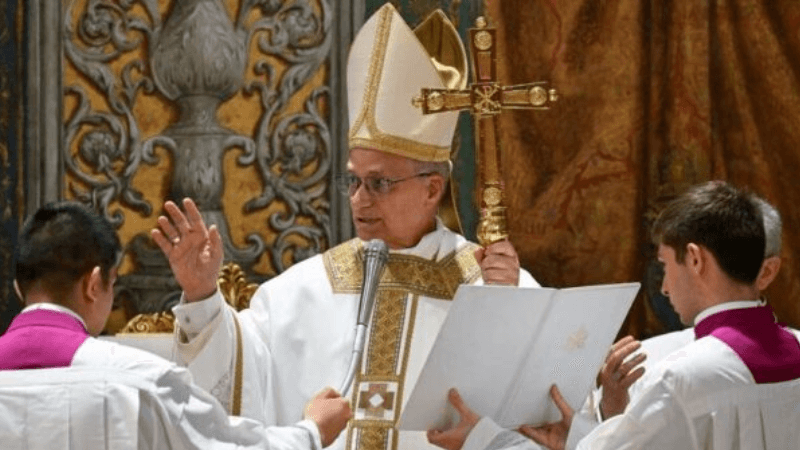
Today, however, the atmosphere was different. If Pope Francis's passing had drawn a river of tears and devotion, today brought a sunrise of hope — the beginning of a new pontificate led by a pope already drawing comparisons to his predecessor. More than 200,000 faithful filled St. Peter’s Square to witness the solemn inauguration of Pope Leo XIV, formerly Cardinal Robert Prevost, whose voice and vision now lead the global Catholic Church.
“During the Mass, I felt the strong spiritual presence of Pope Francis, who accompanies us from Heaven,” Pope Leo XIV said in his Regina Caeli address, invoking his predecessor’s legacy as a bridge-builder and peace-seeker. The crowd responded with prolonged applause at the mention of Francis — a testimony to the love he still commands.

But attention quickly shifted to the new pontiff, who emerged on Via della Conciliazione in the popemobile for the first time. Chants of "Viva il Papa!" filled the air as he greeted pilgrims from around the world, including groups from East Timor, Brazil, Nigeria, and especially Peru — where he once served as bishop in the beloved diocese of Chiclayo.
The Mass, though deeply liturgical, did not shy away from the cries of a fractured world. In his first major public address, Pope Leo XIV spotlighted three global crises: Gaza, Myanmar, and Ukraine. His words were measured but potent.
“In Gaza, children, families, and elderly survivors are being driven to starvation,” he said, referencing Israel’s blockade on humanitarian aid during its Operation “Gideon’s Chariots.” His concern extended to Myanmar, where a faltering ceasefire has yielded more bloodshed, and to Ukraine, which he called “the tormented land still awaiting a just and lasting peace.”
Ukrainian President Volodymyr Zelensky, present at the Mass, later wrote: “We appreciate the support for Ukraine and the clear voice raised in defence of peace.” With tensions between Moscow and Kyiv unresolved, attention now turns to the Vatican’s possible role as a neutral site for peace negotiations — a proposal quietly raised during U.S. Secretary of State Marco Rubio’s meeting with Vatican envoy Cardinal Zuppi.

Amid the ritual and reverence, a clear message has emerged from the heart of Catholicism: spiritual leadership is not a passive presence in geopolitical affairs — it is an essential one.
In a world increasingly disillusioned with traditional diplomacy and polarised by war, the Vatican offers something few others can: moral authority unburdened by territorial ambition. Pope Leo XIV’s address was more than ceremonial; it was a reminder that spiritual voices can, and must, mediate the world’s darkest conflicts.
The Holy See, with its global network, diplomatic neutrality, and moral clout, stands uniquely positioned to act as a broker for peace. Not as a political player, but as a spiritual one — grounded in the belief that the dignity of every human life must guide negotiations, not just military strategy or economic interest.
As sunlight bathed St. Peter’s Square and the faithful dispersed with joy and hope, a quiet truth echoed among the ancient stones: in times of division, the world may yet turn to a shepherd whose staff is not a sword, but a symbol of unity.
Bob post