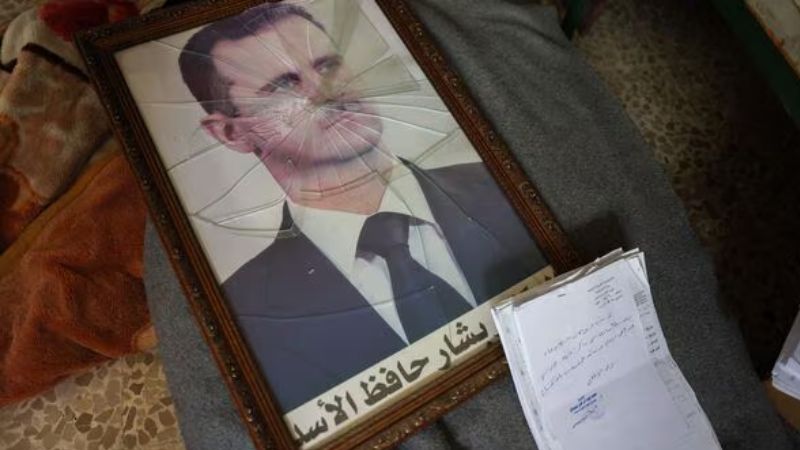
Syrian President Bashar al-Assad has reportedly fled the country after a swift offensive by the Islamist-led rebel coalition Hayat Tahrir al-Sham (HTS). The group announced its forces entered Damascus on Sunday (November 8). Residents in the capital described heavy gunfire and widespread panic with traffic jams and long queues at ATMs as people rushed to secure supplies.
The Syrian Observatory for Human Rights (SOHR) claimed Assad left via Damascus International Airport as security forces vacated the area. Though these reports remain unverified. Meanwhile, HTS fighters have reportedly stormed Sednaya prison, known for its grim reputation under Assad's rule, freeing thousands of detainees. In a symbolic act, protesters in a Damascus suburb toppled a statue of Assad’s father, the late Hafez al-Assad.
HTS began its offensive on November 27, swiftly capturing Homs, a strategic city 140 kilometers north of the capital. The Syrian government initially denied the rebels’ advances, claiming the situation in Homs and Damascus remained secure. However, rebel forces have seized control of southern Daraa province, the birthplace of the 2011 uprising and have established control over key areas in Sweida and Quneitra. Observers reported Syrian troops retreating to Iraq, with 2,000 soldiers, including officers, crossing the border.
Hezbollah is also reportedly repositioning its fighters. Some units have withdrawn to Latakia in Syria, while others have returned to Lebanon. The Lebanese group has supported Assad’s government throughout the conflict but now appears to be scaling back its involvement.
The ongoing violence has resulted in over 826 deaths, including 111 civilians, and displaced at least 370,000 people, according to the SOHR. The United Nations has called for urgent political talks to implement a 2015 resolution aimed at finding a negotiated settlement to the conflict.
International responses to the developments remain mixed. The United States and Russia, key stakeholders in Syria, have issued calls for stability but differ on their approaches to addressing HTS’s rapid advances. Turkey has expressed hope for an end to the bloodshed, reflecting the broader exhaustion of a nation that has endured over a decade of war.
As the Assad regime loses its grip on power, Syria stands on the brink of a potentially transformative moment. The capital’s fall to rebel forces could mark a turning point in the protracted conflict, with far-reaching implications for the country and the region.
BOB Post