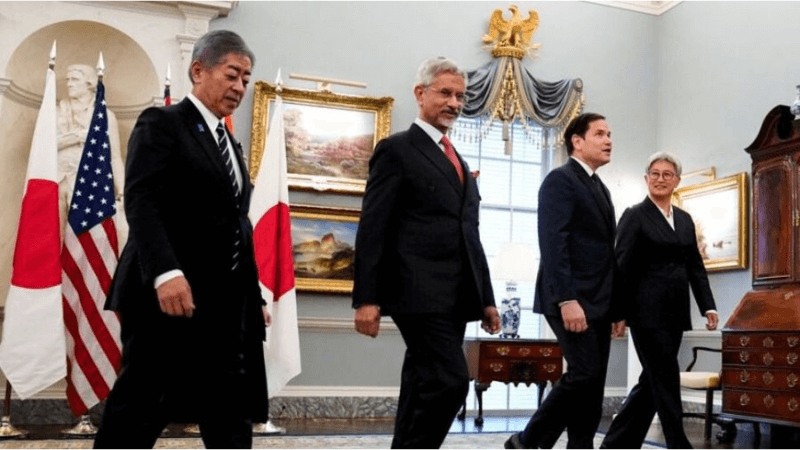
The much-anticipated Quad summit, comprising the United States, India, Japan, and Australia, was held in Washington on Tuesday, aimed at reinforcing a strategic alliance to counterbalance China’s growing influence in the Indo-Pacific. However, beneath the public show of unity, tensions, mistrust, and strategic inconsistencies among member states have cast a shadow over the bloc’s coherence and long-term effectiveness.
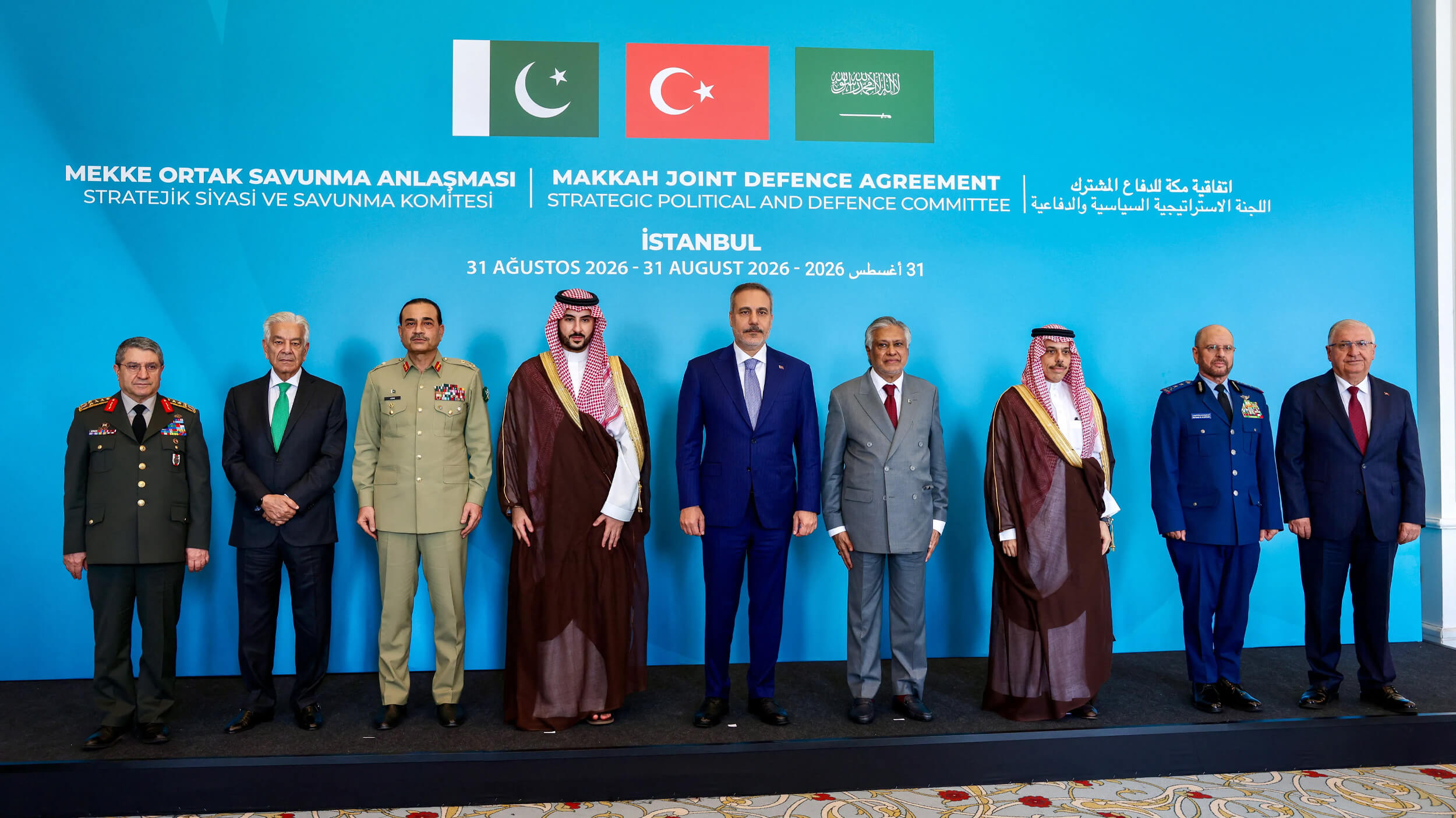
U.S. Secretary of State Marco Rubio hosted the meeting alongside Indian External Affairs Minister S. Jaishankar, Japan’s Takeshi Iwaya, and Australia’s Penny Wong. While official statements emphasized mutual commitments to sovereignty, maritime security, and supply chain resilience, diplomatic friction between the four nations loomed large.
Internal Discord Weakens External Message

Despite shared concerns over China’s assertiveness in the South China Sea and its Belt and Road Initiative, cracks within the Quad alliance have become increasingly visible.
Japan, in a last-minute move, suspended its annual defense dialogue with the U.S., citing concerns over Washington’s escalating defense spending. The abrupt cancellation was seen as a clear signal of Tokyo’s unease with the financial burden of strategic alignment.
India, too, has expressed frustration particularly with President Donald Trump’s recent claim of having "intervened" in averting a war between India and Pakistan. New Delhi dismissed the statement as “political theatrics,” accusing Washington of making unfounded claims on a highly sensitive issue.

Australia, meanwhile, has grown wary over the uncertain future of the AUKUS submarine deal. Senior Pentagon official Elbridge Colby’s call for a “reassessment” of the project has raised concerns in Canberra, already grappling with trade tensions and defense realignments. Former Australian ambassador Arthur Sinodinos remarked that while Washington may view the summit as a platform for unified strategic messaging, internal disagreements are “diluting its effectiveness.”
Pledges vs. Practical Progress
U.S. State Department spokesperson Tammy Bruce reiterated the summit's goals: reaffirming a free and open Indo-Pacific, strengthening sovereign security, and fortifying global supply chains. But analysts caution that symbolic commitments cannot substitute for coordinated action, especially in an era of multipolar power shifts.
Jaishankar, speaking in New York on the eve of the summit, acknowledged the complexities: “No relationship is without friction. The key is how we navigate those challenges and move forward.”
Though envisioned as a counterweight to Beijing’s regional ambitions, the Quad’s internal friction may undermine its strategic clarity. Reuters reports that the group's collective declarations lack teeth amid underlying policy divergence and diplomatic mistrust-providing Beijing with a subtle advantage on the geopolitical chessboard.
As the global balance of power continues to shift, the strength of such alliances will increasingly depend not only on external threats but also on the internal resolve to present a genuinely united front.
BOB Post