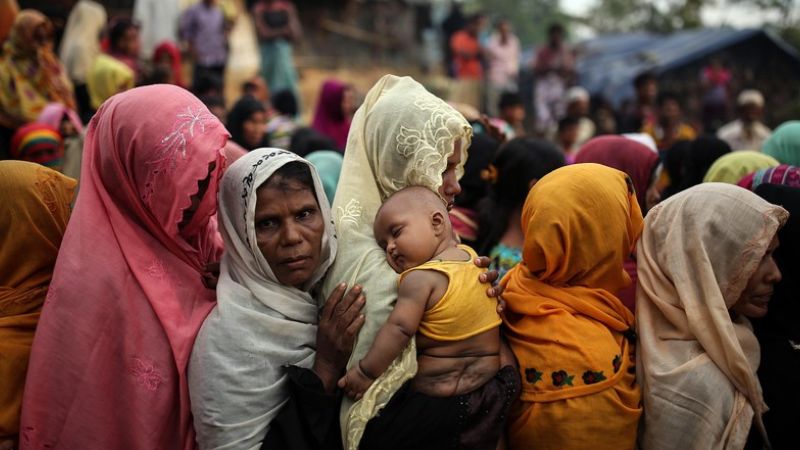
Despite the lofty promises and diplomatic declarations of regional cooperation at the recent BIMSTEC summit, the fate of the Rohingya community remains in a political and humanitarian deadlock. As the summit concluded with discussions on connectivity, trade, and regional security, the enduring crisis of over one million stateless Rohingya, many languishing in refugee camps in Bangladesh, received little more than passing mentions.
The question now arises—can the Rohingya ever see justice, or even a safe return to their homeland in Myanmar’s Rakhine State (historically known as Arakan), without the active collaboration of the Arakan Army, the dominant ethnic armed group in the region?
Global Apathy or Powerless Sympathy?
Over the years, the global community has expressed concern—voicing outrage at the atrocities, passing resolutions at the UN, and pledging humanitarian aid. Yet these gestures have not translated into any meaningful roadmap for repatriation or justice. With geopolitical interests often overshadowing human rights, major powers remain hesitant to exert the kind of pressure on Myanmar’s military regime that could shift the balance.
Meanwhile, countries like Bangladesh bear the brunt of hosting the displaced population, with limited international support and no clear end in sight.
The Arakan Army Factor
As the political situation in Myanmar continues to fragment following the 2021 military coup, control over Rakhine State has increasingly shifted toward the Arakan Army (AA), which seeks greater autonomy for the ethnic Rakhine people. The AA has maintained a complicated stance on the Rohingya issue—occasionally signaling openness to coexistence, but often remaining noncommittal.
Without the AA's explicit endorsement and cooperation, any large-scale, dignified return of the Rohingya to their homeland remains implausible. The central military junta, deeply distrusted by both the Rohingya and the international community, lacks both legitimacy and practical control in many parts of Rakhine.
A Path Forward?
Justice for the Rohingya is not just a question of repatriation—it involves citizenship, reparations, security guarantees, and accountability for past crimes. While these issues lie at the heart of any sustainable solution, they remain absent from most diplomatic agendas.
To chart a viable path forward, international actors may need to move beyond traditional state-to-state diplomacy. Engaging the Arakan Army, supporting grassroots reconciliation, and pressuring Naypyidaw through coordinated sanctions and legal actions could mark the beginning of a long and necessary journey.
As the echoes of the BIMSTEC summit fade, the Rohingya continue to wait—for justice, for home, and for a world that sees them not as a burden, but as a people denied their rightful place.
BOB Post