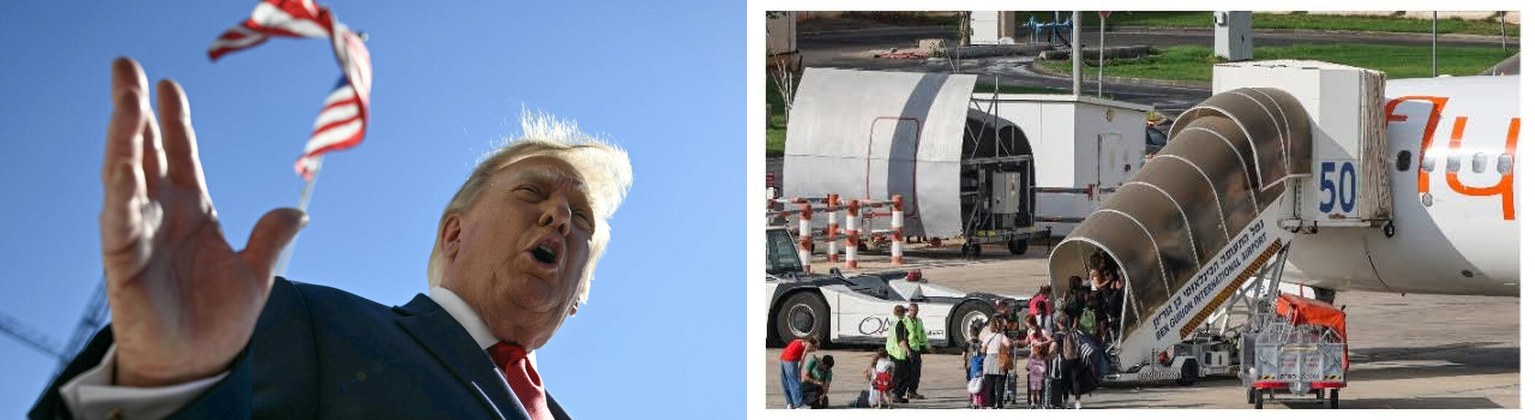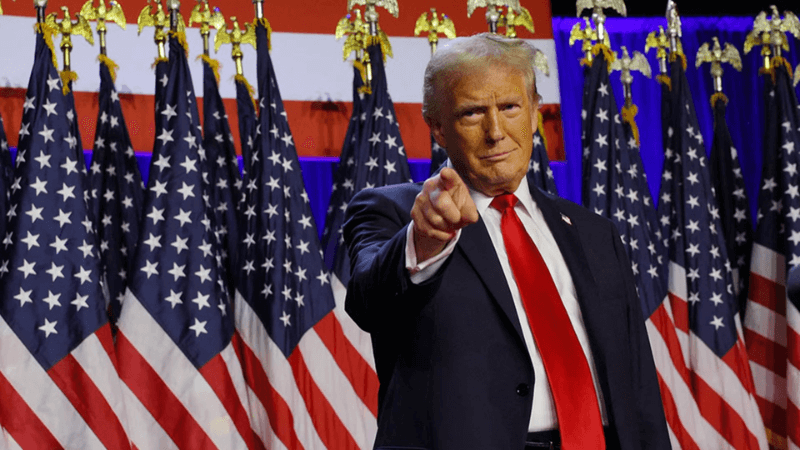
The deportation of Indian nationals from the United States has witnessed a sharp surge under former President Donald Trump’s renewed influence over American immigration policy, raising concerns in New Delhi over the future of bilateral cooperation.
According to a report cited by The Times of India, the daily average of Indians being deported from the U.S. has increased to eight per day under Trump’s leadership more than double the figure during President Joe Biden’s administration, when it stood at just three. This spike is viewed as a reflection of Trump’s hardline stance on immigration and his revived “America First” doctrine, which has returned to the forefront of U.S. policy since his re-election campaign gained momentum.

Analysts say that this deportation trend is not an isolated development. It is part of a broader pattern of actions targeting Indian interests ranging from curbs on skilled-worker visas, particularly the H-1B program that overwhelmingly benefits Indian IT professionals, to repeated tariff threats on Indian exports.
“Trump’s actions are sending a message: allies like India can’t expect special treatment,” said a U.S.-based South Asia analyst. “It is strategic unpredictability dressed as nationalism.”
While Trump has publicly hailed India as a key partner in the Indo-Pacific, his administration has quietly imposed higher duties on Indian pharmaceutical products, textiles, and steel, disproportionately impacting India's small and medium enterprises (SMEs) and export-oriented businesses. Additionally, U.S. trade benefits under the Generalized System of Preferences (GSP)—suspended during Trump’s previous term—have not been restored, despite repeated diplomatic overtures from New Delhi.

Economic and Diplomatic Fallout
The consequences for India are mounting. The increase in deportations, particularly of students and temporary workers, not only disrupts families but also discourages new talent from pursuing opportunities in the U.S., a country once viewed as a reliable destination for education and employment.
Trade bodies have expressed concern that the combined impact of deportations, visa delays, and tariffs could shrink India’s IT and services exports to the U.S. currently its largest market by up to 15% in the next fiscal year. Many Indian tech companies have already begun shifting their focus to Canada and the Gulf as alternative hubs.
Diplomatically, Indian officials remain tight-lipped, but insiders confirm that New Delhi has registered “strong reservations” with Washington over what it sees as a targeted dismantling of people-to-people ties.
Warning Signs and a Strategic Dilemma
Trump’s campaign rhetoric has grown increasingly hostile toward immigrants, often conflating legal and undocumented migration. This has cast a shadow over Indian diaspora communities, which have historically served as bridges between the two nations.
For India, the choice is becoming stark: continue aligning with Washington in strategic areas like defense and the Indo-Pacific, or push back more openly against policies that treat Indian nationals as expendable.
“The strategic convergence with the U.S. can’t be one-sided,” said a former Indian diplomat. “If the human and economic costs continue to rise, public and political pressure may force New Delhi to re-evaluate the equation.”
As Trump eyes a return to power, New Delhi is now faced with a sobering reality, a friendly handshake in public may no longer guarantee a stable partnership behind closed doors.
BOB Post