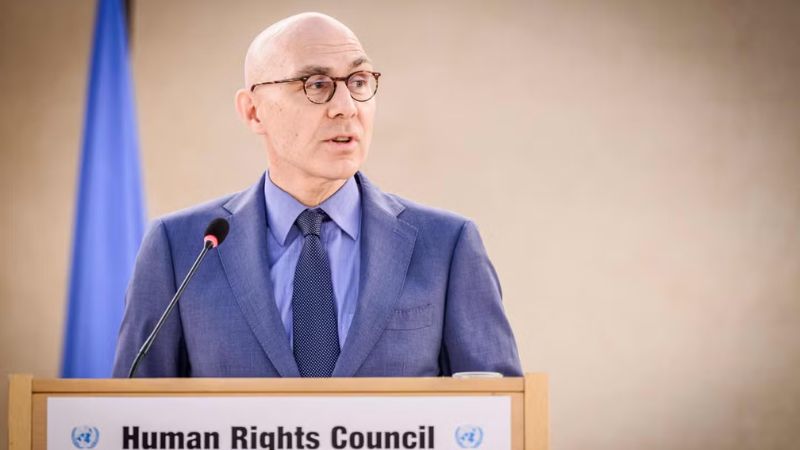
The United Nations High Commissioner for Human Rights, Volker Türk, has strongly criticized Meta’s recent decision to discontinue its fact-checking program, citing concerns over the spread of harmful online content and its real-world consequences. Türk emphasized that regulating harmful content is not censorship but a necessary measure to protect vulnerable voices and ensure safer online spaces.
Türk: Regulation is Essential, Not Censorship
In a statement posted on X (formerly Twitter), Türk highlighted the dangers of unchecked online hate speech, which he said can lead to tangible harm. “Allowing hate speech and harmful content online has real-world consequences. Regulating this content is not censorship,” he wrote.
Expanding on the issue in a LinkedIn post, Türk warned that unregulated digital spaces silence marginalized voices while enabling hate speech, which limits free expression and undermines public safety. “Allowing hatred online limits free expression and may result in real-world harms,” he said.
Türk called for greater accountability and governance in the digital sphere, urging social media platforms to align their practices with human rights principles. “This safeguard public discourse, builds trust, and protects the dignity of all,” he concluded.
UN and WHO Voice Commitment to Evidence-Based Information
The UN’s Michele Zaccheo, Chief of TV, Radio, and Webcast, stressed the importance of fact-based content on social media. “It remains crucial for us to be present with fact-based information,” he said, reaffirming the UN’s commitment to providing evidence-based resources online. Similarly, the World Health Organization (WHO) reiterated its dedication to delivering science-based health information across digital platforms.
Fact-Checking Network Rebukes Meta’s Rationale
Meta CEO Mark Zuckerberg announced last week that the company would end its fact-checking initiative in the United States, claiming it had stifled free speech and led to excessive censorship. Zuckerberg argued that the program failed to effectively address misinformation and that the company needed to refocus on its “roots around free expression.”
The International Fact-Checking Network (IFCN) rejected Zuckerberg’s claims, labeling them “false.” Angie Drobnic Holan, IFCN’s chief, argued that fact-checking journalism adds crucial context to contentious claims and debunks misinformation without censoring content. “The fact-checkers used by Meta follow a Code of Principles requiring nonpartisanship and transparency,” she stated.
Evidence Highlights the Role of Fact-Checking
Data from 2023 underscores the impact of Meta’s fact-checking efforts. In Australia alone, the program flagged warnings on over 9.2 million pieces of content on Facebook and over 510,000 posts on Instagram, providing context and debunking misinformation.
Concerns Over Meta’s Move
Critics argue that Meta’s decision to discontinue the program could exacerbate the spread of misinformation and hate speech. With significant potential to influence public discourse, social media platforms bear a responsibility to balance free expression with the prevention of harm, experts say.
The UN and IFCN have called for continued vigilance in combating online misinformation, emphasizing that effective regulation is a cornerstone of safe and inclusive digital spaces.
BOB Post