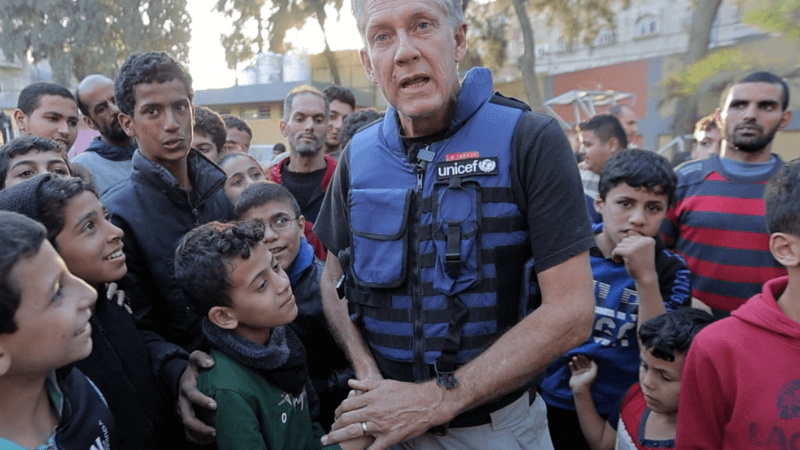
UNICEF spokesman James Elder describes the situation in Gaza as a "war on children," emphasizing its devastating impact on them. He visited Gaza for the second time since the Oct. 7 attacks."a lot of desperation, a lot of exhaustion among people." he noted. Elder highlighted the dire state of Nasser Hospital in Khan Yunis, southern Gaza Strip, especially for treating injured children, stating that it is now non-operational.
"I have visited two more hospitals today, and the hospitals are very busy. Hospital staff always talk about lack of medical supplies." He added. UNICEF has delivered significant medical supplies to hospitals and urges more aid for northern Gaza. With over half of Gaza's hospitals non-functional, the situation is dire. UNICEF describes it as 'a war against children,' with nearly 40% of casualties being children. Over 10,000 children have died, with many more at risk. Psychological stress is widespread among Gaza's children, emphasising the urgent need for a ceasefire.
"Until a cease-fire, these children will continue to live in a war zone. Gaza is not a place for children right now, but there are more than a million children here. So, we have to get a cease-fire, and then ensure that they get all the care they need," he said.
Elder emphasizes Palestinian resilience and calls for international support to rebuild post-war."There is a lot to be done in Gaza. Two-thirds of homes and buildings are devastated. The psychological trauma on children will be a huge task that needs to be addressed.If the war continues, and they have mental stress, and they are unable to get the skills to be part of the workforce, then you can have a demographic disaster."
He stated, "Aid is arriving but falls short of requirements. UNICEF, WHO, WFP, and other agencies are active, yet demand exceeds supply. We require more entry crossings and fewer restrictions to facilitate aid delivery and enable humanitarian efforts." Reporting that buildings, universities, and homes in the Khan Yunis area are in ruins, Elder said: "I don't think I've seen anything so devastating in my 20 years with the UN."
There is constantly a sense of anxiety in Rafah, as evidenced by the noises of unmanned aerial vehicles: "People are in tents, on the ground, and in crowds. Sanitation is the actual issue. It is an extremely challenging environment for people to live." Elder says.
There have been around 32,000 Palestinian deaths in Gaza, the majority of them women and children, and over 74,000 injuries due to widespread devastation and shortages of basic supplies. According to the UN, the Israeli war has caused 60% of the enclave's infrastructure to be damaged or destroyed, forcing 85% of its population to be internally displaced amid a punishing embargo of the majority of food, clean water, and medication. The International Court of Justice has charged Israel of genocide. An interim verdict from January required Tel Aviv to make sure that its soldiers do not carry out acts of genocide and to ensure that residents in Gaza receive humanitarian aid.
BOB Post