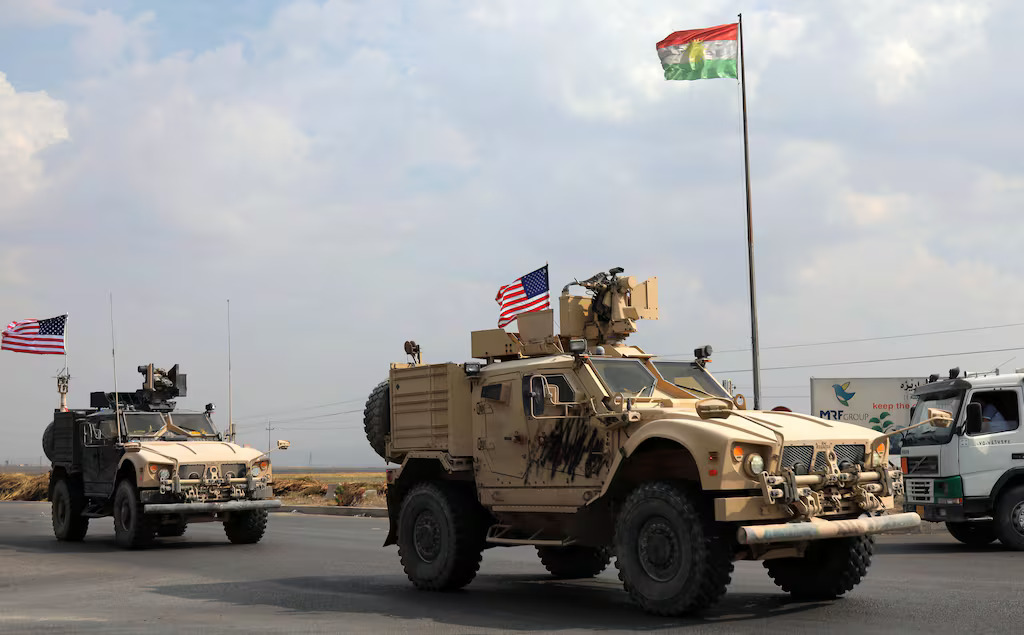
The US-led coalition is ending its military mission in Iraq after more than a decade, completing a withdrawal that began after the defeat of Islamic State but leaving Baghdad with a new challenge: keeping armed groups and security threats under state control.
The coalition arrived in Iraq in 2014, when Islamic State had seized large parts of the country and Syria. Its forces helped Iraqi troops defeat the group’s territorial stronghold, with Islamic State losing its last major positions in Iraq in 2017 and in Syria two years later.
But coalition troops stayed after the territorial defeat to pursue Islamic State remnants and support Iraqi security forces.
Under an agreement reached by Baghdad and Washington in 2024, the withdrawal was carried out in stages. The final troops are leaving Iraq’s autonomous Kurdistan region on Wednesday.
For the Iraqi government, the departure is also tied to a long-running dispute over armed factions backed by Iran. Baghdad argues that the end of the foreign military presence removes one of the main arguments used by powerful groups to keep their weapons outside direct state control.
Prime Minister Ali al-Zaidi has declared October 1 as Sovereignty Day, saying the coalition’s departure marks a step toward strengthening state institutions and Iraq’s control over its own security.
According to AFP, however, the withdrawal has not ended tensions over weapons. Several powerful factions have resisted calls to disarm, while negotiations continue over how their weapons could eventually be brought under state authority.
Kataeb Hezbollah, one of the most powerful Iran-backed groups, welcomed the departure of US forces but also issued a warning to Zaidi’s government, saying a government that fails to serve the Iraqi people could be brought down.
The US-led coalition and the Iran-backed factions once fought the same enemy in Islamic State. After the group’s territorial defeat, however, the presence of US forces became a major source of confrontation. Armed groups carried out drone and missile attacks on coalition positions, followed by US strikes against faction commanders.
The withdrawal is also causing concern in Iraqi Kurdistan. Residents in Erbil, which has repeatedly faced drone attacks, fear losing coalition air-defence support after the final troops leave.
With the coalition gone, Iraq enters a new phase in which Baghdad will have to confront Islamic State remnants while dealing with armed factions and regional tensions largely on its own.
BOB Post