The Government of Japan has committed $3.2 million (JPY 500 million) to support the World Health Organization’s (WHO) initiatives aimed at reducing morbidity and preventable deaths among Rohingya refugees and host communities in Cox’s Bazar and Bhasan Char.
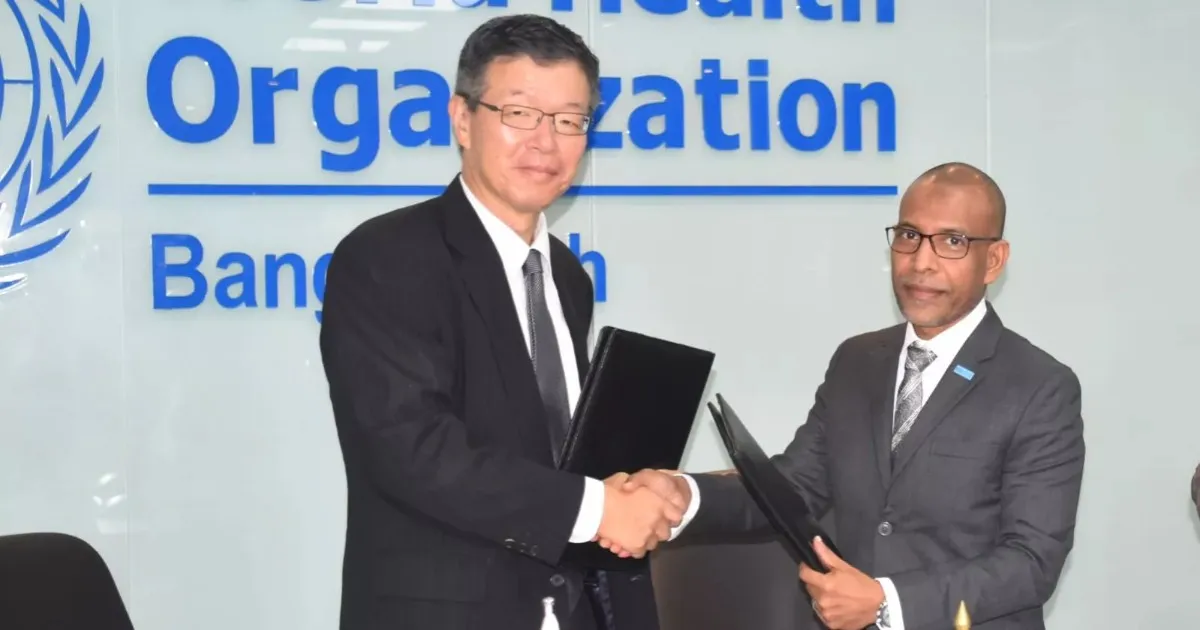
The funding agreement was formalized with an exchange of notes signed by Saida Shinichi, Japan’s Ambassador to Bangladesh, and Dr. Ahmed Jamsheed Mohamed, WHO Representative in Bangladesh.
This collaboration will enhance access to essential health services for over one million people living in the refugee camps and surrounding areas. The initiative is part of a broader effort to address the ongoing Rohingya humanitarian crisis, which WHO has described as one of the world’s largest protracted crises, now in its eighth year.
Since the crisis began in August 2017, Japan has contributed more than $240 million to support UN agencies and NGOs working in Bangladesh. WHO has been leading the health sector response in Cox’s Bazar since September 2017, coordinating efforts among over 70 humanitarian agencies.
The Rohingya population remains highly vulnerable, relying heavily on humanitarian health services while facing increased risks from natural disasters and disease outbreaks, including cholera, hepatitis, and dengue. Around half of the refugees are under 18 years old, and 51% are female, highlighting the urgency for targeted health interventions.
The new WHO-Japan project will focus on strengthening healthcare systems in both Cox’s Bazar and Bhasan Char, aiming to ensure equitable access to quality healthcare services. It will also enhance the health sector’s capacity for epidemic preparedness, public health surveillance, and emergency response.
Key activities under the 12-month project will include capacity-building for healthcare providers, procuring essential medical supplies, monitoring health service delivery, and conducting research on disease transmission trends. An estimated 1.1 million Rohingya refugees and members of the host community are expected to benefit.
Speaking at the signing ceremony in Dhaka, Ambassador Shinichi expressed hope that the initiative would improve health conditions for both refugees and host communities. “Japan will continue working towards sustainable solutions in cooperation with international organizations like WHO,” he added.
Dr. Mohamed praised Japan’s continued commitment, saying the support would help ensure access to vital health services and contribute to Bangladesh’s efforts toward achieving health-related Sustainable Development Goals under the 2030 Agenda.