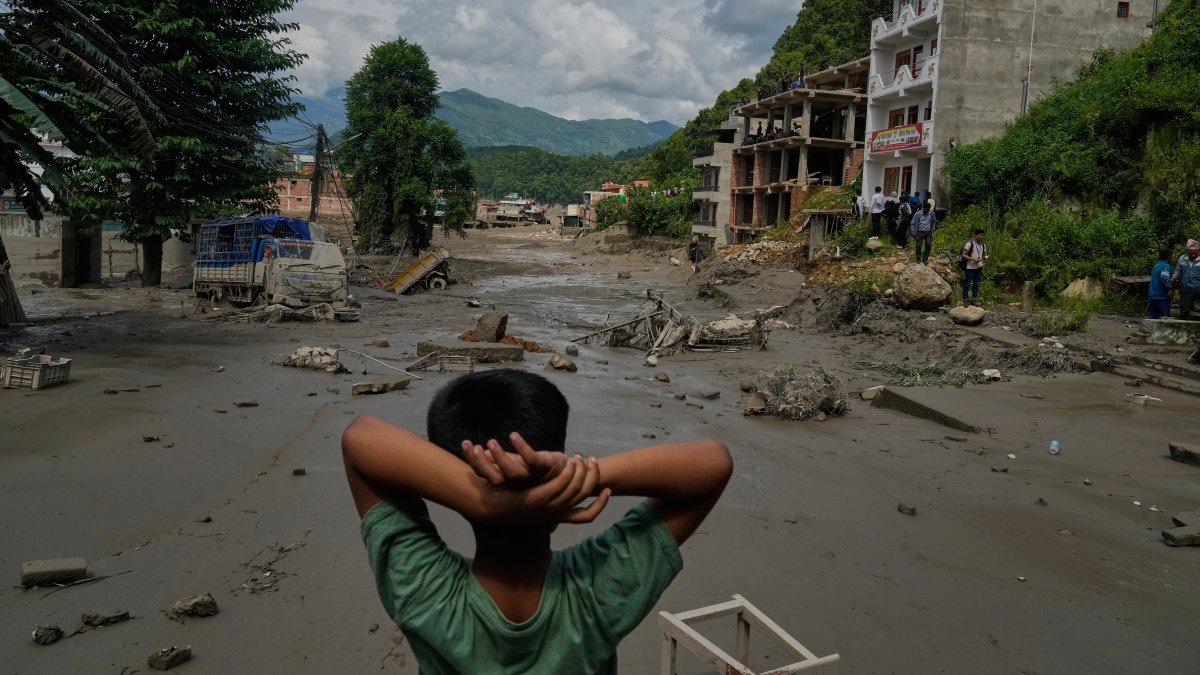
When a wall of mud and water tore through Nepal’s Bhote Koshi valley, the shockwaves reached far beyond the Himalayas. Yet, calling it an unpredictable act of nature misses the point entirely.
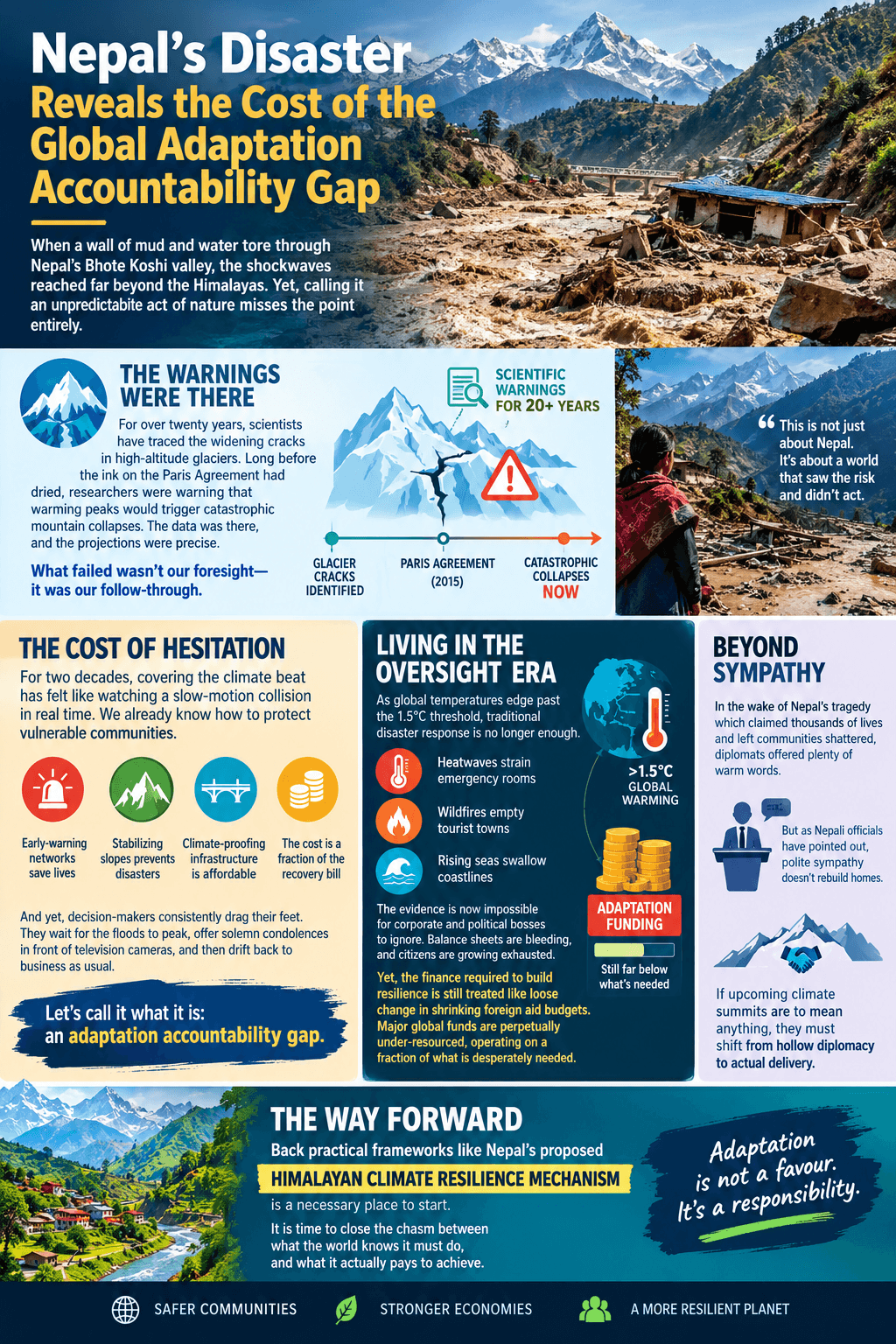
For over twenty years, scientists have traced the widening cracks in high-altitude glaciers. Long before the ink on the Paris Agreement had dried, researchers were warning that warming peaks would trigger catastrophic mountain collapses. The data was there, and the projections were precise. What failed wasn’t our foresight-it was our follow-through.
The Cost of Hesitation
Covering the climate beat for two decades feels like watching a slow-motion collision in real time. We already know how to protect vulnerable communities. We know that building early-warning networks, stabilizing slopes, and climate-proofing infrastructure costs a fraction of cleaning up the wreckage afterward.
And yet, decision-makers consistently drag their feet. They wait for the floods to peak, offer solemn condolences in front of television cameras, and then drift back to business as usual. Let’s call it what it is: an adaptation accountability gap.
Living in the Oversight Era
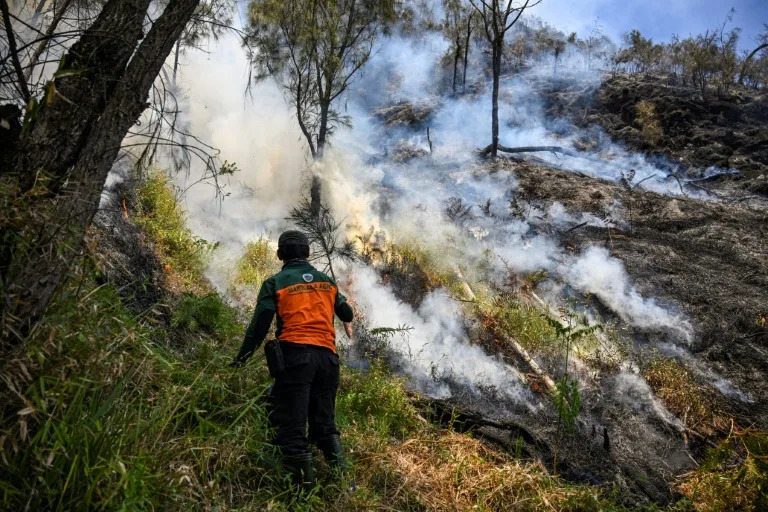
As global temperatures edge past the 1.5°C threshold, traditional disaster response is no longer enough. We are entering an era of cascading extremes—where heatwaves strain emergency rooms, wildfires empty tourist towns, and rising seas swallow coastlines.
The irony is that the evidence is now impossible for corporate and political bosses to ignore. Balance sheets are bleeding, and citizens are growing exhausted. Yet, the finance required to build resilience is still treated like loose change in shrinking foreign aid budgets. Major global funds are perpetually under-resourced, operating on a fraction of what is desperately needed.
Beyond Sympathy
In the wake of Nepal’s tragedy which claimed thousands of lives and left communities shattered, diplomats offered plenty of warm words. But as Nepali officials have pointed out, polite sympathy doesn't rebuild homes.
If upcoming climate summits are to mean anything, they must shift from hollow diplomacy to actual delivery. Backing practical frameworks like Nepal’s proposed Himalayan Climate Resilience Mechanism is a necessary place to start. It is time to close the chasm between what the world knows it must do and what it actually pays to achieve.
BOB Post