Bangladesh has taken a significant policy step toward addressing the long-running challenges in the Chittagong Hill Tracts by forming three high-level committees tasked with developing a comprehensive national strategy covering security, development, counterterrorism, border protection and communal harmony.
The initiative brings together administrative experience, security expertise, policy coordination and local representation in what the government appears to be positioning as a more integrated approach to the region’s complex challenges.
The Cabinet Division issued separate notifications on Thursday night announcing the formation of the Chittagong Hill Tracts National Committee, Executive Committee and Advisory Committee.
Rather than placing the entire responsibility on a single body, the government has created a three-tier mechanism in which consultation, strategy formulation and final decision-making are handled at different levels.
Three committees, three responsibilities
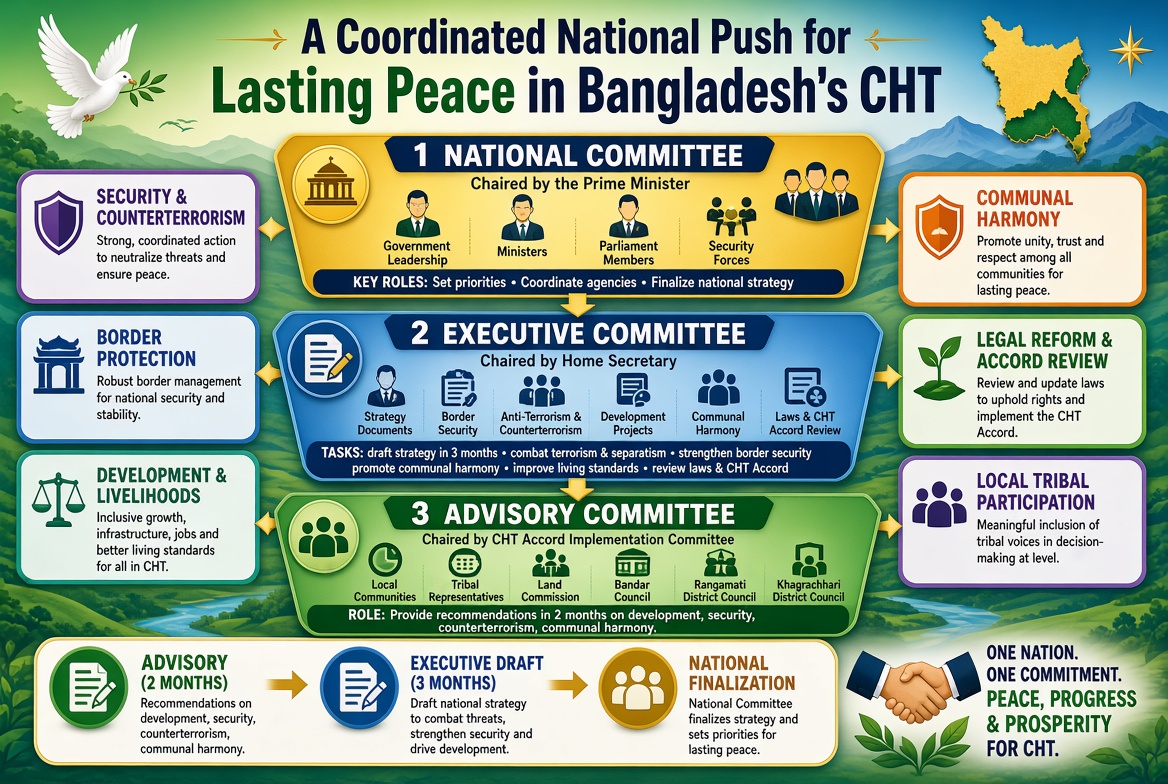
At the highest level is the National Committee, chaired by the Prime Minister. It will have a broad mandate to set priorities on major issues concerning the Chittagong Hill Tracts, coordinate implementation among government agencies and finalize the national strategy for the region.
The committee includes ministers responsible for finance and planning, home affairs, foreign affairs, land, law and Chittagong Hill Tracts affairs. It also brings together senior officials from the Cabinet, Prime Minister’s Office, Armed Forces Division and National Security Intelligence, as well as elected members of parliament from the three hill districts.
The composition reflects the government's attempt to bring political, administrative, economic, security and local perspectives into the same decision-making framework.
The second tier is the Executive Committee, chaired by the Home Secretary. Its primary task is to prepare a draft national strategy within three months based on recommendations from the Advisory Committee.
But its mandate goes considerably beyond security planning. The committee has been tasked with developing a national strategy to combat terrorism and separatism, strengthen border security, promote communal harmony and improve the living standards of all communities living in the hill region.
It will also review existing laws, provisions of the Chittagong Hill Tracts Accord and relevant rules and regulations, and recommend amendments, reforms or new legislation where necessary.
Bringing local perspectives into the process
The third body, the Advisory Committee, is chaired by the chairman of the Chittagong Hill Tracts Accord Implementation and Monitoring Committee. Its role is to provide recommendations on development, security, counterterrorism and communal harmony within two months.
Importantly, its membership includes representatives connected to several institutions directly involved with the region, including the Chittagong Hill Tracts Land Dispute Resolution Commission, the Chittagong Hill Tracts Development Board, the regional council and the three hill district councils.
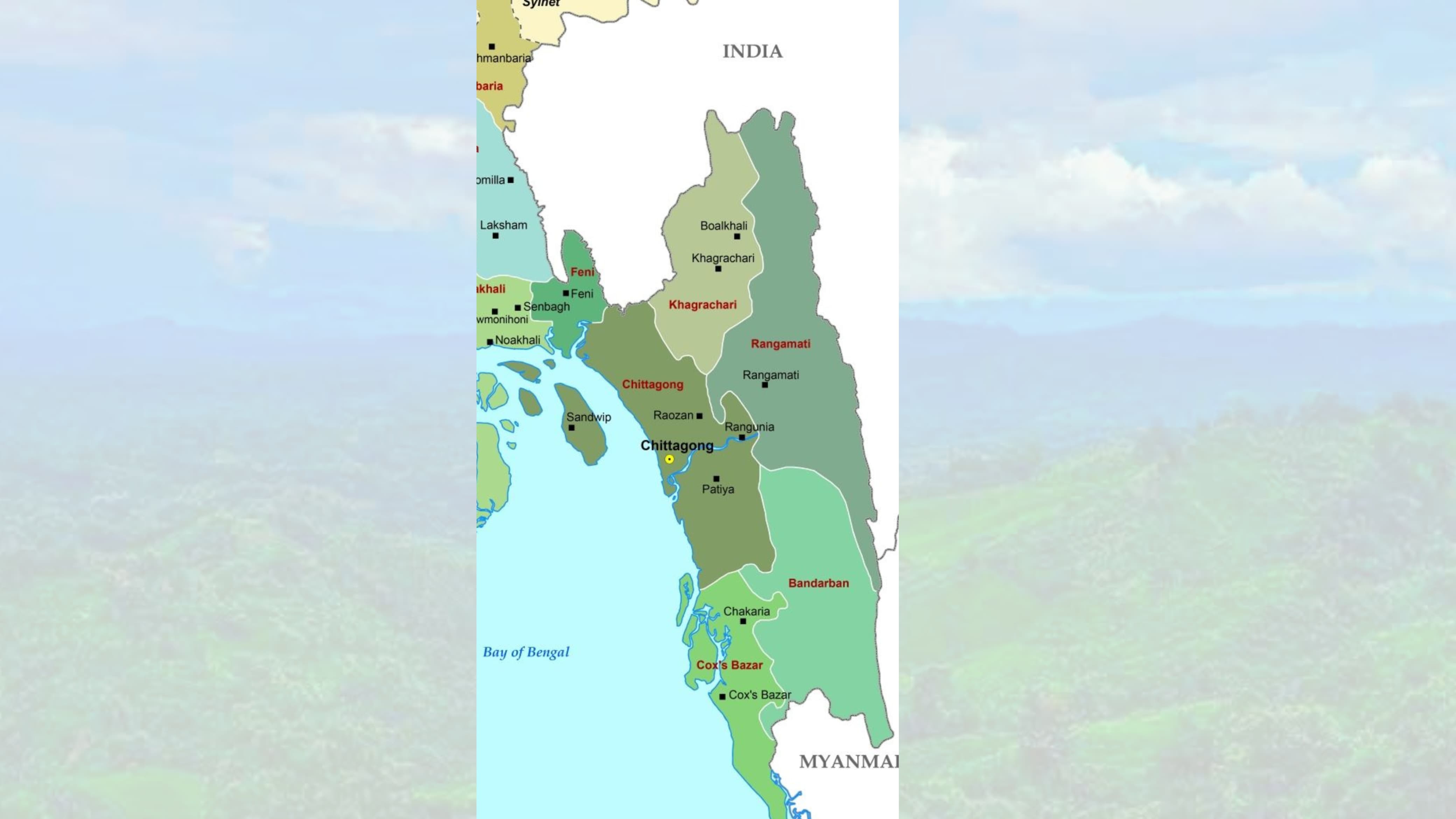
The inclusion of the chairmen of the Bandarban, Rangamati and Khagrachhari Hill District Councils is particularly significant. As locally representatives from the hill districts and key representatives of the region’s tribal communities, their participation brings local and community-level perspectives into a national policy process.
This means the three-tier framework is not composed solely of central government officials, security agencies and administrators. It also creates institutional space for representatives from the tribal communities to contribute to discussions on development, security, communal harmony and the wider challenges facing the Chittagong Hill Tracts.
For a region where questions of land, identity, development, security and political representation have long intersected, such participation could help ensure that the national strategy reflects realities and perspectives from within the hill districts themselves.
Moving beyond a purely security-based approach
One of the most notable aspects of the government's initiative is its attempt to avoid treating the Chittagong Hill Tracts solely as a law-and-order or security issue.
Security and counterterrorism remain central to the mandate. But the same framework also places development, social harmony, livelihoods, legal reform and institutional coordination on the agenda.
That broader approach is significant because long-term stability in the hill region cannot be achieved through security measures alone.
A sustainable solution requires security, economic opportunity, effective governance, social trust and a functioning legal and administrative framework to work together.
The government has therefore sought to place these issues under a single national strategic framework.
Reviewing laws and the Accord
The decision to review existing laws, the provisions of the Chittagong Hill Tracts Accord and relevant rules and regulations is another significant element of the initiative.
The Executive Committee has been specifically asked to identify areas requiring amendment or reform and to recommend new laws and regulations where necessary to ensure sustainable security in the region.
This could open the door to a broader examination of whether existing legal and institutional arrangements are adequately equipped to address the current realities of the Chittagong Hill Tracts.
At the same time, the inclusion of the Accord within the review process indicates that the government intends to consider the region's political commitments alongside its present security and administrative challenges.
Coordination at the national level
The composition of the three committees also points to an effort to overcome one of the longstanding challenges in managing the Chittagong Hill Tracts: coordination among multiple state institutions.
The Executive Committee includes senior officials from the ministries of land, law and Chittagong Hill Tracts affairs, as well as the police, Border Guard Bangladesh, Ansar, Armed Forces Division, intelligence agencies and the Chattogram divisional administration.
The National Committee, meanwhile, brings together key political and administrative decision-makers. Such a structure could allow security, development and administrative policies to be considered together rather than pursued separately by different agencies.
The notifications also allow the committees, when necessary, to bring in officials from the armed forces, security and law-enforcement agencies, or other individuals for specific periods to provide expertise and assistance.
From consultation to strategy
The government's timeline is also notable. The Advisory Committee has two months to submit its recommendations. The Executive Committee then has three months to prepare a draft national strategy, which will subsequently go to the National Committee for finalization.
This creates a clear three-stage process: consultation, strategy formulation and national-level approval. The real test, however, will come after the committees complete their work.
The Chittagong Hill Tracts has accumulated decades of political, security, land and development challenges. No single committee or policy document can resolve all of them overnight.
But the new mechanism represents an attempt to address the region through a more coordinated national framework—one that combines security with development, legal reform and local participation.
For a region where lasting peace has remained an unfinished national priority, the formation of these three committees could mark an important new phase. The challenge now is to turn recommendations into a credible strategy—and the strategy into measurable action.
For the Chittagong Hill Tracts, the significance of this initiative will ultimately be judged not by the committees that have been formed, but by the peace, security, development and trust they are able to deliver.
EDITOR ,Bay of Bengal Post