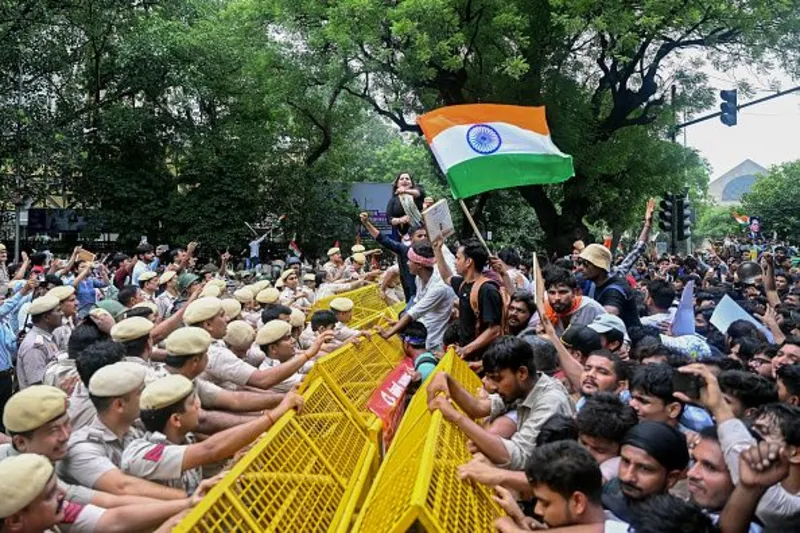
The tear gas may clear from the streets of Central Delhi, and the immediate political spectacle outside the Prime Minister’s residence may fade, but one crucial fact remains undeniable- a new political consciousness has taken root among India’s youth.
While the student-led "Cockroach" protests triggered by severe paper leaks in the National Eligibility Entrance Test (NEET) and grading blunders may not yet have achieved their final objective of systemic overhaul, viewing them as a failure misses the forest for the trees. This movement is not just a passing grievance over an exam; it is a spark. And in a country where millions of young lives hang on the thread of competitive gateways to upward mobility, small sparks hold the power to light massive fires.
What we are witnessing in India cannot be isolated from a broader, global trend. Across Asia and beyond-most notably seen in the youth-driven political upheavals in Bangladesh and Nepal- Generation Z is redefining the mechanics of dissent.

Empowered by hyper connectivity and rapid digitalization, today's youth are far more aware, coordinated, and unapologetic than previous generations. They no longer accept administrative incompetence or institutional opacity as mere bad luck. For Gen Z, an exam paper leak isn't just an administrative lapse, it is a stolen future. Digital tools have democratized awareness, turning isolated frustrations into organized, national movements almost overnight.
For the ruling Bharatiya Janata Party (BJP), the emergence of the Cockroach Janta Party (CJP) should serve as a loud wake-up call. Years of political dominance can easily foster institutional complacency. When 66 percent of surveyed citizens favor the resignation of an Education Minister, brushing off student anger as political opportunism or mere "spectacle" is a dangerous miscalculation.
No government- regardless of how massive its mandate or how deep its electoral footprint can afford to take its youth lightly. The rage currently bubbling beneath the surface is a accumulating interest on unfulfilled promises regarding education, job security, and meritocracy. Even if suppressed today, this anger will remain latent, waiting for the next spark to reignite. The cockroach movement may not overturn an election tomorrow, but it has successfully broken the narrative that young voters are politically passive.
Yet, the ruling party isn't the only establishment feeling the heat. The protests have exposed a glaring opening for opposition parties like the Indian National Congress- one they seem oddly hesitant to fully claim.
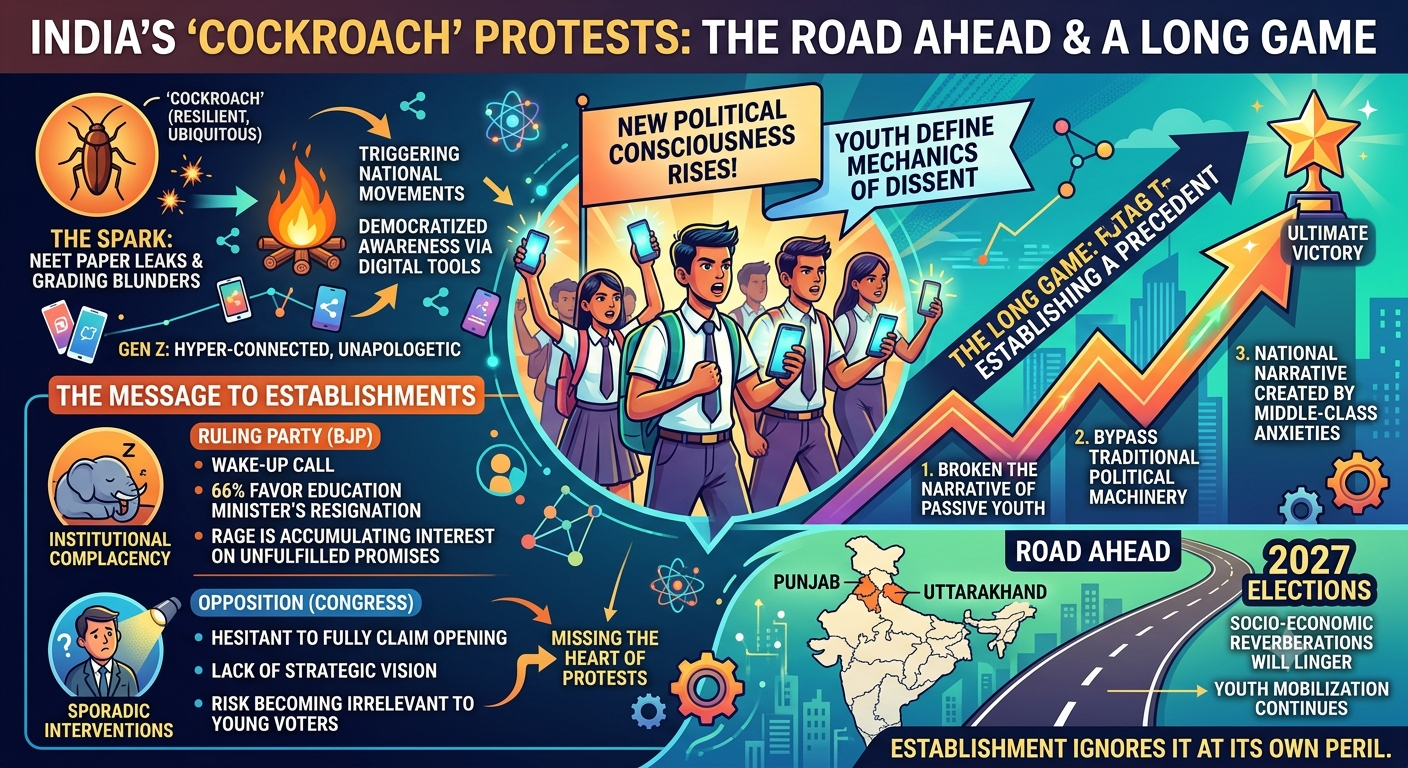
Rahul Gandhi’s high-profile detainment outside the Prime Minister’s residence garnered headlines, but sporadic interventions cannot substitute for sustained, ground-level solidarity. The opposition’s visible absence from the heart of the protests at Jantar Mantar signals a lingering disconnect with Gen Z. Hesitating out of fear of birthing another political disrupter-much like the anti-corruption movement that birthed the Aam Aadmi Party (AAP) over a decade ago shows a lack of strategic vision. If traditional political parties fail to genuinely champion non-partisan youth causes, they risk becoming entirely irrelevant to the country's youngest voters.
The ultimate victory of the "Cockroach" movement does not lie in an immediate political overthrow today. Its real achievement is the establishment of a precedent. It has proven that middle-class anxieties over fairness and mobility can bypass traditional political machinery to create a national narrative.
With key state elections on the horizon in places like Punjab and Uttarakhand in early 2027, the socio-economic reverberations of this student movement will undoubtedly linger. The journey of youth political mobilization in India has officially begun and the establishment, both government and opposition, ignores it at its own peril.
Editor, Bay of Bengal Post