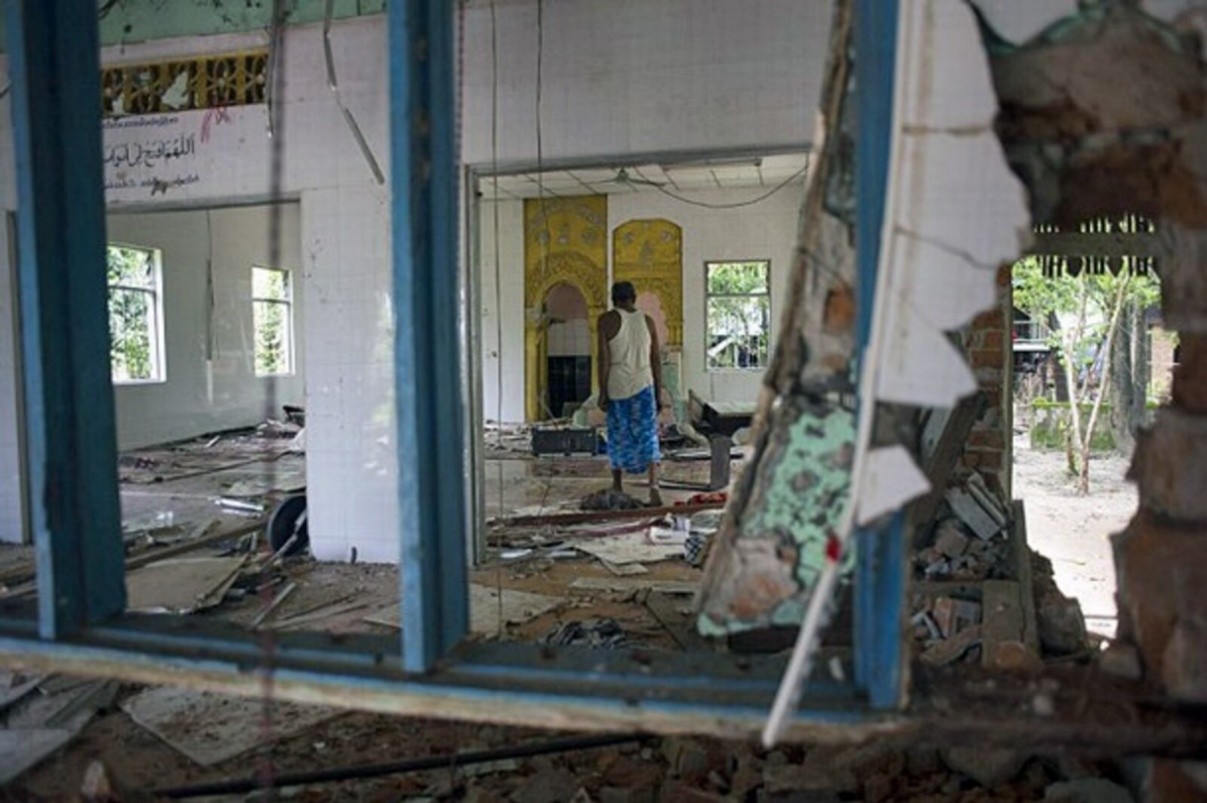
Although Myanmar’s Rakhine State—historically known as the Arakan region—has long been a land of ethnic and religious diversity, recent decades have transformed it into a horrific battleground of extreme nationalism, religious violence, and systematic persecution. Documentation and investigations by the United Nations and international human rights organizations clearly show that it is not only the minority Rohingya Muslims suffering at the hands of state military forces and powerful local armed groups, but also Hindus, Christians, and other small religious and ethnic communities living in Rakhine.
UN Reports and the Spread of Hate via Social Media
Reports from the Office of the United Nations High Commissioner for Human Rights (OHCHR) and the Independent International Fact-Finding Mission on Myanmar have repeatedly highlighted the far-reaching role of digital propaganda and hate speech in spreading religious extremism across Myanmar.
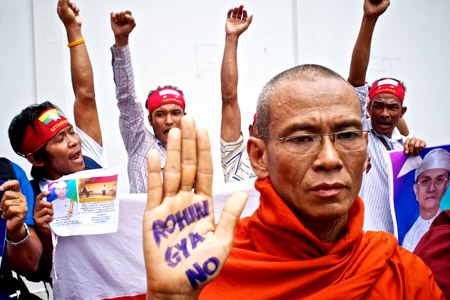
UN documents explicitly note that social media platforms, particularly Facebook, were systematically used over a prolonged period to disseminate radical Buddhist nationalist narratives and disinformation against Rohingya Muslims. The main objective of this smear campaign was to brand the Muslim population as an "existential threat" to the nation. Reports by international human rights organizations—including Human Rights Watch (HRW) and Amnesty International—further prove that such communal hatred and extremist propaganda fostered a blind animosity among the general public in Rakhine, ultimately paving the way for one of the most brutal ethnic cleansings in history.
The Arakan Army and the Continuation of Communal Hostility
The Arakan Army, which has emerged as a dominant armed group in Rakhine State, was primarily formed on the tenets of Rakhine ethnic nationalism. While they present themselves as a political and military resistance movement, the deep impact of religious extremism and sectarian bias remains evident in their operations. Over recent years, non-Buddhist religious groups and ethnic minorities in Rakhine have faced various forms of pressure and persecution. Within the Arakan Army's sphere of influence, Rohingya Muslims, alongside local Hindu and Christian communities, face multifaceted insecurity and marginalization. This pattern of expanding dominance by undermining communal harmony permanently threatens peace and peaceful coexistence across the entire region.

Recent UN human rights reports highlight severe human rights violations against religious minorities and other communities in areas under Arakan Army control. Tactical battlefield decisions by various armed factions have gravely compromised the basic safety of civilians. According to international agencies, the Buddhist-centric extremism in Rakhine and the aggressively sectarian stance and intolerance of the Arakan Army are dismantling the region's pluralistic society and permanently endangering the historical coexistence among its diverse religious communities.
The Struggle for Survival vs. The "Islamic Extremism" Narrative
Myanmar’s mainstream political and military establishment, along with emerging armed groups like the Arakan Army, employ a specific strategy to suppress the Rohingya movement for rights.
A familiar tactic shared by both the state framework and the Arakan Army is labeling the Rohingya’s legitimate struggle for human rights and survival as "Islamic extremism" or part of a global jihad. This calculated narrative aims to mislead both the international community and their own local followers.
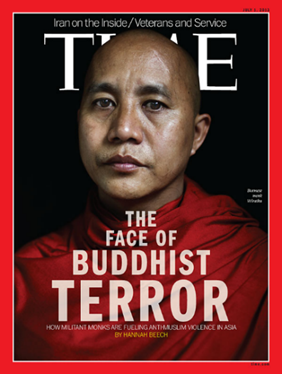
In reality, the Rohingya struggle is not driven by extremist ideology; it is a fundamental fight for survival—to restore their citizenship, ensure a dignified return to their ancestral homes, and protect their physical existence. Despite residing in Rakhine for generations, discriminatory policies such as the 1982 Citizenship Law have rendered the Rohingya stateless and stripped of basic human rights. Labeling a population as "Islamic extremists" when they are simply standing up for minimal survival rights amidst endless massacres, rape, arson, and displacement is deeply inhumane and politically motivated.
UN reports strongly criticize these deceptive tactics. In addition to state propaganda, Arakan Army messaging and radical Buddhist circles frequently try to mischaracterize the Rohingya’s core struggle for civil rights as "Islamic extremism" or global jihad.
UN human rights findings confirm that this struggle is not about establishing an extremist agenda; it is about restoring citizenship, securing a safe and dignified return to their homelands, and ensuring basic physical survival. Investigations by the UN and the International Criminal Court (ICC) make it clear that the violence against the Rohingya is not a series of isolated incidents, but a well-coordinated campaign of repression. When an besieged and disenfranchised community rises to demand basic survival rights after enduring mass killings, sexual violence, arson, and displacement, branding them as "Islamic extremists" constitutes a grave violation of human rights and a direct perversion of truth under international law.
International Accountability and Legal Action
To ensure justice for international crimes committed in 2016 and 2017 by the Myanmar military and local radical Buddhist groups, the UN has taken independent and effective steps. Among these, reports by the Independent Investigative Mechanism for Myanmar (IIMM) continue to gather and preserve irrefutable evidence of war crimes, crimes against humanity, and hate propaganda on Myanmar soil. Progress on the genocide case against Myanmar at the International Court of Justice (ICJ) and resolutions adopted by the UN General Assembly explicitly state that the safety of all people must be guaranteed, regardless of religion, race, or ethnic identity. Recently, investigative reports from various human rights organizations have also documented harrowing accounts of Rohingya genocide attributed to the Arakan Army.
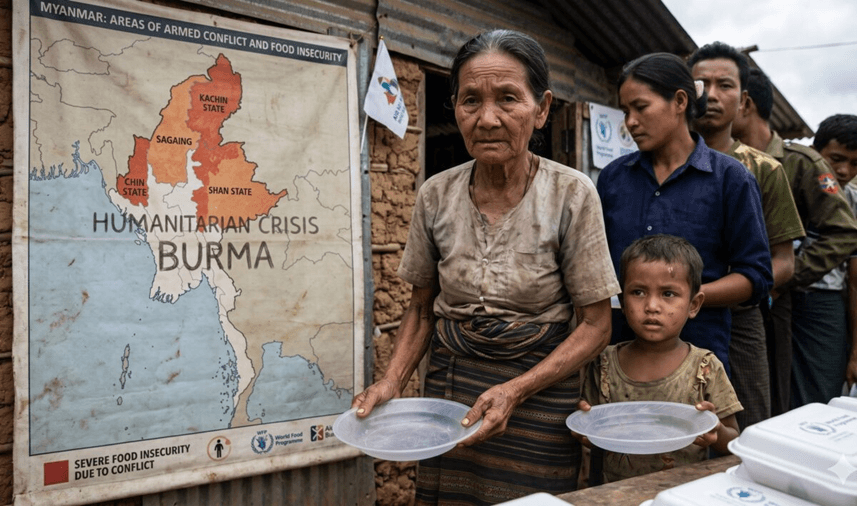
UN agencies strongly urge that avenues for humanitarian aid access in Myanmar's conflict zones be cleared, and that sectarian terror attacks on civilians by both military forces and non-state armed groups like the Arakan Army cease immediately. The international community maintains that ending all forms of extremism and sectarian hatred is an absolute prerequisite for establishing lasting peace in Rakhine State.
In light of data and evidence from the UN and international agencies, it is abundantly clear that all minority populations in Myanmar's Rakhine State are falling victim to religious extremism. Propaganda aimed at framing the Rohingya's legitimate struggle for basic survival as "Islamic extremism" is merely a political tool used to legitimize atrocities. Achieving lasting peace and stability in the region requires eradicating the culture of extreme nationalism and sectarian hate, while fully recognizing equal citizenship and human rights for members of every community.