

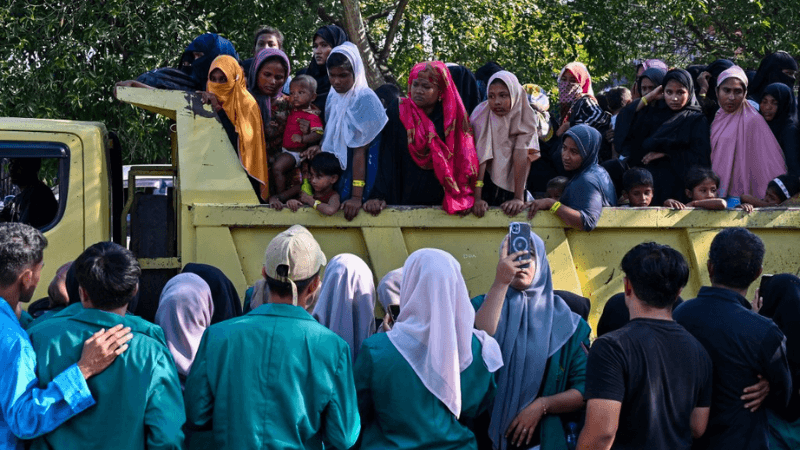






Hundreds of university students forcibly evicted 137 Rohingya refugees from a temporary shelter, revealing the deep-seated tensions surrounding the persecuted minority. This alarming episode occurred amid the largest influx of Rohingya refugees into Aceh in eight years, underscoring the vulnerability of displaced communities and exposing the challenges of fostering empathy in the face of rising xenophobia. The students, identifiable by their university jackets, stormed a government function hall serving as a shelter for Rohingya refugees. Chanting slogans like "Kick them out!" and "Reject Rohingyas in Aceh," the students subjected the refugees to verbal abuse, intimidation, and even physical aggression, as seen in videos circulated by news agencies. The distressing scenes depicted women and children in tears, their belongings kicked and scattered. This act of aggression is rooted in the escalating unease in Aceh over the surge of Rohingya refugees arriving by boat. Since mid-November, over 1,500 Rohingya have sought refuge on Acehnese shores, fleeing persecution and violence in Myanmar. While local authorities initially provided temporary shelter and essential support, concerns among some residents regarding the perceived strain on resources, job markets, and security began to surface.

Human rights groups and international organizations swiftly condemned the actions of the students, labeling them as "inhumane" and a violation of international refugee law. The United Nations High Commissioner for Refugees (UNHCR) called on Indonesian authorities to investigate the incident, emphasizing the imperative of ensuring the safety and protection of the Rohingya refugees. The principle of non-refoulement, which prohibits returning refugees to a place where they may face persecution, was underscored as a fundamental obligation. Facing both international pressure and domestic criticism, the Indonesian government pledged to investigate the incident thoroughly and hold those responsible accountable for their actions. Authorities reiterated their commitment to providing temporary shelter and meeting the basic needs of Rohingya refugees while seeking sustainable, long-term solutions. This incident, however, has highlighted the underlying tensions and lack of understanding regarding the Rohingya's plight in Aceh.
The forced eviction from the temporary shelter magnifies the precarious situation of Rohingya refugees in Indonesia. Despite Indonesia's historical role in providing refuge to persecuted communities, the recent rise in anti-refugee sentiment poses a significant challenge. This sentiment often stems from misinformation, economic anxieties, and national security concerns. Addressing these issues through education, community engagement, and factual information dissemination becomes crucial in countering prejudice and fostering empathy toward vulnerable groups. Beyond addressing immediate concerns, there is a pressing need for the Indonesian government to implement transparent and humane policies towards asylum seekers and refugees. Establishing a proper legal framework for handling asylum claims, ensuring access to basic services, and promoting social integration through language classes and vocational training are essential components. Engaging with local communities and addressing their concerns through open dialogue and evidence-based information dissemination can help bridge the understanding gap.
While immediate attention is focused on ensuring the safety and well-being of Rohingya refugees, the long-term solutions require addressing the root causes of the Rohingya crisis in Myanmar. Additionally, fostering acceptance and understanding in host communities like Aceh is paramount. Breaking the cycle of persecution and vulnerability necessitates coordinated efforts on the international stage to address political unrest and displacement.
BOB Post