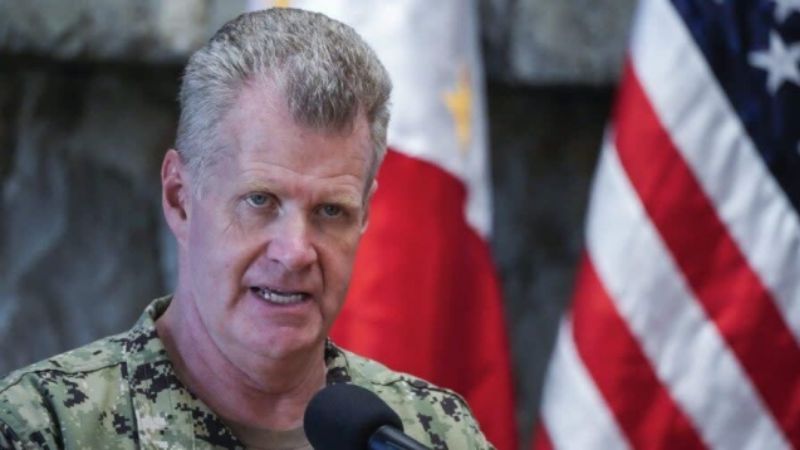
The chief of the U.S. Indo-Pacific Command, Admiral Samuel Paparo, gave a sobering assessment of America's preparedness to handle escalating threats in Asia shortly before Thanksgiving. After directing the Pacific Fleet for three years, Paparo took on his new position in May. He cautioned that American forces and their allies lack the necessary tools to meet the growing threats, especially from China.
Since Russia’s invasion of Ukraine nearly three years ago, the U.S. has struggled to balance its commitments, providing aid to Ukraine and Israel while maintaining preparedness in the Pacific. Initially, Paparo noted that the weapons needed in Europe and the Middle East, such as artillery shells and short-range missiles, had little overlap with the requirements for a potential conflict with China. However, in 2024, the situation shifted as resources such as Patriot air defense missiles and advanced air-to-air munitions became increasingly stretched.
"The truth is, it’s now cutting into our stocks for a potential conflict with China," Paparo acknowledged during a recent appearance in Washington. "To say otherwise would be dishonest."
Paparo highlighted an alarming escalation in Chinese military activity, describing the scale of recent exercises as unprecedented in his decades-long career. Over the years, China has developed "assassin’s mace" weapons designed to neutralize U.S. forces in the Pacific. In response, the U.S. is racing to implement the Replicator Initiative, an ambitious program aiming to deploy thousands of low-cost drones capable of aerial, surface, and underwater operations by next year.
The goal is clear: to deter aggression by turning the Taiwan Strait into a perilous battleground for any invading force. "I can make their lives utterly miserable for a month," Paparo explained, emphasizing that such measures would buy critical time for broader military mobilization.
A Race Against Time
Deputy Secretary of Defense Kathleen Hicks, who launched the Replicator Initiative, stressed the importance of accelerating the Pentagon’s ability to procure and deploy weapons. Historically, the U.S. defense industry has been plagued by delays and inefficiencies. This sluggishness dates back to the tenure of Robert McNamara, whose bureaucratic reforms during the Vietnam War era have left a legacy of slow weapons development.
This inefficiency poses significant risks as demand for advanced American weaponry far outpaces supply. For example, while the U.S. began sending Patriot missiles to Ukraine two years ago, manufacturers like Lockheed Martin and Raytheon will not double production until 2027—the same year Chinese President Xi Jinping has directed his military to prepare for a potential invasion of Taiwan.
Even with these efforts, experts warn that production timelines for large, high-quality systems—such as submarines and aircraft carriers remain too slow. Paparo emphasized that while drones alone cannot defeat China, they offer a critical window of opportunity in the event of conflict.
Historical Lessons and Modern Challenges
Paparo drew parallels to World War II, when the U.S. Pacific Fleet operated from a heavily fortified headquarters near Pearl Harbor after Japan’s attack on December 7, 1941. Admiral Chester Nimitz faced years of intense battles before new ships and planes turned the tide against Japan. Today, however, Paparo cautioned that such a luxury of time no longer exists.
"If China attacks, we won’t have years to recover," he warned. Instead, America’s ability to deter aggression and maintain peace in Asia hinges on urgently overcoming industrial bottlenecks and streamlining defense production.
The stakes could not be higher. With China rapidly expanding its arsenal and U.S. military leaders scrambling to respond, the future of security in the Indo-Pacific rests on whether the U.S. can adapt and fast.
Obaidur Chowdhury
BOB Post