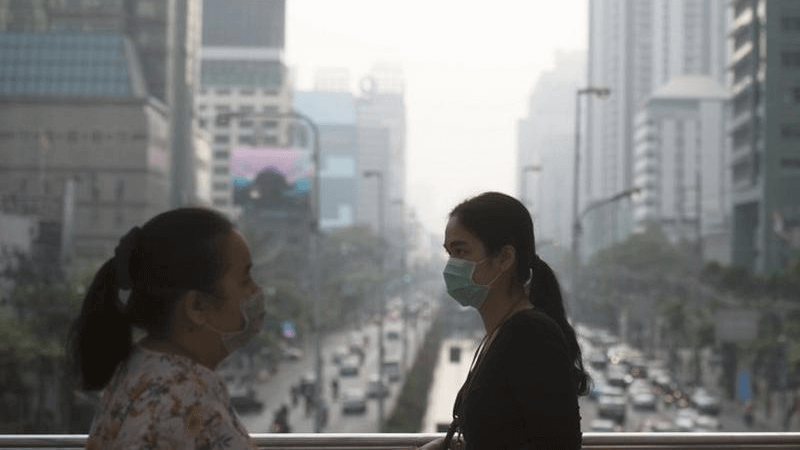
In 2023, a staggering 10 million Thais sought medical treatment for illnesses linked to air pollution, according to data from the National Economic and Social Development Council (NESDC). This alarming figure coincides with a deteriorating air quality situation in Thailand, where widespread farm burning and forest fires, particularly in the northern regions, contribute to noxious smog at the beginning of the year.
The NESDC data highlights a concerning trend, with the number of people seeking treatment for pollution-related illnesses seeing a surge at the start of 2024. From 1.3 million cases in the first nine weeks of 2023, the number increased to 1.6 million in the same period of 2024. These cases encompass individuals with chronic conditions such as lung cancer, bronchitis, asthma, and heart diseases.
The NESDC emphasized the urgent need for Thailand to prioritize addressing the impact of PM2.5 on public health. PM2.5 refers to tiny, hazardous particles with diameters of 2.5 micrometers or smaller, capable of entering the bloodstream through the lungs. Exposure to these micro-pollutants can lead to symptoms such as burning and itching in the eyes and skin, coughing, and chest tightness, especially for individuals with pre-existing heart or lung conditions.
Thailand's northern cities, including Chiang Mai, Chiang Rai, and Lampang, have received "unhealthy" ratings from air quality monitoring platform IQAir, making them some of the world's most polluted areas. The country's air pollution crisis typically intensifies during the dry season, running from November to March, primarily due to seasonal burning by farmers clearing sugarcane and rice fields.
Prime Minister Srettha Thavisin has pledged to improve air quality, and lawmakers have endorsed a bill aimed at tackling the problem. Recently, Thailand announced plans to deploy 30 aircraft for cloud seeding to induce rain and alleviate pollution. However, the start of 2024 has already witnessed unhealthy pollution levels, prompting officials in Bangkok to urge employees to work from home for two days in February.
Amid the worsening situation, residents and environmental groups in Thailand have taken legal action, filing lawsuits to demand government intervention against pollution. Last year, about 1,700 people in Chiang Mai initiated legal proceedings against former Prime Minister Prayut Chan-o-cha and state agencies for failing to address pollution, which they argue shortens lives by about five years. In response, a Chiang Mai court ordered the government to devise an emergency plan to improve air quality within 90 days.
BOB Post