On Friday, the European Union, the United States, and their allies issued a joint statement expressing deep concern over the escalating violence in Myanmar. The statement was co-signed by Australia, Canada, the EU, South Korea, Malta, New Zealand, Norway, Switzerland, the UK, and the US.
The statement highlighted the deteriorating human rights and humanitarian crisis in Myanmar, particularly the increased harm to civilians. "The worsening conflict is driving a devastating human rights situation across the country," the joint declaration emphasized.
In a related development, the United Nations human rights office reported alarming developments from Myanmar’s northern Rakhine State. Liz Throssell, spokesperson for the U.N. High Commissioner for Human Rights, detailed "frightening and disturbing reports" of the impact of the ongoing clashes between Myanmar's military and the Arakan Army on Rohingya civilians.
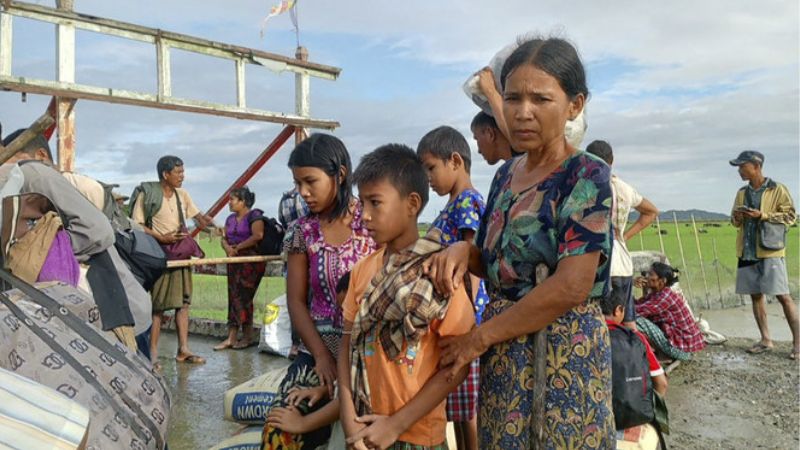
Throssell’s statement outlined grave allegations, including the killing of Rohingya civilians and the burning of their properties. Approximately 45,000 Rohingya have recently fled from the violence in Buthidaung and Maungdaw, seeking refuge along the Naf River near Bangladesh, joining over a million Rohingya who had previously fled there.
The U.N. documented "renewed attacks" on Rohingya civilians during the latest bouts of violence, which included reports of aerial strikes, shootings of unarmed fleeing villagers, beheadings, disappearances, and the burning of homes.
The joint statement by the allied nations condemned the widespread abuses against civilians, listing airstrikes on homes, schools, places of worship, and hospitals, as well as torture, the use of civilians as human shields, and sexual violence against women and children.
Since the February 2021 military coup in Myanmar, the number of people in need of humanitarian assistance has skyrocketed from 1 million to 18.6 million. The coup, which ousted the civilian government and detained National League for Democracy officials, including Aung San Suu Kyi, has intensified the conflict.
Myanmar’s military and various armed groups have persistently targeted towns and villages in Rakhine State, resulting in high levels of displacement and forced recruitment, including among the Rohingya population.
The Rohingya, a Muslim minority in predominantly Buddhist Myanmar, have long faced severe discrimination and been denied citizenship and basic rights. Throssell pointed out that the military has systematically targeted the Rohingya with draconian and discriminatory restrictions for years.
In 2017, a brutal campaign by Myanmar's government against the Rohingya led to widespread atrocities, forcing nearly a million Rohingya to seek refuge in Bangladesh.
The U.N. human rights office has called for an immediate end to the conflict and the protection of all civilians, urging for the prompt and unhindered delivery of humanitarian aid without discrimination based on identity.
BOB Post