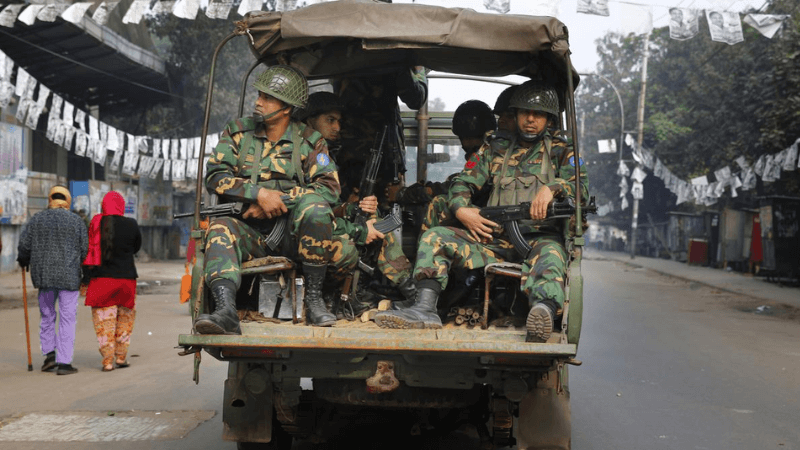
Anticipation hangs heavy in the air as Bangladesh prepares for its 12th parliamentary elections on January 7th. Amidst heightened vigilance, the Election Commission (EC) has taken a critical step towards ensuring a free and fair electoral process – the deployment of armed forces in a "In Aid to Civil Power" role.
This decision, authorized by Article 126 of the Bangladesh Constitution, aims to bolster security throughout the country and create a secure environment for citizens to exercise their democratic right to vote. The deployment began on January 3rd and will continue until January 10th, covering all 62 districts, 45 upazilas in border areas, and additional strategic locations.
The move has been met with positive reactions. Most view it as a necessary measure to deter violence and intimidation, others voice concerns about potential for military overreach. However, the EC assures the public that the role of the armed forces is strictly to support law enforcement agencies and civil administration in maintaining order and preventing any untoward incident.
"The deployment of armed forces is solely focused on ensuring a peaceful and secure environment for the elections," emphasized Chief Election Commissioner Kazi Habibul Awal. "Their presence will primarily be stationed at nodal points and strategic locations, with no direct involvement in the voting process itself."
The decision carries undeniable weight in light of past violence during elections. Clashes between rival political parties and intimidation tactics aimed at suppressing turnout have marred previous polls. The EC hopes that the presence of armed forces will deter such behavior and create a climate of confidence for voters. The deployment is not without its challenges. Critics point to the potential for misuse of power and an undue influence on the voting process. However, the EC has established clear guidelines and protocols to govern the conduct of the armed forces throughout their deployment. They will remain under the command of local civil authorities and operate within strictly defined parameters.
"We understand the concerns surrounding the deployment," acknowledged Election Commissioner Md. Alamgir Hosain. "However, we want to assure the public that this measure is being taken with utmost transparency and accountability. We are committed to conducting a free and fair election, and the presence of armed forces is meant to facilitate, not hinder, that process."
Ultimately, the success of the elections will depend on the collective efforts of the EC, law enforcement agencies, political parties, and, most importantly, the Bangladeshi people. If executed transparently and responsibly, the deployment of armed forces can serve as a positive force, safeguarding the democratic rights of citizens and enabling them to cast their votes without fear or intimidation.
BOB Post