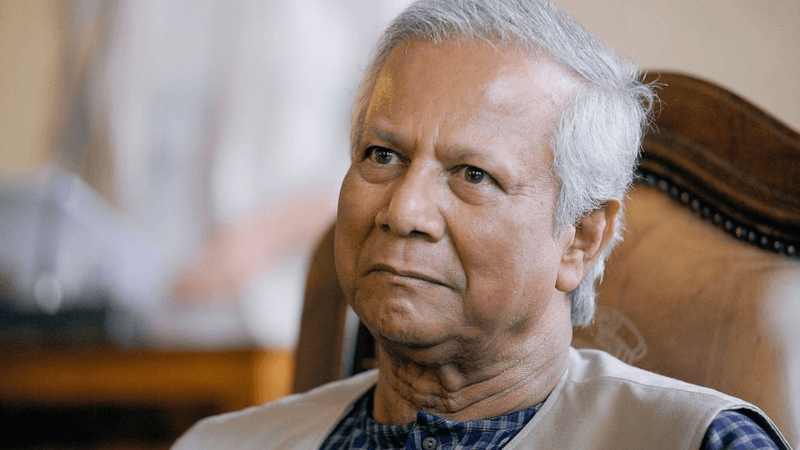
In an exclusive interview with Voice of America (VOA), Muhammad Yunus, Chief Adviser of Bangladesh's interim government, explained the reasoning behind delegating magistracy power to army officers. Yunus, who assumed the role on August 8, said the decision was necessary to restore law and order as the police force had lost morale amid escalating unrest in the country. Yunus emphasized that while not all police officers were involved in wrongdoing, the overall effectiveness of the force had diminished following violent clashes with students. The interim government decided to temporarily empower the military for two months to stabilize the situation. Yunus expressed hope that the police would regain their confidence and resume their duties soon. However, he acknowledged that the army's involvement was crucial in preventing further deterioration of law and order. "The army’s presence gives people pause because they now hold authority," he said. Discussing the involvement of students in the country’s leadership, Yunus praised the youth for their role in recent changes. He stated that the younger generation should take more responsibility in shaping Bangladesh's future. However, he clarified that while students are playing an active role, they are not running the administration. On the topic of the interim government’s duration, Yunus remained non-committal, declining to confirm General Waqar-Uz-Zaman's suggestion of elections within 18 months. He noted that discussions on the timeline were ongoing, but no decisions had been made. Yunus also addressed Bangladesh's relationship with India, emphasizing the need for strong, cordial ties between the neighboring countries. He described improving bilateral relations as mutually beneficial and essential for regional stability. When asked about the potential extradition of former Prime Minister Sheikh Hasina, who is currently in India, Yunus highlighted that it is a legal matter, and any decision would follow proper legal procedures. He also addressed the destruction of the Bangabandhu Memorial Museum and the national mourning day cancellation, noting that Bangladesh was moving forward with reforms after a period of mass uprising. In response to the ongoing Rohingya refugee crisis, Yunus affirmed Bangladesh’s commitment to accepting more refugees under international law. He stressed that the global community must help find a sustainable solution for the displaced population, noting that the growing Rohingya community, including 32,000 children born in Bangladesh each year, posed long-term challenges. Yunus concluded by discussing the need for constitutional amendments, revealing that the interim government had formed a commission to guide national debates on the topic. He emphasized that reforms are critical to prevent a return to the chaos experienced under the previous government and to build a stable future for the country. This interview provides a rare insight into the goals and challenges facing the interim government as it navigates a complex political landscape marked by unrest, legal issues, and international concerns.
BOB Post