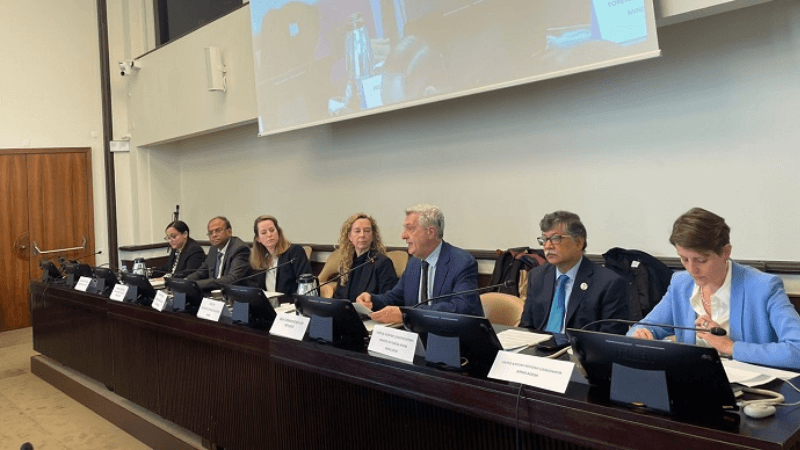
Foreign Secretary Masud Bin Momen of Bangladesh has dismissed any notion of integrating Rohingya refugees into the country, urging instead for their safe and voluntary repatriation to Myanmar. Speaking at the launch of the 2024 Joint Response Plan (JRP) for the Rohingyas in Geneva on March 13, Masud emphasized Bangladesh's commitment to finding a lasting solution to the prolonged Rohingya crisis.
Masud underscored the necessity of equitable burden sharing by the broader international community, warning that without it, Bangladesh, along with UNHCR, IOM, and WFP, would struggle to provide humanitarian assistance and protection to the Rohingya population. He called on the international community to bolster their contributions and make new pledges to address the widening funding gap for Rohingya aid.
Highlighting the significant strain the Rohingya presence has placed on Bangladesh over the past six years, Masud cautioned against the potential threats of radicalization and violent extremism within the refugee population, which could destabilize the region. He noted the addition of 30,000 newborns to the Rohingya refugee community in Bangladesh annually, further exacerbating the situation.
The 2024 JRP, amounting to USD 852 million for 1.35 million Rohingyas and host communities across 195 projects, prioritizes the repatriation of Rohingyas as its primary objective. UN High Commissioner for Refugees, Filippo Grandi, echoed the call for the safe, voluntary, and dignified return of Rohingyas to Myanmar as the sustainable solution to the crisis, urging international action toward this end.
While commending Bangladesh's efforts, Grandi emphasized that financial initiatives such as loans from the World Bank should complement, not substitute, humanitarian responses. Amy Pope, Director General of IOM, expressed concern over the persistent funding gap for Rohingya humanitarian efforts, advocating for support to empower the Rohingya community for potential reintegration into Myanmar society.
Principal Secretary Mohammad Tofazzel Hossain Miah emphasized the ecological and biodiversity impacts in Cox’s Bazar due to the prolonged presence of Rohingyas, urging effective climate action from the international community. He stressed that taking loans for Rohingya aid was not a sustainable solution for Bangladesh, calling for meaningful contributions from international partners.
The JRP launch, co-sponsored by UNHCR and IOM, saw participation from Ambassadors/Permanent Representatives of various UN member states, NGOs, INGOs, media, academics, and UN officials. Several ambassadors recognized Bangladesh's generosity in hosting Rohingya refugees and pledged voluntary contributions for the JRP, focusing on education, healthcare, and basic needs for the displaced population. They reiterated that repatriation remained paramount, underscoring the need for Myanmar's political commitment to facilitate the process. The engagement of ASEAN and other regional stakeholders was also emphasized as crucial in resolving the Rohingya crisis.
BOB Post