


Bangladesh has renewed its urgent call to the international community to take collective responsibility for ensuring the safe, voluntary, and dignified return of the forcibly displaced Rohingya population to their homeland in Myanmar, emphasizing that the issue cannot be left for Bangladesh to bear alone.
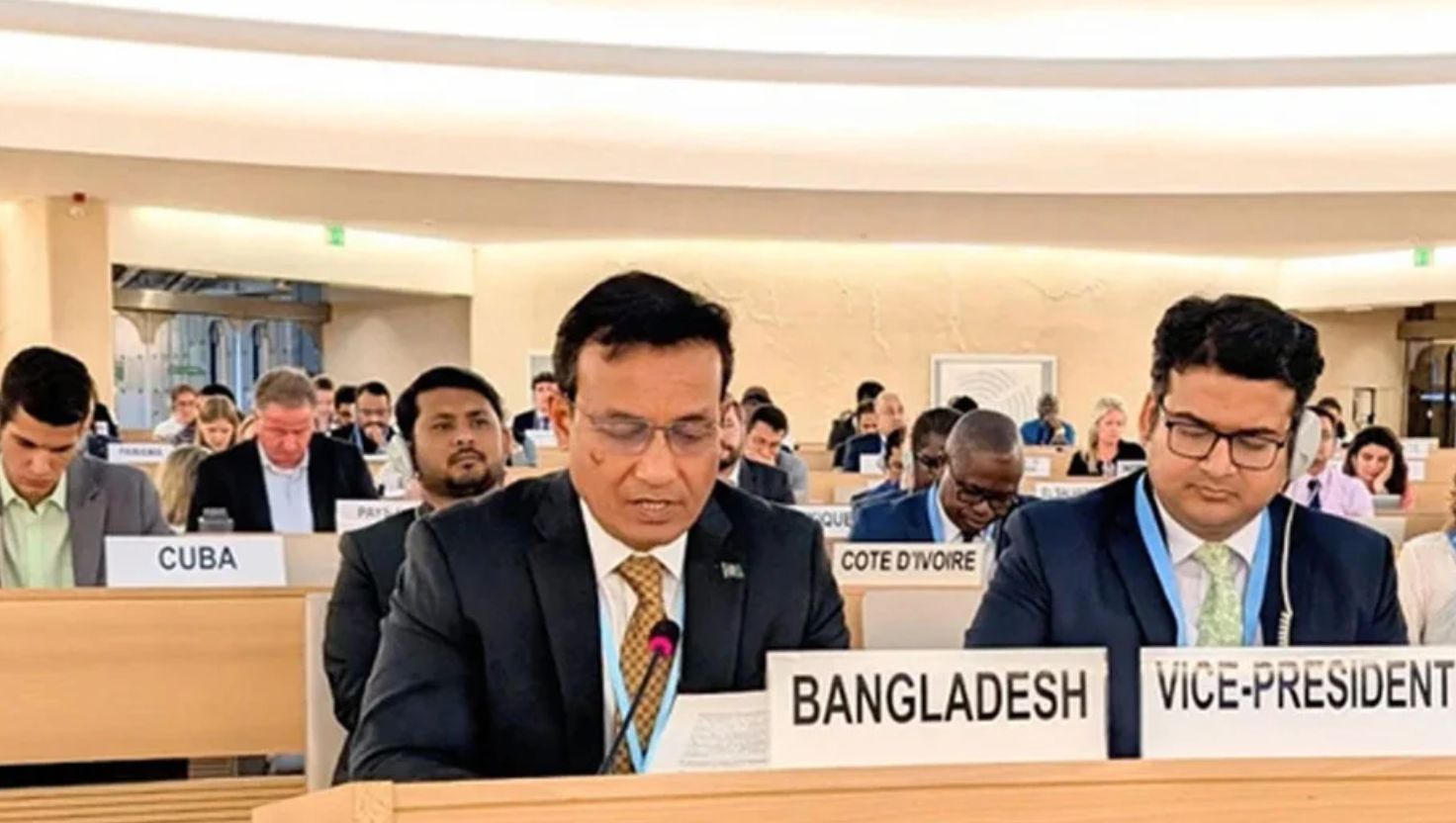
Speaking at the 59th session of the United Nations Human Rights Council (UNHRC) in Geneva, Ambassador Tareq Md Ariful Islam, Bangladesh’s Permanent Representative to the UN Office, underlined the need for global action and accountability in resolving the protracted crisis that has strained Bangladesh's resources and stability for years.
“It is the collective duty of the international community to ensure that the rights and dignity of the Rohingya are upheld, and that conditions conducive to their return are created urgently in Rakhine,” he said while addressing the adoption of the resolution titled “The Situation of Human Rights of the Rohingya Muslims and Other Minorities in Myanmar”, spearheaded by the Organisation of Islamic Cooperation (OIC).
In his statement, the ambassador reaffirmed Bangladesh’s steadfast commitment to working constructively with all stakeholders to achieve a durable solution to the crisis, centered on repatriation that is safe, voluntary, dignified, and sustainable.
Bangladesh, hosting over one million Rohingya refugees since 2017, remains at the forefront of advocating for the rights of this vulnerable community despite limited global support. The ambassador expressed deep concern over continued violence in Myanmar’s Rakhine State, where the Myanmar military and armed groups, including the Arakan Army, have intensified clashes, hindered humanitarian access, and deepened the suffering of Rohingyas and other minorities.
Since November 2023 alone, nearly 118,000 Rohingya have fled to Bangladesh, escaping fresh waves of persecution and conflict. Ambassador Islam stressed that such renewed influxes highlight the urgent need for global intervention and political will to resolve the crisis at its roots.
The newly adopted resolution not only raised alarm over dwindling international humanitarian aid for Rohingya refugees but also urged equitable responsibility-sharing among nations. It called for enhanced and unrestricted humanitarian access in Rakhine by the UN and all relevant agencies.
The resolution further demanded accountability to end the entrenched culture of impunity in Myanmar and stressed the necessity of inclusive governance with the meaningful participation of Rohingya Muslims at all levels.
Highlighting the upcoming High-Level Conference on the Rohingya Crisis scheduled for September in New York, Bangladesh urged that the summit produce “concrete and time-bound outcomes” to advance repatriation efforts.
As Bangladesh continues to shoulder a disproportionate humanitarian burden, the country’s proactive diplomacy and principled stance reflect its commitment to international human rights, regional stability, and the pursuit of justice for one of the world’s most persecuted communities.
The 59th session of the Human Rights Council began on June 16 and will conclude on July 9.
BOB Post