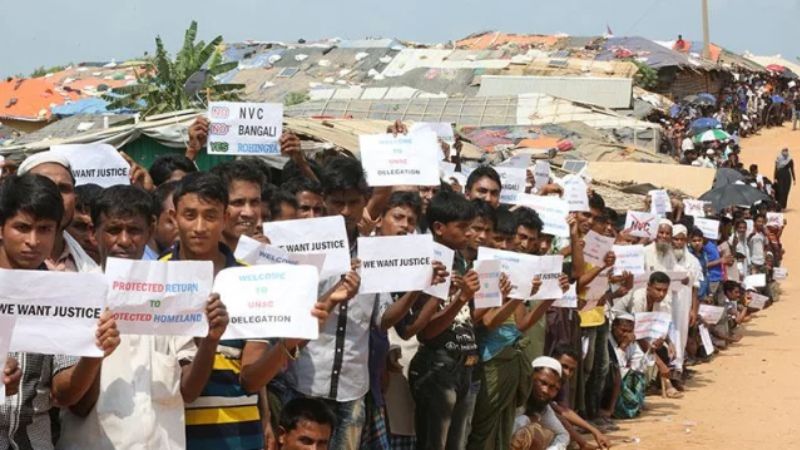
Muhammad Yunus, head of Bangladesh’s interim government and Nobel Peace Prize laureate, has called for an expedited resettlement process for Rohingya Muslims currently residing in Bangladesh. This plea comes in response to a new influx of refugees fleeing the escalating violence in Myanmar’s Rakhine state.
During a recent meeting with the International Organization for Migration (IOM), Yunus emphasized that the resettlement process needs to be streamlined and efficient. Despite the United States' commitment to resettle thousands of Rohingya, the pace of the process has not accelerated to meet the urgent needs expressed by the Bangladeshi government.
Amid this crisis, Bangladesh’s Foreign Minister Mohammad Touhid Hossain highlighted the nation's limitations in accepting additional refugees, citing overcrowding in the Cox’s Bazar camps. Hossain also urged India and other countries to increase their intake of refugees to help alleviate the pressure on Bangladesh.
The recent surge in violence in Myanmar is the most severe since 2017, with approximately 8,000 Rohingya Muslims crossing into Bangladesh in recent months. This new wave of refugees adds to the over one million Rohingya already in Bangladesh, many of whom fled the 2017 military crackdown that the United Nations condemned as “ethnic cleansing.”
UN Secretary-General Antonio Guterres has described the Rohingya as “one of, if not the, most discriminated people in the world.” The Rohingya, Myanmar’s largest Muslim ethnic minority, have been systematically denied citizenship and subjected to severe discrimination by the Myanmar government since 1949.
Despite substantial international humanitarian aid efforts, long-term solutions remain elusive. The focus has often been on managing the refugee crisis rather than addressing the root causes of the conflict. Until the international community tackles the underlying issues in Myanmar, the safety and dignity of the Rohingya will remain precarious. Sustainable peace in the region can only be achieved by addressing the systemic violence and discrimination in Myanmar, ensuring lasting security for the Rohingya community.
BOB Post