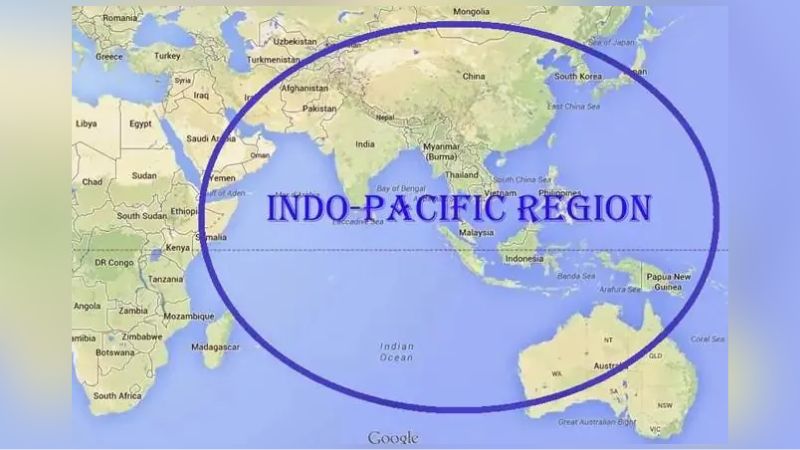
Experts and policymakers discussed the increasing importance of Bangladesh in the Indo-Pacific region at a seminar on Monday (October 7). Japanese Ambassador ITO Naoki emphasized Bangladesh’s strategic location in the Bay of Bengal, suggesting that the country should leverage this to boost its economic prospects.
The seminar, titled "Geopolitics of Indo-Pacific and Reconnecting the Bay of Bengal Littorals," was organized by the Bangladesh Institute of International and Strategic Studies (BIISS) and the Japanese Embassy, marking 50 years of diplomatic relations between Japan and Bangladesh.

Ambassador ITO mentioned that Japan is developing Bangladesh's first deep seaport in Matarbari, part of a project called the Bay of Bengal Industrial Growth Belt (Big-B). He highlighted Japan’s "Free and Open Indo-Pacific" policy, which aims to promote a rules-based international order for peace and prosperity. He noted that Bangladesh shares this vision and values with Japan and other nations.

Major General Mohammad Maksudur Rahman from BIISS pointed out that China's Belt and Road Initiative has made the Indian Ocean and the Straits of Malacca more geopolitically significant. He explained that Bangladesh's central location enables it to play a crucial role in regional trade.

Kikuchi Tsutomu, a professor from Japan, stressed that the Indo-Pacific region involves more than just the US and China. He encouraged other nations, including Bangladesh, to actively contribute to maintaining a rules-based order rather than merely acting as pawns in the power dynamics between the US and China.
Professor Lailufar Yasmin from the University of Dhaka noted the strong ties between Japan and Bangladesh over the past 50 years, while Professor Imtiaz Ahmed emphasized Bangladesh’s unique status as a peaceful nation with a friendly foreign policy.
Lawmaker Muhammad Faruk Khan highlighted the potential security issues posed by the Rohingya crisis, calling for international support for the safe return of Rohingya refugees to Myanmar.
Ambassador ITO reiterated the need to ensure that the presence of Rohingya refugees does not destabilize the region. The seminar concluded with remarks from Kazi Imtiaz Hossain, chairman of BIISS, and was moderated by Rashed Uz Zaman, a professor at the University of Dhaka.
BOB Post