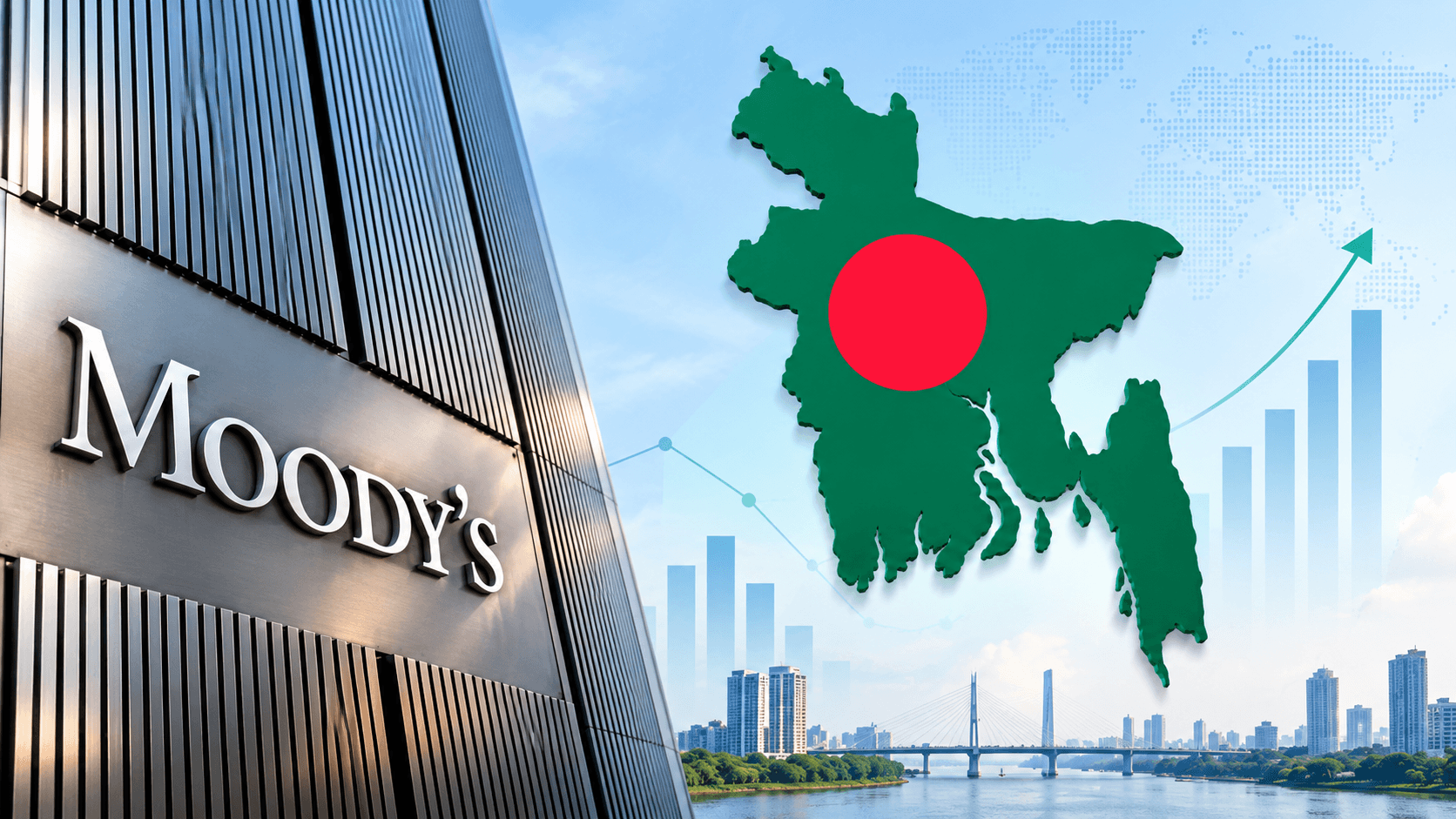
Bangladesh is set to investigate data irregularities that allegedly exaggerated economic performance during the tenure of former Prime Minister Sheikh Hasina, as part of an initiative to combat corruption that has affected the South Asian nation for much of the past 15 years.
The country's interim government has tasked economist and public policy analyst Debapriya Bhattacharya with preparing a "white paper" to document the mismanagement under Hasina's rule. Bhattacharya has been given 90 days to complete the report and will submit an initial draft to Nobel Laureate Muhammad Yunus, who is leading Bangladesh's temporary administration.
"We have a serious problem with data," Bhattacharya, 68, said in an interview in Dhaka on Saturday. "Data were manufactured. Data were suppressed. I call that data anarchy."
Despite being seen from afar as an economic success story, largely due to the world's second-largest garment export industry, Bhattacharya contends that Hasina's administration likely released misleading data on exports, inflation, and GDP, leading to "unprecedented economic vulnerabilities."
Hasina, who recently resigned and fled to India amid mass protests, left behind 18.36 trillion taka ($153 billion) in local and foreign debt as of December—a sum equivalent to the national budget for three fiscal years.
Bhattacharya pinpointed three major challenges for Bangladesh: macroeconomic instability, inflation, and a shortage of foreign exchange reserves. He noted that stability had been disrupted over the past few years, with Hasina attributing it to the Ukraine war—a justification Bhattacharya found unconvincing.
Bangladesh currently has a tax-to-GDP ratio of 7.3%, one of the lowest globally, though it is expected to rise to 8.8% by the fiscal year ending in June 2025.
"This is one of the paradoxes. You have 5% to 7% steady growth, and you do not collect taxes, which essentially means that either the growth was fictitious, or those who benefited from the income generated from the growth did not come under the tax net," Bhattacharya said. "Maybe a large part of it was funneled out of the country."
The interim government's immediate priority is to secure the funds needed for essential services like electricity. Newly appointed central bank Governor Ahsan H. Mansur recently stated that the country is in discussions with the International Monetary Fund for an additional $3 billion in emergency aid, while also seeking support from other multilateral lenders.
Export disruptions have further strained foreign exchange reserves, which had already been declining before the current crisis. The central bank is purchasing dollars from the interbank market to fulfill its obligations, according to the governor.
With a population of 170 million, Bangladesh is struggling to progress to the next stage of development. A key issue is whether the nation is prepared to graduate from its status as a least developed country (LDC) by 2026. The United Nations recently delayed the Solomon Islands' graduation from the LDC category following a change in government and subsequent social unrest.
Bhattacharya argues that the challenges Bangladesh faces are not "problems of graduation" but "problems of development." He maintains that the country is still on track, despite the ongoing unrest and leadership changes.
"Bangladesh is still above all the three sets of criteria for graduation: per capita GNI, human assets, and economic and environmental vulnerability index," said Bhattacharya, who serves on the UN panel.
Bangladesh is currently experiencing severe political turmoil, with more than 600 people killed during violent protests in recent weeks, according to the UN Human Rights Office. Bhattacharya remarked that the situation in Bangladesh follows the "playbook of any authoritarian government."
"What has happened in Bangladesh is no exception," he said. "First, you abhor pluralism, then you banish democratic accountability, and then you put your partisan people in all institutions—not necessarily on merit, but more based on their loyalty, and often sycophancy."
BOB Post