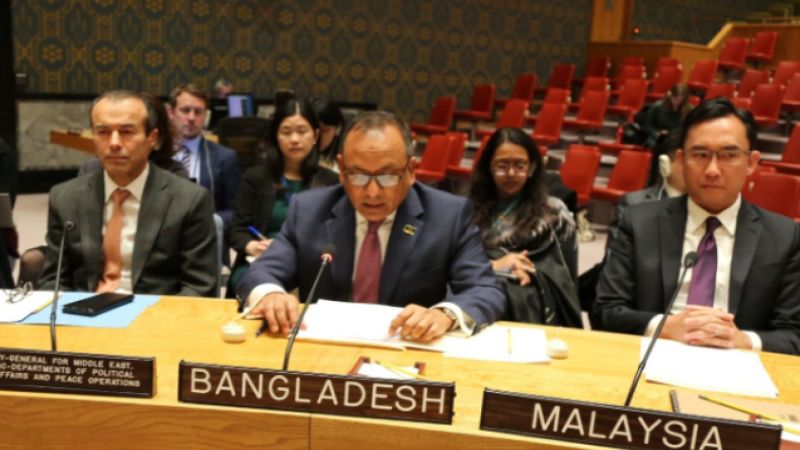
"While the 2017 crisis remains unresolved, Rohingya Muslims in Rakhine are faced with renewed risks, as the armed conflict between Myanmar military and the Arakan Army resumes," said Bangladesh’s permanent representative to the UN, Ambassador Muhammad A Muhith, before the Security Council on Thursday.
Maltese presidency hosted an open Briefing on Myanmar discussing the Rakhine State escalation and its impact on civilians, specifically the Rohingya. Khalid Khiari and Lisa Doughten from the UN spoke, along with representatives from Malaysia, Indonesia, and Bangladesh. Ambassador Muhith emphasized the hindrance in Rohingya repatriation due to recent events in Rakhine, urging Myanmar to show political will and collaborate with Bangladesh on the return agreements. He hoped for improved conditions to resume the repatriation process soon.
"We also solicit meaningful and effective engagements of the international community, especially the regional organizations, and regional and neighboring countries, in restoring peace and stability in Rakhine and supporting reintegration of the future returnees," he added.
Muhith highlighted the importance of UN Security Council Resolution 2669, emphasizing the necessity of establishing a favorable environment in Rakhine and tackling the fundamental causes of vulnerability among the Rohingya. These issues are deeply rooted in Myanmar's discriminatory legal and political system.
"Unless those underlying causes are addressed, the bilateral and regional efforts are unlikely to succeed," he said.
The UN must enhance its presence in Myanmar, report on Resolution 2669, hold perpetrators of crimes against Rohingya Muslims accountable, and enforce humanitarian laws. Timely implementation of key agreements is vital. International support is crucial for Rohingya reintegration. Ambassador Muhith stressed the negative impact on Bangladesh from hosting Rohingya refugees and urged the council to address the situation in Rakhine with meaningful action for a comprehensive and sustainable Rohingya crisis solution.
Various speakers expressed deep concern over the escalation of conflict and violence in Myanmar, urging authorities to address the root causes of the conflict in Rakhine. They emphasized the importance of creating conditions for the voluntary, safe, sustainable, and dignified return of displaced Rohingya and internally displaced persons. Furthermore, there was a call for greater international unity and support for UN and ASEAN efforts to promote peace and stability in Myanmar, aligned with Security Council Resolution 2669. The speakers commended Bangladesh for its humanitarian leadership in sheltering over a million Rohingya and called on others to support the humanitarian response in Cox’s Bazar until the displaced Rohingya could return.
BOB Post