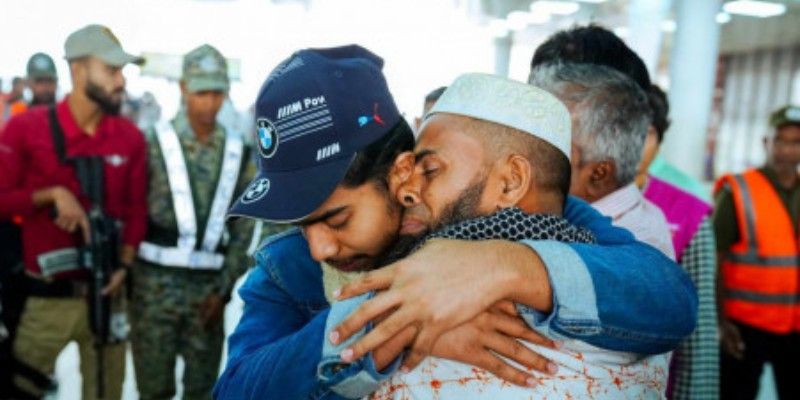
Eighteen Bangladeshi nationals, who fell victim to human trafficking and were trapped in Myanmar's notorious scam centres, are set to return home tonight. They will arrive in Dhaka at 12:45 AM (March 19) on a Thai Airways International flight, following a joint rescue operation involving the Ministry of Foreign Affairs, the Bangladesh Embassy in Thailand, and BRAC.
According to a press release, the victims were deceived with promises of high-paying jobs and initially taken to Thailand. From there, traffickers transported them to scam centres in Myanmar, where they were forcibly engaged in cyber fraud activities under brutal conditions.
Myanmar’s Scam Centres: Hubs of Exploitation and Torture
Myanmar’s scam centres have gained infamy as hubs of forced cyber fraud and brutal extortion. These centres, often run by organized crime networks with links to international trafficking rings, force victims to carry out large-scale online scams targeting people worldwide. Many victims, including those from Bangladesh, are coerced into fraudulent activities at gunpoint.
Those who resist are subjected to horrific torture, including electric shocks and severe beatings. One of the Bangladeshi victims fell ill and started vomiting blood due to the harsh conditions. Another Bangladeshi, Junayed, who accompanied him to a hospital, managed to escape. He swam across a river into Thailand and initiated efforts to rescue his fellow victims by contacting BRAC and relevant authorities.
The Rescue Efforts
Shariful Hasan, Associate Director of BRAC’s Migration and Youth Platform, confirmed the rescue and return of the victims.
"Thanks to the relentless efforts of the Ministry of Foreign Affairs, the Bangladesh Embassy in Thailand, and other concerned parties, the 18 Bangladeshis were freed and are finally returning home today," Hasan stated.
The rescued individuals include Omar Faruk, Rashedul Islam Rifat, Alif Imran, Mohammad Raihan Subhan, SK Arman, Pavel Chowdhury, Monir Hossain, Ismail Hossain, Nazim Uddin, Zahir Uddin, Tanveer Ahmed Rafi, Tainur Khalilullah, Saymon Hossain Abir, Ujjal Hossain, Mehedi Hasan Shanto, Mohammad Kaiser Hossain, Shah Alam, and Akash Ali.
The Rise of Cyber Scam Human Trafficking
Human traffickers have shifted tactics, exploiting digital platforms to lure victims with fake job postings for roles such as computer operators, typists, and call centre staff. Ads on social media platforms like Facebook, WhatsApp, Telegram, and fraudulent job websites promise lucrative salaries in Southeast Asian countries, including Thailand, Myanmar, Laos, Vietnam, and Cambodia.
Once recruited, victims are smuggled into Myanmar's conflict-ridden regions, where they are held captive and forced into cybercrimes, such as investment fraud and identity theft scams. Those who refuse to comply face brutal punishment, including beatings, starvation, and even threats of execution.
Warnings and Preventive Measures
Authorities and human rights groups have repeatedly warned job seekers to be vigilant when applying for overseas employment opportunities. "It is crucial for everyone, especially those planning to travel abroad, to be aware of these dangers and verify job offers through credible sources," Shariful Hasan urged.
As these 18 survivors return home, their harrowing ordeal serves as a grim reminder of the growing threat of cyber scam human trafficking. Experts call for stronger international cooperation to dismantle trafficking networks and prevent further exploitation of vulnerable individuals.
BOB Post